
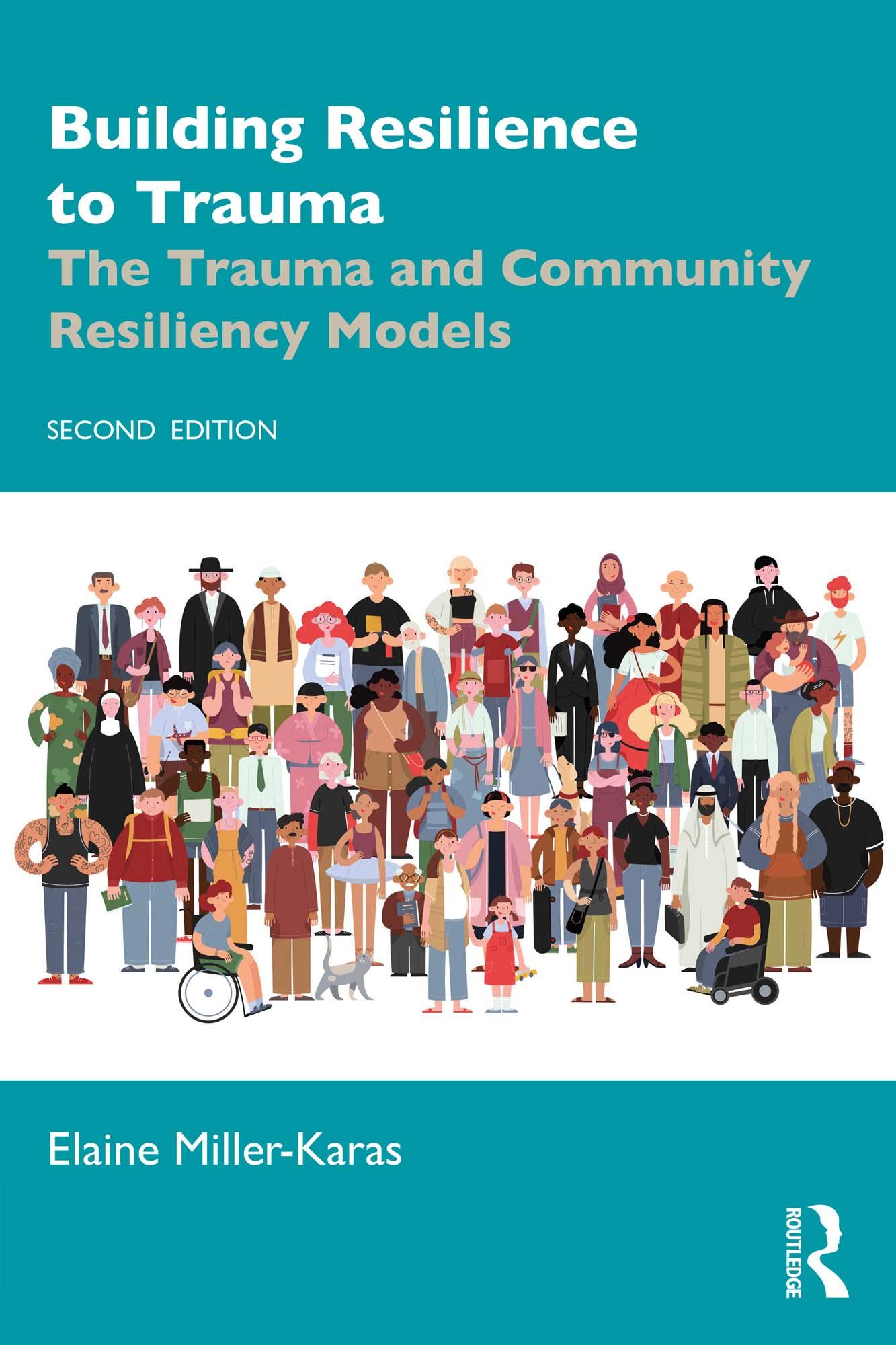
During and after a traumatic experience, survivors experience a cascade of physical, emotional, cognitive, behavioral, relational, and spiritual responses that can make them feel unbalanced and threatened. The second edition of Building Resilience to Trauma explains common responses from a biological perspective, reframing the human experience from one of shame and pathology to one of hope and biology. Using two evidence-informed models of intervention that are trauma-informed and resiliency-informed—the Community Resiliency Model (CRM) and the Trauma Resiliency Model (TRM)—chapters distill complex neuroscience into understandable concepts and lay out a path for fostering short- and long-term healing.
CRM develops natural leaders who share wellness skills throughout communities as primary prevention, and TRM focuses on training mental health professionals to reprocess traumatic experiences. Studies have demonstrated that the models’ use leads to significant reductions in depression and anxiety, and both models also lead to increases in well-being. The models restore balance after traumatic experiences and can be used as tools to cultivate well-being across cultures and abilities throughout the lifespan.
Program cosponsors have included the United Nations, Emory University's Center for Contemplative Science and Compassion-Based Ethics, the Victims and Survivors Network of Northern Ireland, PACES Connection, the International Transformational Resilience Coalition, the Adventist Disaster Relief Agency International, Wake County School System, and the State of Washington Police Commission.
Betal enkelt med kort, Klarna, Apple Pay eller Google Pay. Ikke fornøyd? Du har alltid 14 dagers angrerett. Les mer i våre vilkår. Har du spørsmål, send oss en e-post på hello@memmo.org.
Memmo gjør det enklere å studere – uansett hvor du er i verden. Hos oss samler du pensumbøker og smarte studieverktøy på ett og samme sted: sammendrag, quizer, podkaster og flashcards. Og så Ted, din studiekompis som svarer på alt du lurer på. Over 50 000 studenter studerer allerede her – bygget for at du skal lære raskere og stresse mindre.