
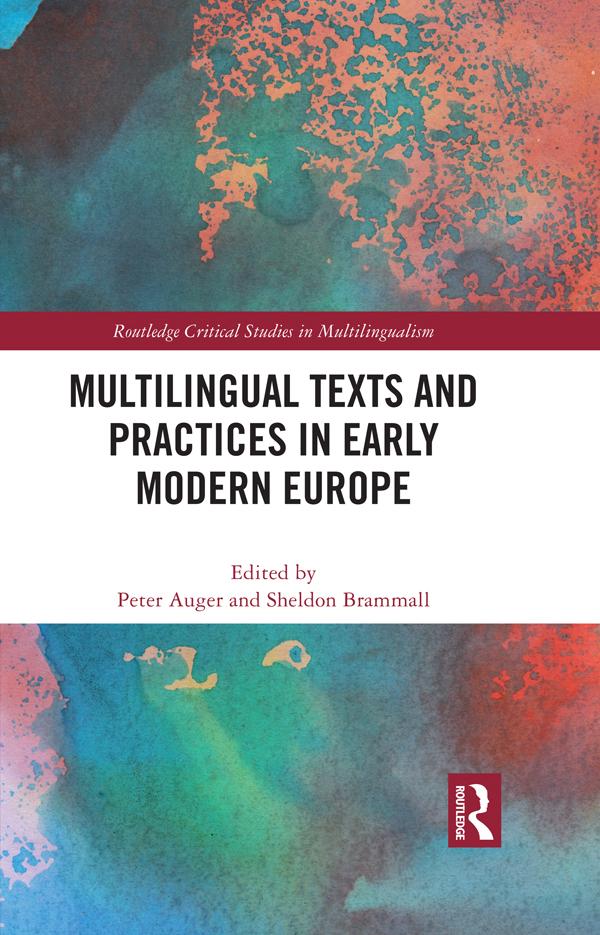
This collection offers a cross-disciplinary exploration of the ways in which multilingual practices were embedded in early modern European literary culture, opening up a dynamic dialogue between contemporary multilingual practices and scholarly work on early modern history and literature.
The nine chapters draw on translation studies, literary history, transnational literatures, and contemporary sociolinguistic research to explore how multilingual practices manifested themselves across different social, cultural and institutional spaces. The exploration of a diverse range of contexts allows for the opportunity to engage with questions around how individual practices shape national and transnational language practices and literatures, the impact of multilingual practices on identity formation, and their implications for creative innovations in bilingual and multilingual texts. Taken as a whole, the collection paves the way for future conversations on what early modern literary studies and present-day multilingualism research might learn from one another and the extent to which historical texts might supply precedents for contemporary multilingual practices.
This book will be of particular interest to students and scholars in sociolinguistics, early modern studies in history and literature, and comparative literature.
Betal enkelt med kort, Klarna, Apple Pay eller Google Pay. Ikke fornøyd? Du har alltid 14 dagers angrerett. Les mer i våre vilkår. Har du spørsmål, send oss en e-post på hello@memmo.org.
Memmo gjør det enklere å studere – uansett hvor du er i verden. Hos oss samler du pensumbøker og smarte studieverktøy på ett og samme sted: sammendrag, quizer, podkaster og flashcards. Og så Ted, din studiekompis som svarer på alt du lurer på. Over 50 000 studenter studerer allerede her – bygget for at du skal lære raskere og stresse mindre.