
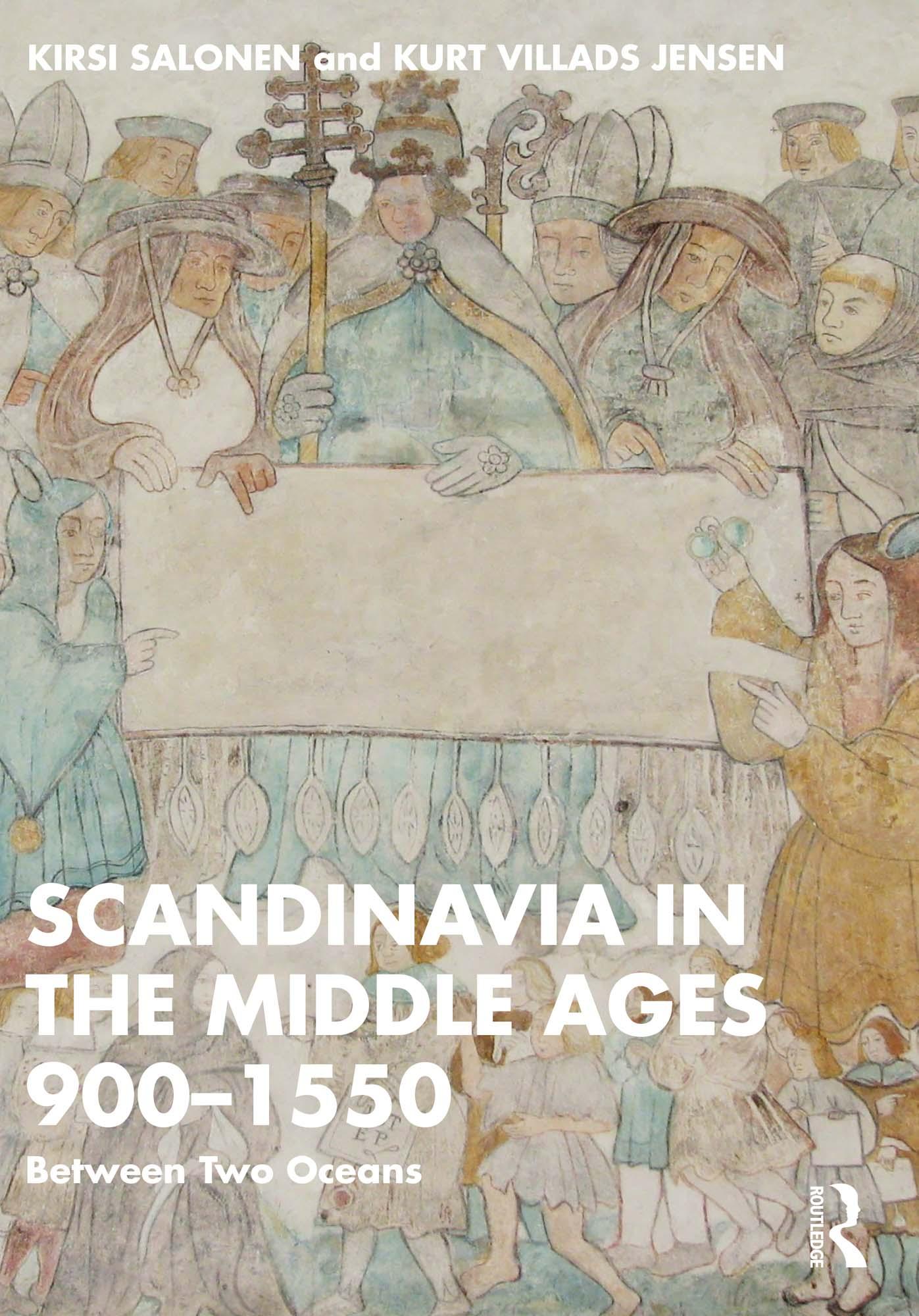
Medieval Scandinavia went through momentous changes. Regional power centres merged and gave birth to the three strong kingdoms of Denmark, Norway, and Sweden. At the end of the Middle Ages, they together formed the enormous Kalmar Union comprising almost all lands around the North Atlantic and the Baltic Sea. In the Middle Ages, Scandinavia became part of a common Europe, yet preserved its own distinct cultural markers.
Scandinavia in the Middle Ages 900–1550 covers the entire Middle Ages into an engaging narrative. The book gives a chronological overview of political, ecclesiastical, cultural, and economic developments. It integrates to this narrative climatic changes, energy crises, devastating epidemies, family life and livelihood, arts, education, technology and literature, and much else. The book shows how different groups had an important role in shaping society: kings and peasants, pious priests, nuns and crusaders, merchants, and students, without forgetting minorities such as Sámi and Jews. The book is divided into three chronological parts 900–1200, 1200–1400, and 1400–1550, where analyses of general trends are illustrated by the acts of individual men and women.
This book is essential reading for students of, as well as all those interested in, medieval Scandinavia and Europe more broadly.
Betal enkelt med kort, Klarna, Apple Pay eller Google Pay. Ikke fornøyd? Du har alltid 14 dagers angrerett. Les mer i våre vilkår. Har du spørsmål, send oss en e-post på hello@memmo.org.
Memmo gjør det enklere å studere – uansett hvor du er i verden. Hos oss samler du pensumbøker og smarte studieverktøy på ett og samme sted: sammendrag, quizer, podkaster og flashcards. Og så Ted, din studiekompis som svarer på alt du lurer på. Over 50 000 studenter studerer allerede her – bygget for at du skal lære raskere og stresse mindre.