
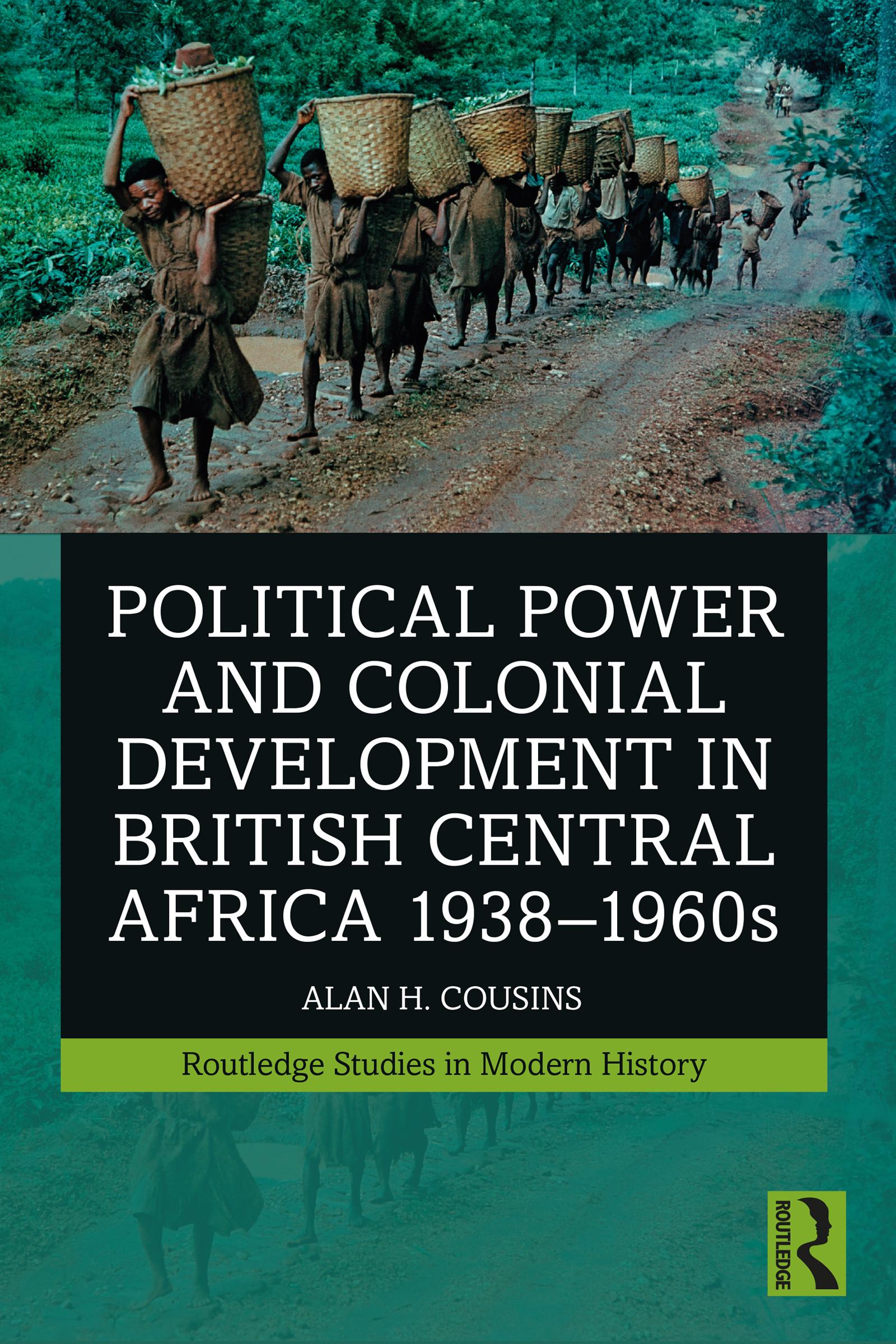
This book focuses on the late colonial history of Zambia and Malawi, which between 1953 and 1963 were part of the Federation of Rhodesia and Nyasaland. Although there were many links in their history and between their populations, the two territories (British protectorates under Colonial Office control) contrasted greatly in power structures, in their economies, and in their development. Europeans living in Northern Rhodesia, with a power base in the mining economy, were able to establish a dominant position in the territory after the Second World War. By the 1950s it looked as though they would have, with Southern Rhodesian Europeans, a long hegemony, gaining independence from Britain as a new Dominion, which would mean control over both Northern Rhodesia and Nyasaland through the Federation. Thus, white ethnicity and ideology are essential factors in this book relating to the struggle for power from just before the Second World War up to the 1960s. However, crises in 1959 and 1960 led to the collapse of the Federation. A second focus is on issues of social and economic development. For Africans in Nyasaland, and in rural parts of Northern Rhodesia, there was a relatively weak economy in this period, a pattern of limited cash crop production, while many people became caught up in labour migration, subordinate to powerful European-dominated economic forces within southern Africa. This meant that colonial policies aimed at rural development were fundamentally flawed. The book also looks at the actual nature of rural economic change (as opposed to colonial policies) and discusses alternative visions of the future which were put forward. The argument is put that historians have often concentrated on the activities of the main nationalist movements in Nyasaland and Northern Rhodesia, seeing them as bringing progress away from colonialism and towards independence. Here there is an attempt to draw out the complexities of life, and a variety of responses in the colonial situation, progress coming in a number of forms, but not always being achieved.
Betal enkelt med kort, Klarna, Apple Pay eller Google Pay. Ikke fornøyd? Du har alltid 14 dagers angrerett. Les mer i våre vilkår. Har du spørsmål, send oss en e-post på hello@memmo.org.
Memmo gjør det enklere å studere – uansett hvor du er i verden. Hos oss samler du pensumbøker og smarte studieverktøy på ett og samme sted: sammendrag, quizer, podkaster og flashcards. Og så Ted, din studiekompis som svarer på alt du lurer på. Over 50 000 studenter studerer allerede her – bygget for at du skal lære raskere og stresse mindre.