
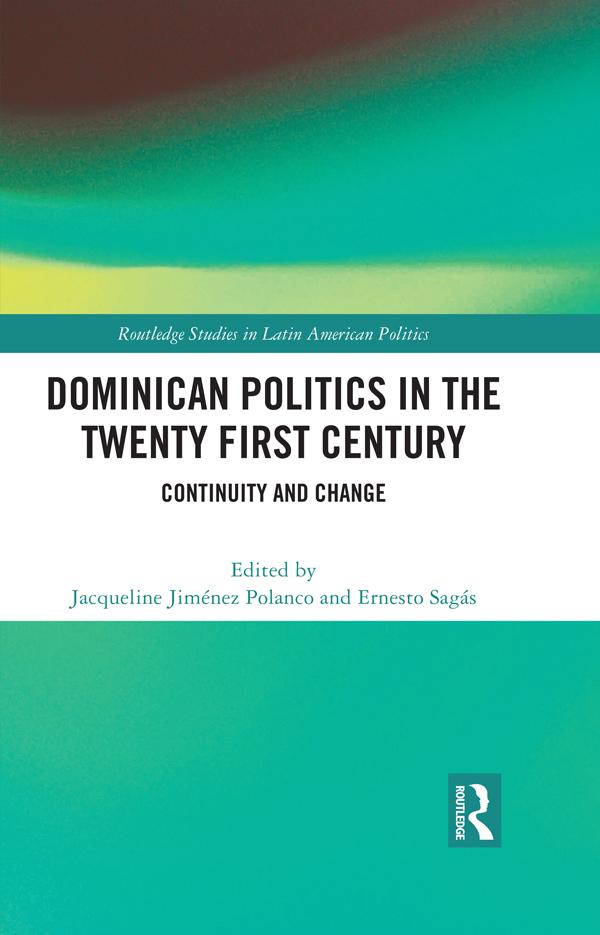
This collection examines the continuities and changes that have set the Dominican political system apart from its Latin American counterparts over the last couple of decades. Whereas traditional political parties have lost support throughout Latin America and electoral systems have devolved into illiberal democracies, Dominican democracy remains flawed but vibrant with a popular embrace of party politics.
Across eight chapters, a collection of subject experts argue that the Dominican case offers valuable lessons to understand that even though traditional political parties are endangered throughout the region, they are not going anywhere. The book analyzes topics including electoral politics, the quality of Dominican democracy, political parties, corruption, relations with Haiti and the United States, migration, the Dominican diaspora, gender and politics, social movements, and civil participation and citizenship, to reveal how the Dominican case proves that traditional political parties can adapt in order to survive, turning themselves into major sources of patronage, appealing to personalistic politics, and tinkering with the constitution in order to stay relevant.
Dominican Politics in the Twenty First Century will be a vital resource for understanding contemporary Dominican politics. It will appeal to political scientists, Latin Americanists, and students of democracy, comparative politics, and electoral politics in general.
Betal enkelt med kort, Klarna, Apple Pay eller Google Pay. Ikke fornøyd? Du har alltid 14 dagers angrerett. Les mer i våre vilkår. Har du spørsmål, send oss en e-post på hello@memmo.org.
Memmo gjør det enklere å studere – uansett hvor du er i verden. Hos oss samler du pensumbøker og smarte studieverktøy på ett og samme sted: sammendrag, quizer, podkaster og flashcards. Og så Ted, din studiekompis som svarer på alt du lurer på. Over 50 000 studenter studerer allerede her – bygget for at du skal lære raskere og stresse mindre.