
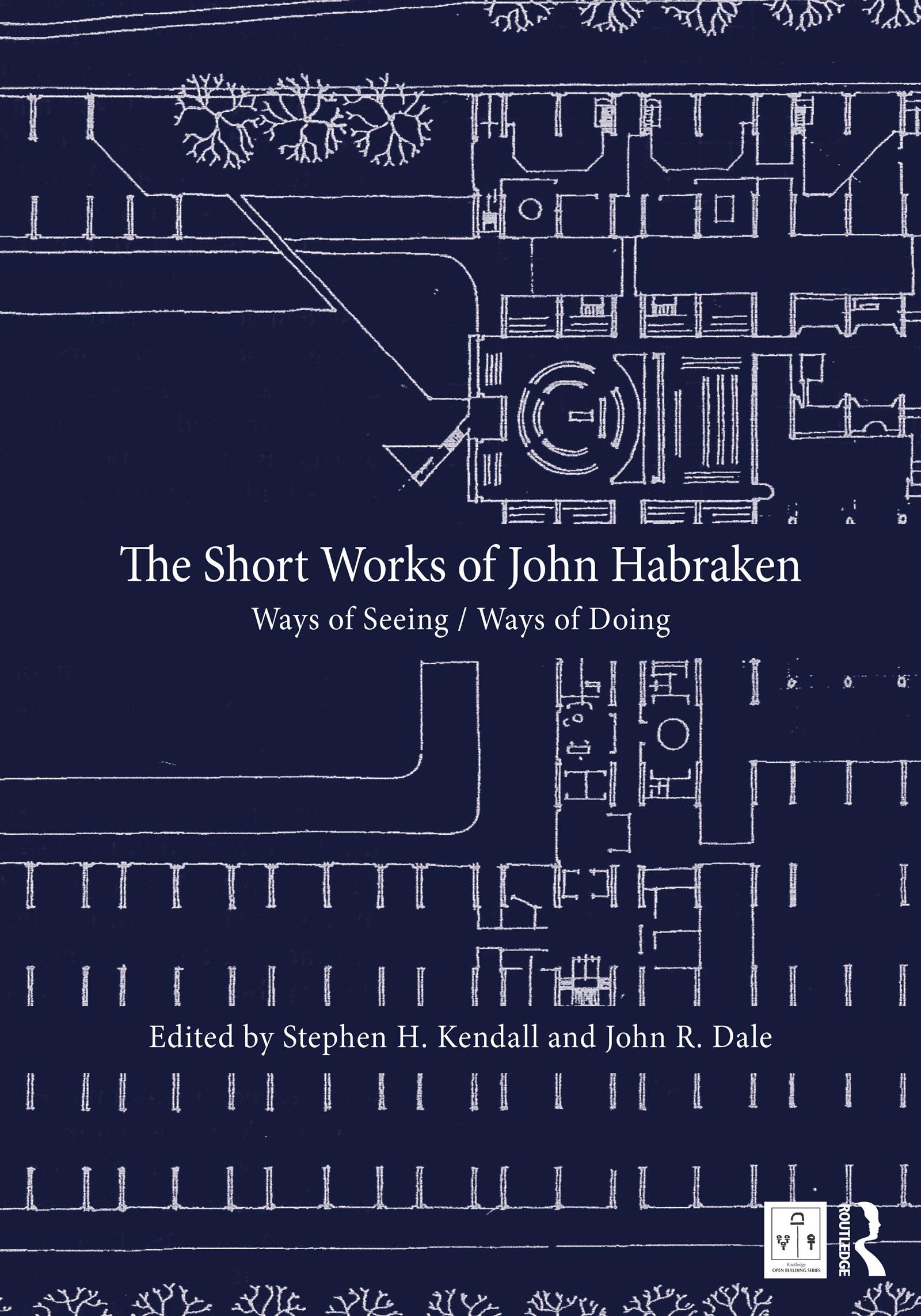
This book offers, for the first time, access to the chronological arc of John Habraken’s writing in a single collection.
Few architects or scholars have so consistently and patiently pursued such a humane and culturally vital set of radical questions related to the behaviour of the built environment as N. John Habraken. From the publication of his first book in 1960, he has quietly helped redraw the map of architectural research, education, practice, design methods and theory. His insights lead us to a better understanding of how the built field works, contributing to the development of methods enabling professionals to contribute to its coherence and resilience.
Following an introductory essay by the editors, placing Habraken’s work in context, this collection is organized in two sections and further organized around a number of specific themes: The Built Field; Role of the Architect; Control; Sharing Forms; Examples of Ways of Doing; Open Building; Tools; and Cultivating the Built Environment. A series of interviews with the author enable him to reflect on his journey of inquiry, research, advocacy and teaching – and the relationship between ways of seeing and ways of doing.
Offering theoretical perspectives and methodological ways forward, this book will be of interest to architects, planners and urban designers tackling the challenges of the contemporary built environment that Habraken identifies, as well as educators and students.
Betal enkelt med kort, Klarna, Apple Pay eller Google Pay. Ikke fornøyd? Du har alltid 14 dagers angrerett. Les mer i våre vilkår. Har du spørsmål, send oss en e-post på hello@memmo.org.
Memmo gjør det enklere å studere – uansett hvor du er i verden. Hos oss samler du pensumbøker og smarte studieverktøy på ett og samme sted: sammendrag, quizer, podkaster og flashcards. Og så Ted, din studiekompis som svarer på alt du lurer på. Over 50 000 studenter studerer allerede her – bygget for at du skal lære raskere og stresse mindre.