
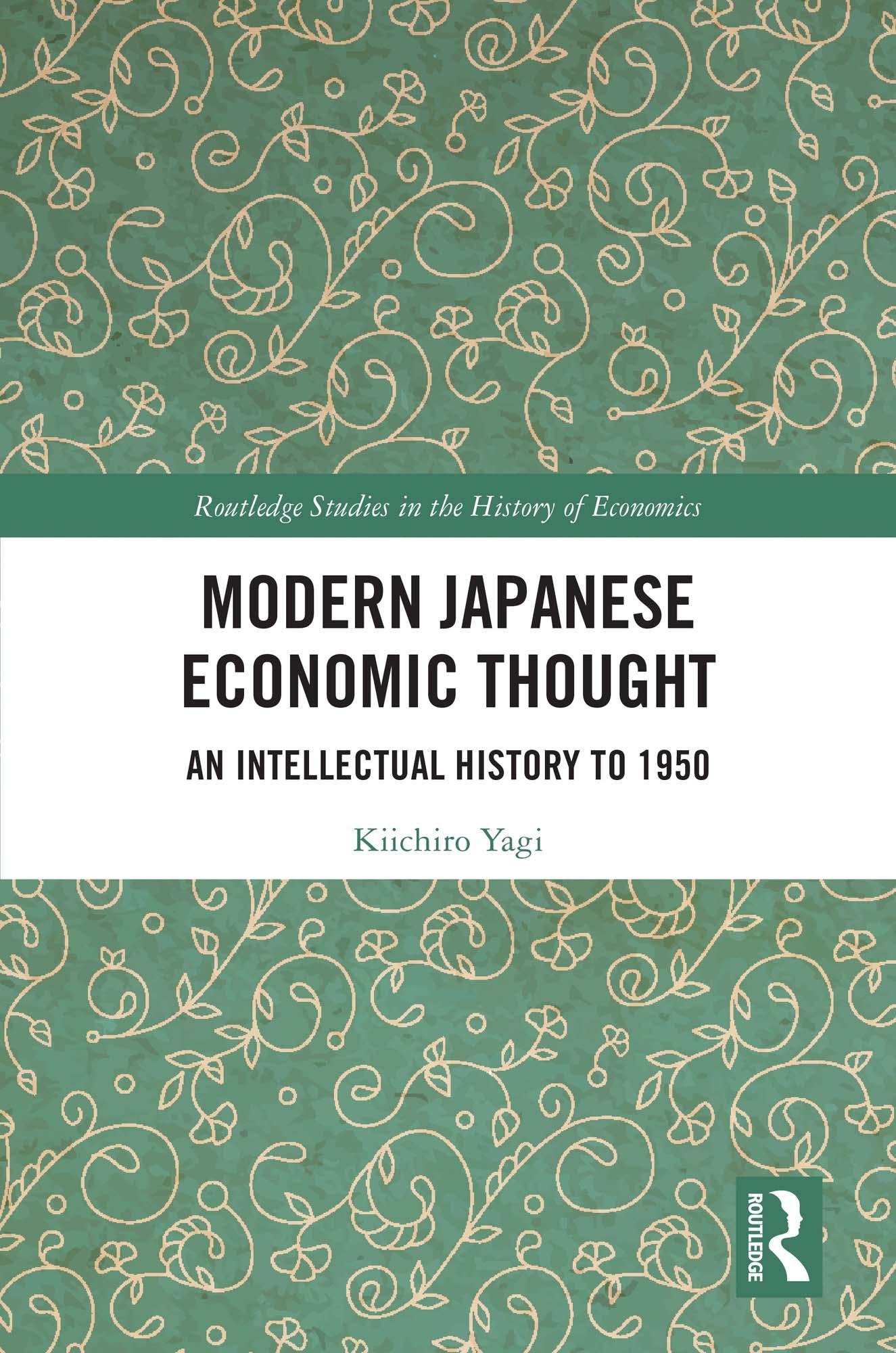
Since the late-19th century, Japan has made remarkable strides in industrialization. Beginning with the economic vision of Miura Baien in the 18th century, and employing a detailed comparison with the West, this book delves into the economic thought of the scholars who played a pivotal role in Japan’s modernization process.
The author takes Fukuzawa Yukichi’s theory of ‘civilization’ as the standard measure of Japan’s modernization and compares it with differing visions from various critics whose research focused on rural poverty and social problems, such as Maeda Masana, early socialists, Yanagita Kunio and Kawakami Hajime. Further, the book explores new liberalism (Ishibashi Tanzan, Fukuda Tokuzo) and Marxism (Yamada Moritaro, Uno Kozo) in the 1920s and 1930s. After discussing the dilemmas faced by economists during wartime (Takata Yasuma, Ryu Shintaro, Shibata Kei), the author concludes this intellectual history with the country’s post-1945 democratic reforms and their early demise.
This book is valuable reading for students and researchers of Japan’s intellectual history. However, due to the book’s comparative perspective, as well as the universality of the modernization experience, it will also appeal to students and researchers of the history of economic thought and modern intellectual history.
Betal enkelt med kort, Klarna, Apple Pay eller Google Pay. Ikke fornøyd? Du har alltid 14 dagers angrerett. Les mer i våre vilkår. Har du spørsmål, send oss en e-post på hello@memmo.org.
Memmo gjør det enklere å studere – uansett hvor du er i verden. Hos oss samler du pensumbøker og smarte studieverktøy på ett og samme sted: sammendrag, quizer, podkaster og flashcards. Og så Ted, din studiekompis som svarer på alt du lurer på. Over 50 000 studenter studerer allerede her – bygget for at du skal lære raskere og stresse mindre.