
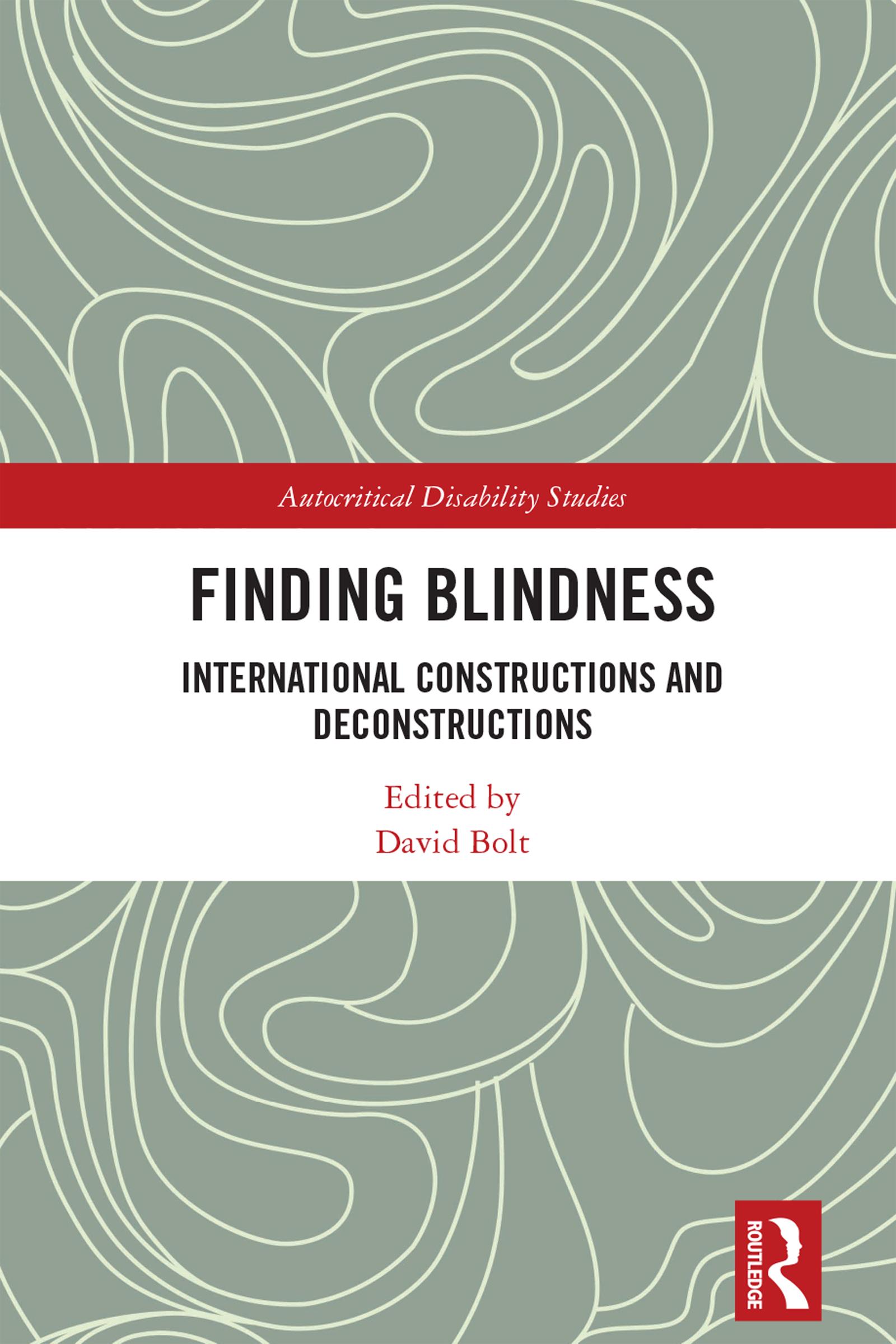
This edited volume explores blindness as a construct with which we the contributors engage as part of our social existence and/or academic research. Irrespective of eye conditions, or the lack thereof, blindness is an understanding at which we have all come to arrive. On the way to this conceptual point, which is in any case unlikely ever to be fixed, we have passed or visited many formative cultural stations.
In the terms of autocritical disability studies (i.e. an explicitly embodied development of critical disability studies), these cultural stations include key moments in education and training; the reflective pursuits of philosophy, aesthetics, and cultural theory; literary works such as autobiography, novels, short stories, drama, and poetry; visual texts ranging from photography to postage stamps; technological developments like television, computer applications, and social media; value systems defined by family and/or religion; and the social phenomenon of hate and war. Each chapter in this volume engages with two of these cultural stations; some ostensibly if not profoundly positive or indeed negative and some that contradict each other within and across chapters.
This book will be of interest to all scholars and students of disability studies, sociology, education, and health.
Betal enkelt med kort, Klarna, Apple Pay eller Google Pay. Ikke fornøyd? Du har alltid 14 dagers angrerett. Les mer i våre vilkår. Har du spørsmål, send oss en e-post på hello@memmo.org.
Memmo gjør det enklere å studere – uansett hvor du er i verden. Hos oss samler du pensumbøker og smarte studieverktøy på ett og samme sted: sammendrag, quizer, podkaster og flashcards. Og så Ted, din studiekompis som svarer på alt du lurer på. Over 50 000 studenter studerer allerede her – bygget for at du skal lære raskere og stresse mindre.