
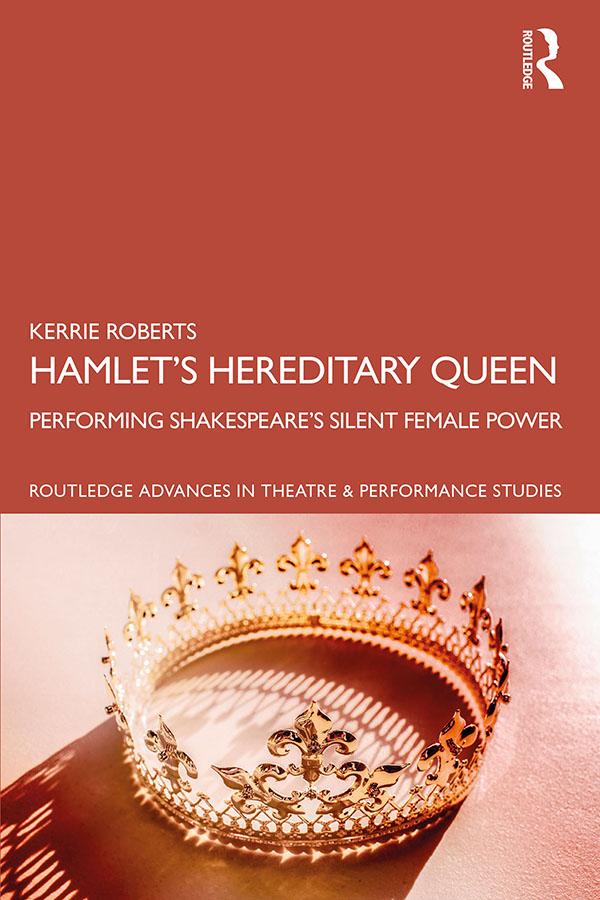
This book explores a fresh and insightful interpretation of Hamlet’s Gertrude as a prominent and powerful figure in the play. It shows how traditional readings of this character, both performance-based and scholarly, have been guided and constrained by misogynistic perspectives on female power.
Bringing together the author’s wealth of insight from a theatre practitioner’s perspective and combining it with a scholarly perspective, the book argues that Gertrude need not be limited to sex and motherhood. She could instead be played as Denmark’s blood royal Queen, her role in the play then being about female political power. Gertrude’s royal status could play out on stage through a variety of possible performance choices for stage design, stage business, acting processes, and the actor’s presence – both speaking and silent.
Hamlet's Hereditary Queen takes into consideration Shakespeare’s source myths, historical studies of the position of queens and the issues concerning them in early modern England, Hamlet’s performance history, and the text itself. It questions traditional readings of Hamlet, and offers detailed analyses of relevant scenes to demonstrate how Gertrude’s Hamlet might play out on stage in the twenty-first century.
This is an engaging and insightful interpretation for students and scholars of theatre and performance studies and Shakespeare studies, as well as theatre practitioners.
Betal enkelt med kort, Klarna, Apple Pay eller Google Pay. Ikke fornøyd? Du har alltid 14 dagers angrerett. Les mer i våre vilkår. Har du spørsmål, send oss en e-post på hello@memmo.org.
Memmo gjør det enklere å studere – uansett hvor du er i verden. Hos oss samler du pensumbøker og smarte studieverktøy på ett og samme sted: sammendrag, quizer, podkaster og flashcards. Og så Ted, din studiekompis som svarer på alt du lurer på. Over 50 000 studenter studerer allerede her – bygget for at du skal lære raskere og stresse mindre.