
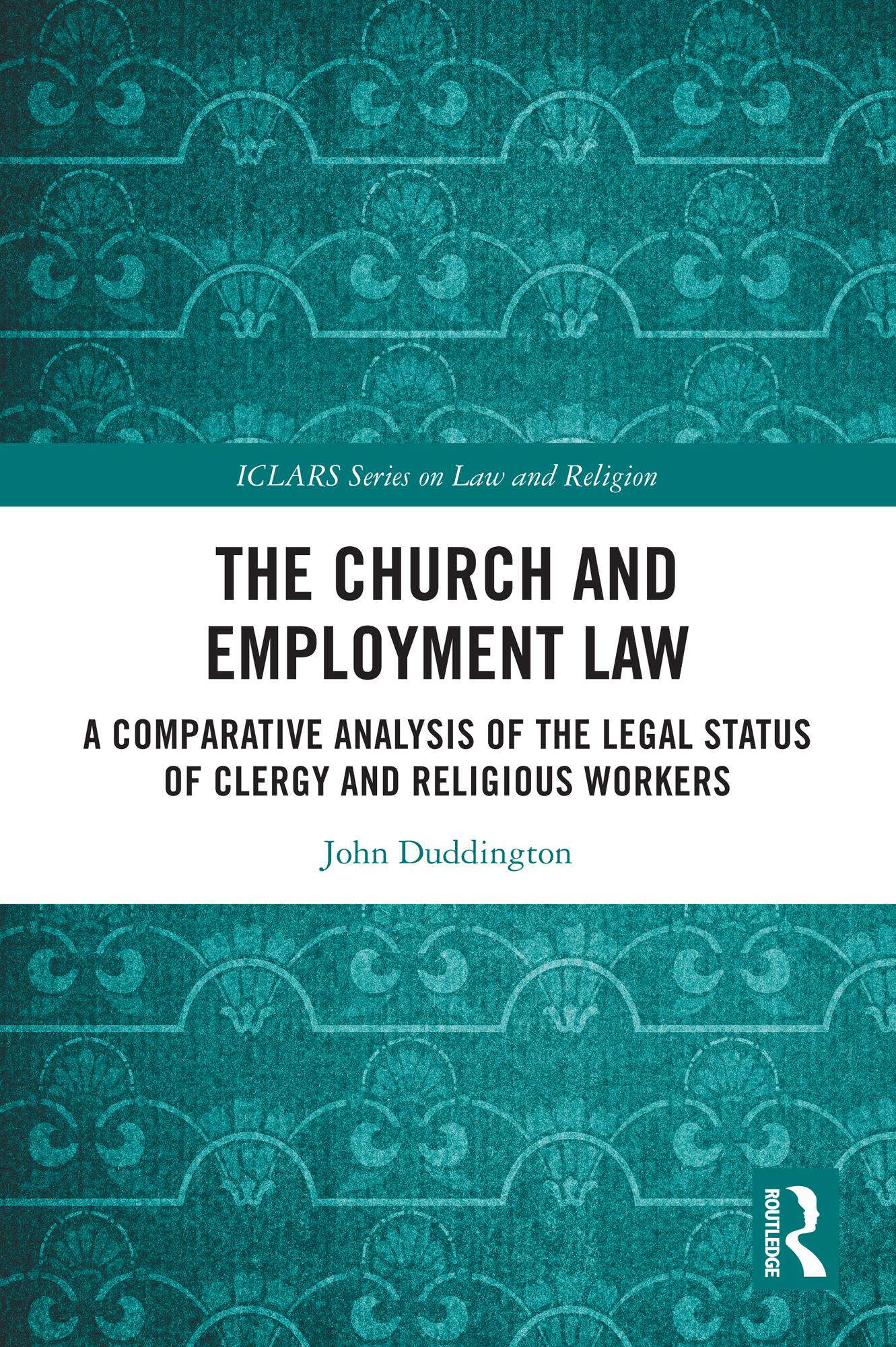
This book examines the current law on the employment status of ministers of religion together with religious workers and volunteers and suggests reforms in this area of the law to meet the need for ministers to be given a degree of employment protection. It also considers the constant theme in Christian history that the clergy should not be subject to the ordinary courts and asks whether this is justified with the growth of areas such as employment law. The work questions whether it is possible to arrive at a satisfactory definition of who is a minister of religion and, along with this, who would be the employer of the minister if there was a contract of employment. Taking a comparative perspective, it evaluates the case law on the employment status of Christian and non-Christian clergy and assesses whether this shows any coherent theme or line of development. The work also considers the issue of ministerial employment status against the background of the autonomy of churches and other religious bodies from the State, together with their ecclesiology. The book will be of interest to academics and researchers working in the areas of law and religion, employment law and religious studies, together with both legal practitioners and human resources practitioners in these areas.
Betal enkelt med kort, Klarna, Apple Pay eller Google Pay. Ikke fornøyd? Du har alltid 14 dagers angrerett. Les mer i våre vilkår. Har du spørsmål, send oss en e-post på hello@memmo.org.
Memmo gjør det enklere å studere – uansett hvor du er i verden. Hos oss samler du pensumbøker og smarte studieverktøy på ett og samme sted: sammendrag, quizer, podkaster og flashcards. Og så Ted, din studiekompis som svarer på alt du lurer på. Over 50 000 studenter studerer allerede her – bygget for at du skal lære raskere og stresse mindre.