
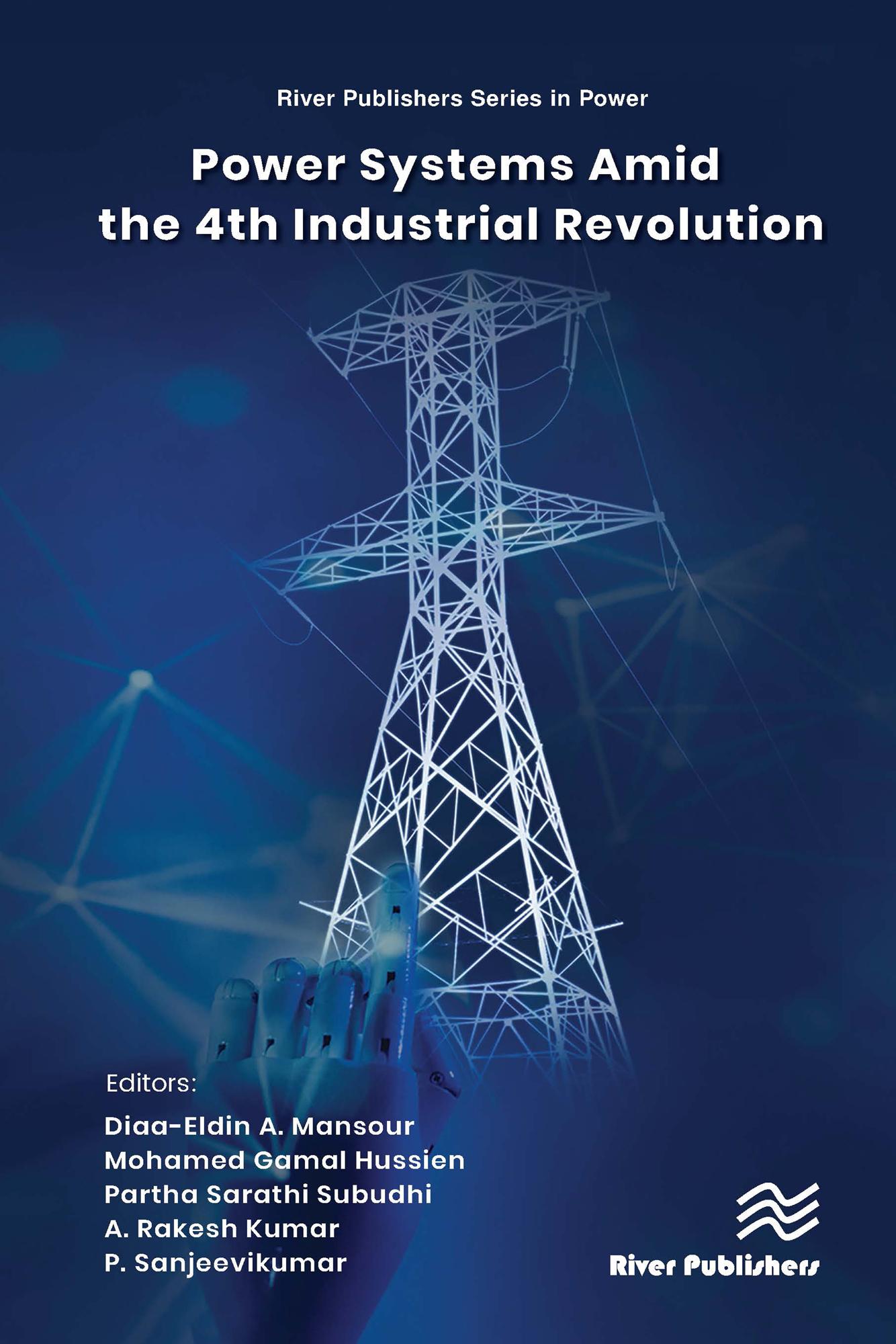
This book discusses the operation of power systems amid the 4th industrial revolution and the value of Industry 4.0 technologies to grid operators and end customers.
The concept of smart grids was introduced years ago, but their practical implementation into power grids was delayed as the information communication technology infrastructure was not ready. The transition to smart grids can be put into three dimensions: decentralization, decarbonization, and digitalization. Industry 4.0 technologies can enable more advanced features that can add value to all parties in smart grids and achieve a more holistic efficiency increase for the entire system via accomplishing business goals and realizing technical requirements.
Technical topics discussed in the book include:
- Structure of the generalized IoT value chain and IoT applications for low carbon technologies.
- Topological improvement of electrical equipment to facilitate a smooth transition to the smart grid infrastructure.
- Improvement of techniques to tackle advanced power system problems such as energy management, power equipment diagnostics, and renewable energy integration.
- Modeling, simulation, and analytic tools for cyber-attacks and cyber security actions for current cyber-physical power systems.
- Artificial intelligence, big data, and machine learning application to power system problems.
- Intelligent controllers for an advanced residential system.
Betal enkelt med kort, Klarna, Apple Pay eller Google Pay. Ikke fornøyd? Du har alltid 14 dagers angrerett. Les mer i våre vilkår. Har du spørsmål, send oss en e-post på hello@memmo.org.
Memmo gjør det enklere å studere – uansett hvor du er i verden. Hos oss samler du pensumbøker og smarte studieverktøy på ett og samme sted: sammendrag, quizer, podkaster og flashcards. Og så Ted, din studiekompis som svarer på alt du lurer på. Over 50 000 studenter studerer allerede her – bygget for at du skal lære raskere og stresse mindre.