
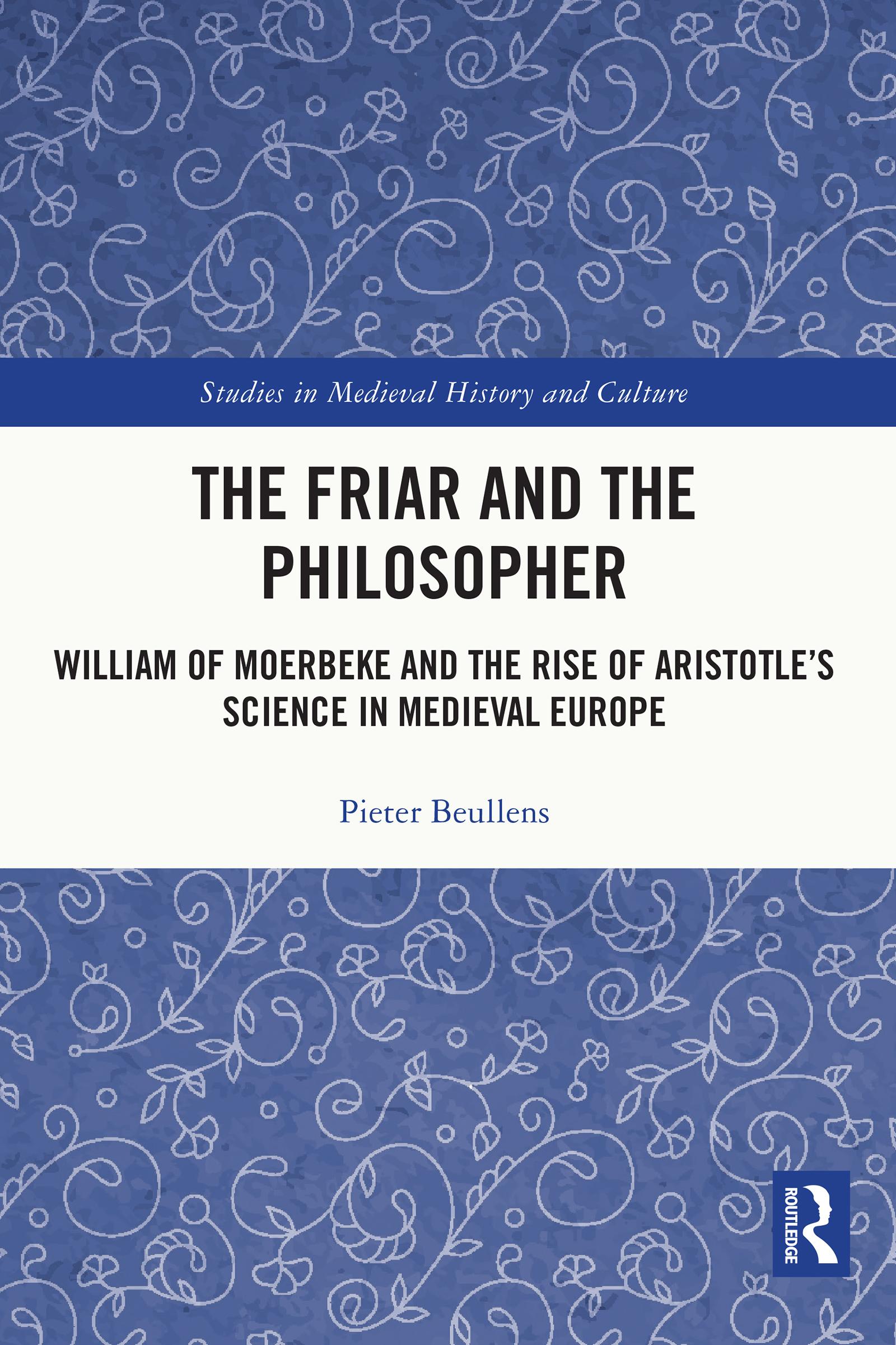
William of Moerbeke was a prolific medieval translator of Aristotle and other ancient philosophical and scientific authors from Greek into Latin, and he played a decisive role in the acceptance of Aristotelian philosophy in the Latin world. He is often criticized for an allegedly deficient translation method.
However, this book argues that his approach was a deliberate attempt to allow readers to reach the correct understanding of the source texts in accordance with the medieval view of the role of the translator. William’s project to make all genuine works of Aristotle – and also of other important authors from Antiquity – available in Latin is framed against the background of intellectual life in the 13th century, the deliberate policy of his Dominican order to reconcile Christian doctrine with worldly knowledge, and new trends in book production that influenced the spread of the new translations. William of Moerbeke’s seemingly modest acts of translation started an intellectual revolution, the impact of which extended from the Middle Ages into the early modern era.
The Friar and the Philosopher will appeal to researchers and students alike interested in Medieval perceptions of Aristotle, as well as other works from Antiquity.
Betal enkelt med kort, Klarna, Apple Pay eller Google Pay. Ikke fornøyd? Du har alltid 14 dagers angrerett. Les mer i våre vilkår. Har du spørsmål, send oss en e-post på hello@memmo.org.
Memmo gjør det enklere å studere – uansett hvor du er i verden. Hos oss samler du pensumbøker og smarte studieverktøy på ett og samme sted: sammendrag, quizer, podkaster og flashcards. Og så Ted, din studiekompis som svarer på alt du lurer på. Over 50 000 studenter studerer allerede her – bygget for at du skal lære raskere og stresse mindre.