
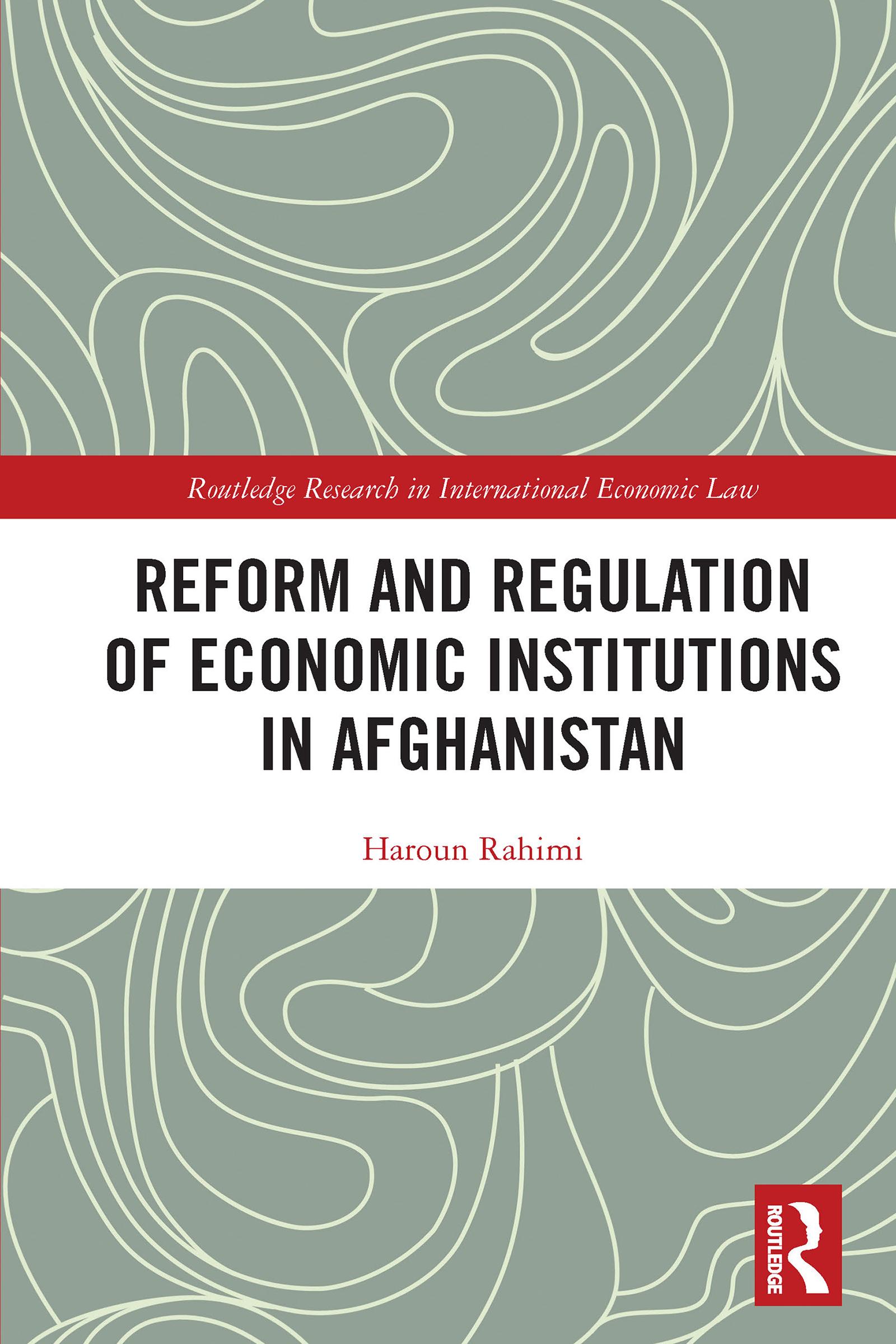
Taliban's return to power in August of 2021 caused everyone to ask why the two decades of institution building in Afghanistan failed. This book investigates the root causes of failed reforms in an important area of reform: trade and credit institutions. It explains why the efforts to reform and regulate the economic institutions in Afghanistan failed and what we can learn from their failure. It draws on more than eighty interviews with Afghan merchants, business leaders, money dealers, and government officials in five major provinces of Afghanistan to identify the barriers to access to credit and to understand the performance of formal institutions (banks) and their informal counterparts. This book finds that Afghan merchants were often unable to benefit from the offerings of formal institutions for three reasons: a highly volatile business climate, uncertain contract enforcement, and an unsupportive property rights system. Several informal institutions have emerged that alleviate some of the credit constraints on Afghan merchants. These informal institutions include risk-sharing trade credit operations, money dealers’ short-term working capital loans, Gerawee, and Sar qufli. Although these informal institutions have helped Afghan merchants survive, they are unable to support economic growth. This book argues that countries like Afghanistan should solve their institutional dilemma by adopting an approach which the author calls "Grounded Institutional Reform." Using this approach, a country would formalize existing informal institutions, a development that would vastly increase their effectiveness. While this book focuses on credit and trade in Afghanistan, the analysis of "formalizing the informal" can easily be extended to solve other types of economic problems in similarly situated countries. This book should be of great interest to scholars, policymakers, and development workers in the field of law, finance, and development.
Betal enkelt med kort, Klarna, Apple Pay eller Google Pay. Ikke fornøyd? Du har alltid 14 dagers angrerett. Les mer i våre vilkår. Har du spørsmål, send oss en e-post på hello@memmo.org.
Memmo gjør det enklere å studere – uansett hvor du er i verden. Hos oss samler du pensumbøker og smarte studieverktøy på ett og samme sted: sammendrag, quizer, podkaster og flashcards. Og så Ted, din studiekompis som svarer på alt du lurer på. Over 50 000 studenter studerer allerede her – bygget for at du skal lære raskere og stresse mindre.