
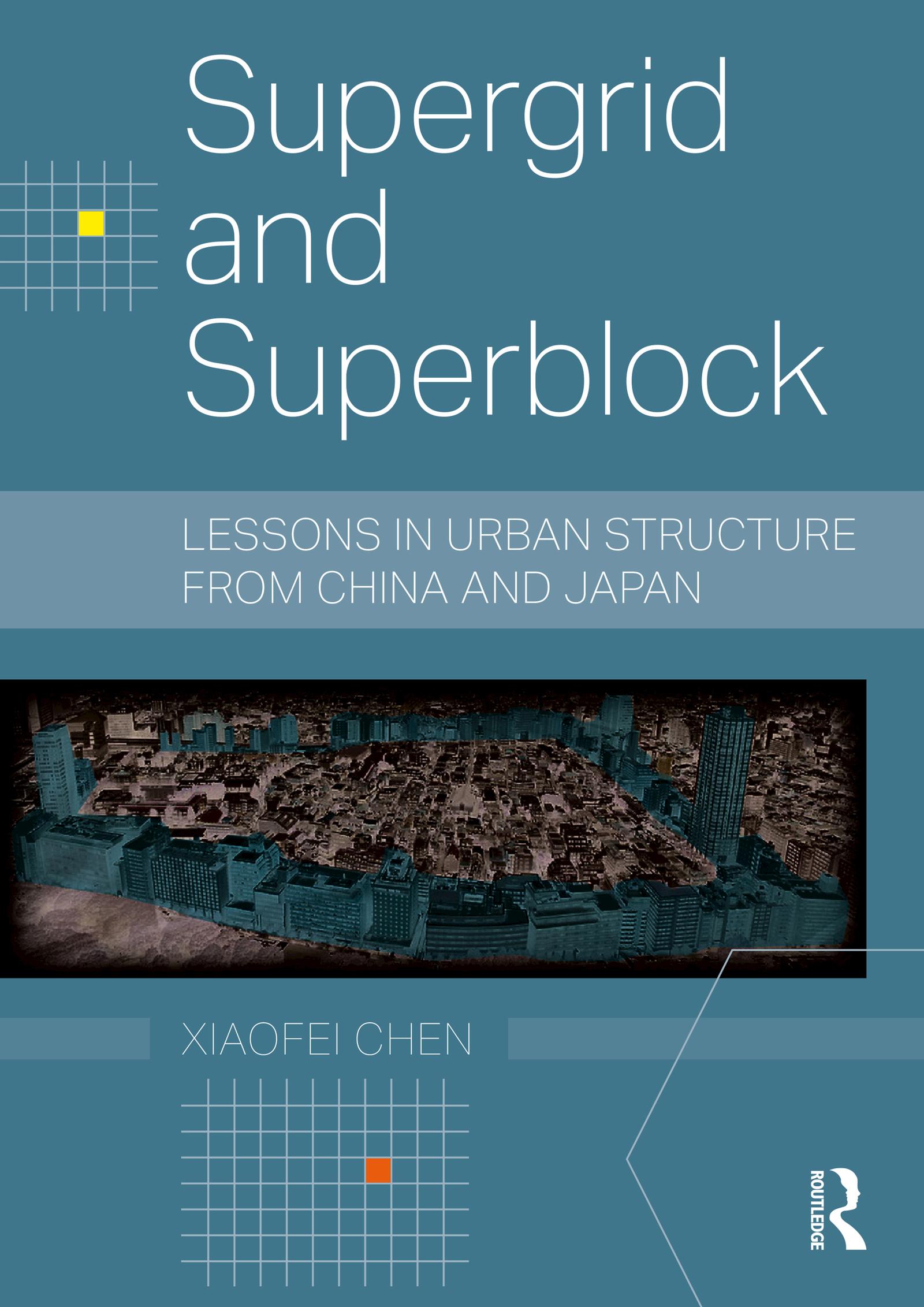
In this superbly illustrated book Xiaofei Chen presents the first analysis in English of a ubiquitous East Asian urban phenomenon: the supergrid and superblock urban structure. The book opens with an introductory essay by Barrie Shelton in which he sets the scene for what is to follow, emphasizing how alien this structure was to Western urban design culture where radial patterns of development were the norm. Then, in her first chapter, Chen explains the make-up of the supergrid and superblock urban structure and its contrasting Chinese and Japanese forms. In the following three chapters she digs deep into the history, cultural origins, and underlying design philosophy of the supergrid and superblock to show how, under different cultural influences, the model has developed into two distinct forms. Two further chapters (5 and 6) provide detailed analysis of two sample superblocks in China (in Xi’an and Nanjing) and two in Japan (in Kyoto and Osaka) to reveal the relative advantages and disadvantages of how the structure is manifest in the two countries. In her conclusion she discusses her findings to show how and why the supergrid and superblock structure is a valuable urban design model which, with regional adjustments, can be used effectively in cities other than those of East Asia.
Betal enkelt med kort, Klarna, Apple Pay eller Google Pay. Ikke fornøyd? Du har alltid 14 dagers angrerett. Les mer i våre vilkår. Har du spørsmål, send oss en e-post på hello@memmo.org.
Memmo gjør det enklere å studere – uansett hvor du er i verden. Hos oss samler du pensumbøker og smarte studieverktøy på ett og samme sted: sammendrag, quizer, podkaster og flashcards. Og så Ted, din studiekompis som svarer på alt du lurer på. Over 50 000 studenter studerer allerede her – bygget for at du skal lære raskere og stresse mindre.