
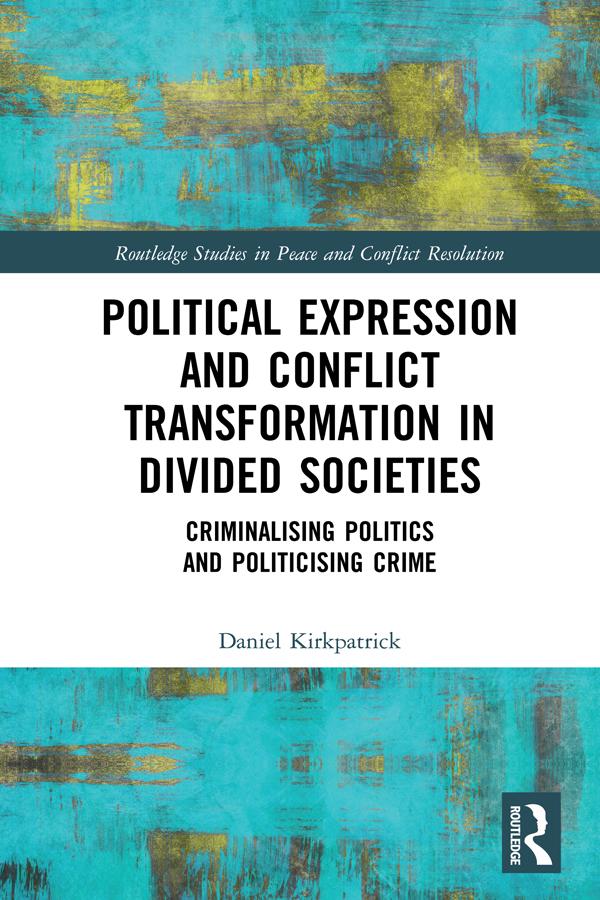
This book considers how the social construction of crime and the criminalising of political expression impact upon different stages in a violent political conflict.
The freedom to express our political opinions is regarded as an essential human right throughout most of the world, and yet, in defence of our security, governments often place various restrictions on it. This book directly considers what these restrictions are in the context of deeply divided societies to understand how they impact upon intergroup relations in four different contexts: nonviolent movements, counter-insurgency, peace negotiations, and post-settlement peacebuilding. Drawing on an extensive body of original interviews and archival material, the volume analyses this relationship through an in-depth consideration of Northern Ireland and South Africa, followed by a wider analysis of Turkey, Sri Lanka, Belgium, and Canada. The overarching argument is that the implications of criminalising political expression depend on both its ‘target’ and the wider social reality it contributes towards.
This book will be of much interest to students of conflict resolution, transitional justice, law, and International Relations.
Betal enkelt med kort, Klarna, Apple Pay eller Google Pay. Ikke fornøyd? Du har alltid 14 dagers angrerett. Les mer i våre vilkår. Har du spørsmål, send oss en e-post på hello@memmo.org.
Memmo gjør det enklere å studere – uansett hvor du er i verden. Hos oss samler du pensumbøker og smarte studieverktøy på ett og samme sted: sammendrag, quizer, podkaster og flashcards. Og så Ted, din studiekompis som svarer på alt du lurer på. Over 50 000 studenter studerer allerede her – bygget for at du skal lære raskere og stresse mindre.