
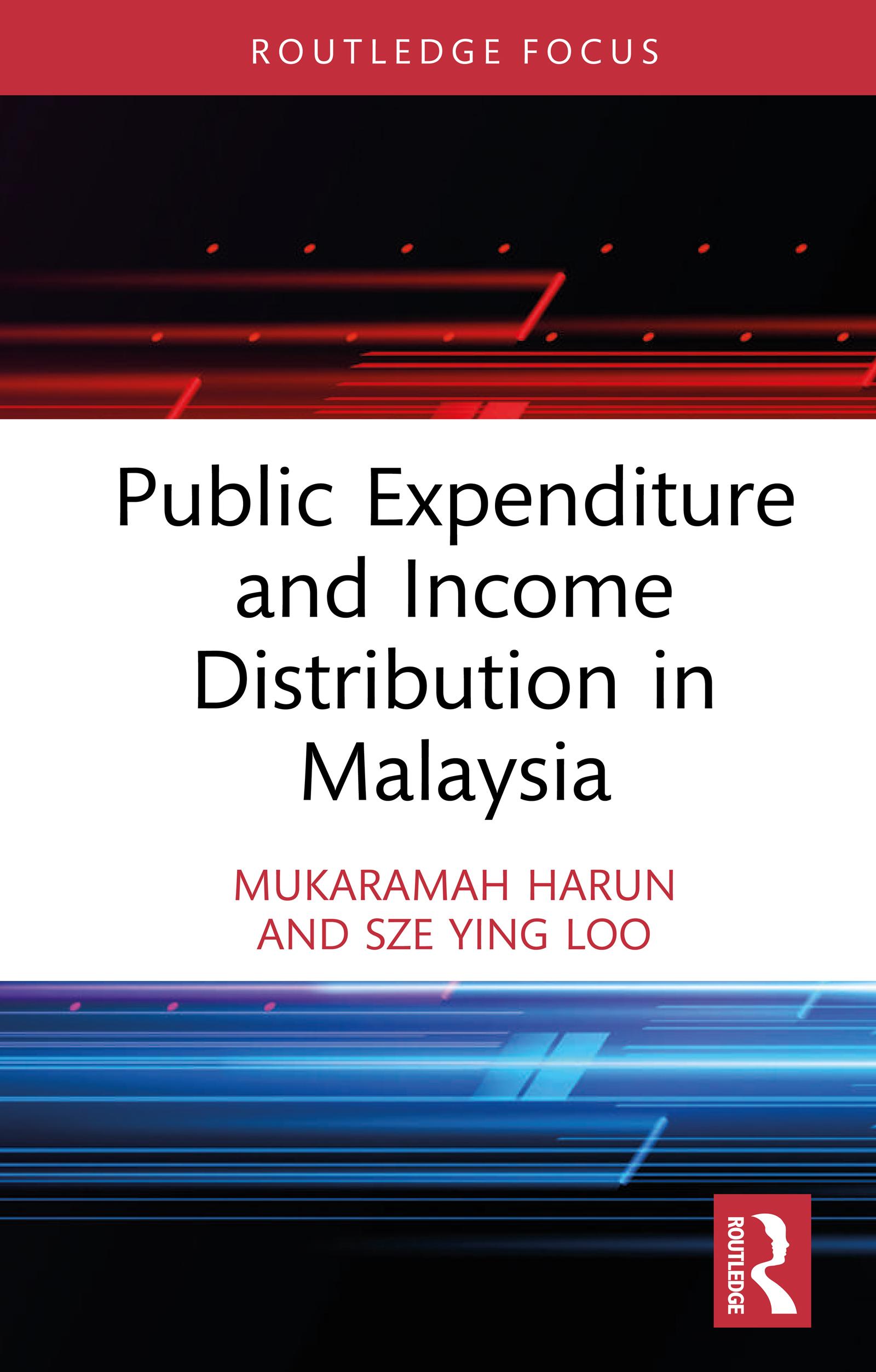
This book studies the impact of public expenditure allocations in achieving income equality goals in Malaysia.
The book examines the initial functional and institutional distribution of income across different institutional agents and sectors and evaluates the impact of the public expenditure policies in reducing the inter-ethnic and rural–urban disparity. Since Malaysia has made enormous progress in eliminating poverty, the authors suggest that a change of emphasis in the public expenditure policy may now be called for. They present evidence on the importance of public expenditure in improving income inequality and examine the initial functional and institutional distribution of income across different institutional agents and sectors. The development of the Social Accounting Matrix (SAM) model that presents both economic and social statistics in an economy can be served as a useful tool of this work. The SAM model is used to evaluate the impact of the public expenditure policies in reducing inter-ethnic and rural–urban disparity.
A comprehensive source of information on how to deal with inequality economic challenges, the book will be of interest to economists and researchers on Southeast Asian Studies.
Betal enkelt med kort, Klarna, Apple Pay eller Google Pay. Ikke fornøyd? Du har alltid 14 dagers angrerett. Les mer i våre vilkår. Har du spørsmål, send oss en e-post på hello@memmo.org.
Memmo gjør det enklere å studere – uansett hvor du er i verden. Hos oss samler du pensumbøker og smarte studieverktøy på ett og samme sted: sammendrag, quizer, podkaster og flashcards. Og så Ted, din studiekompis som svarer på alt du lurer på. Over 50 000 studenter studerer allerede her – bygget for at du skal lære raskere og stresse mindre.