
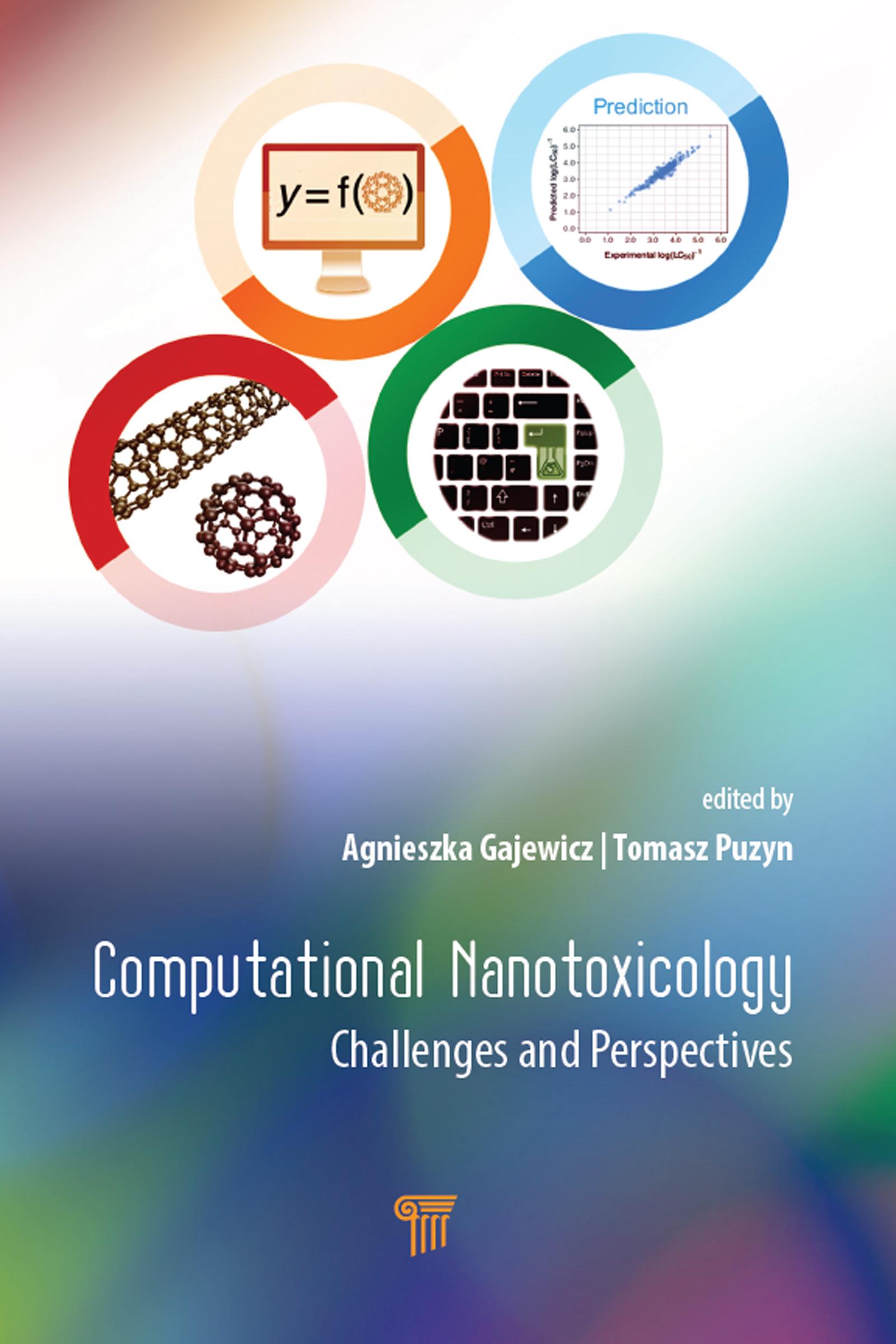
The development of computational methods that support human health and environmental risk assessment of engineered nanomaterials (ENMs) has attracted great interest because the application of these methods enables us to fill existing experimental data gaps. However, considering the high degree of complexity and multifunctionality of ENMs, computational methods originally developed for regular chemicals cannot always be applied explicitly in nanotoxicology. This book discusses the current state of the art and future needs in the development of computational modeling techniques for nanotoxicology. It focuses on (i) computational chemistry (quantum mechanics, semi-empirical methods, density functional theory, molecular mechanics, molecular dynamics), (ii) nanochemoinformatic methods (quantitative structure–activity relationship modeling, grouping, read-across), and (iii) nanobioinformatic methods (genomics, transcriptomics, proteomics, metabolomics). It reviews methods of calculating molecular descriptors sufficient to characterize the structure of nanoparticles, specifies recent trends in the validation of computational methods, and discusses ways to cope with the uncertainty of predictions. In addition, it highlights the status quo and further challenges in the application of computational methods in regulation (e.g., REACH, OECD) and in industry for product development and optimization and the future directions for increasing acceptance of computational modeling for nanotoxicology.
Betal enkelt med kort, Klarna, Apple Pay eller Google Pay. Ikke fornøyd? Du har alltid 14 dagers angrerett. Les mer i våre vilkår. Har du spørsmål, send oss en e-post på hello@memmo.org.
Memmo gjør det enklere å studere – uansett hvor du er i verden. Hos oss samler du pensumbøker og smarte studieverktøy på ett og samme sted: sammendrag, quizer, podkaster og flashcards. Og så Ted, din studiekompis som svarer på alt du lurer på. Over 50 000 studenter studerer allerede her – bygget for at du skal lære raskere og stresse mindre.