
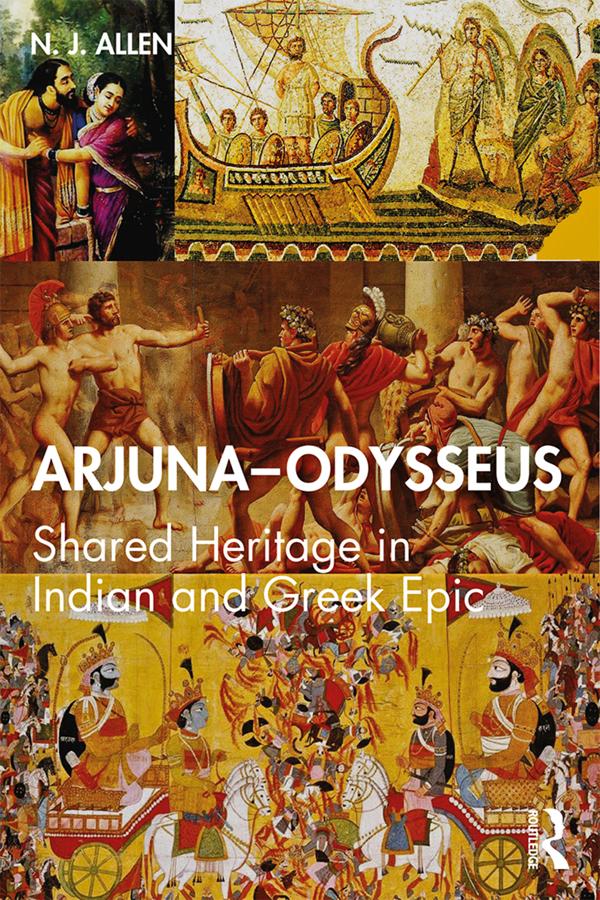
Bringing together the study of the Greek classics and Indology, Arjuna–Odysseus provides a comparative analysis of the shared heritage of the Mahābhārata and early Greek traditions presented in the texts of Homer and Hesiod.
Building on the ethnographic theories of Durkheim, Mauss, and Dumont, the volume explores the convergences and rapprochements between the Mahābhārata and the Greek texts. In exploring the networks of similarities between the two epic traditions, it also reformulates the theory of Georges Dumézil regarding Indo-European cultural comparativism. It includes a detailed comparison between journeys undertaken by the two epic heroes – Odysseus and Arjuna – and more generally, it ranges across the philosophical ideas of these cultures, and the epic traditions, metaphors, and archetypes that define the cultural ideology of ancient Greece and India.
This book will be useful to scholars and researchers of Indo-European comparativism, social and cultural anthropology, classical literature, Indology, cultural and post-colonial studies, philosophy and religion, as well as to those who love the Indian and Greek epics.
Betal enkelt med kort, Klarna, Apple Pay eller Google Pay. Ikke fornøyd? Du har alltid 14 dagers angrerett. Les mer i våre vilkår. Har du spørsmål, send oss en e-post på hello@memmo.org.
Memmo gjør det enklere å studere – uansett hvor du er i verden. Hos oss samler du pensumbøker og smarte studieverktøy på ett og samme sted: sammendrag, quizer, podkaster og flashcards. Og så Ted, din studiekompis som svarer på alt du lurer på. Over 50 000 studenter studerer allerede her – bygget for at du skal lære raskere og stresse mindre.