
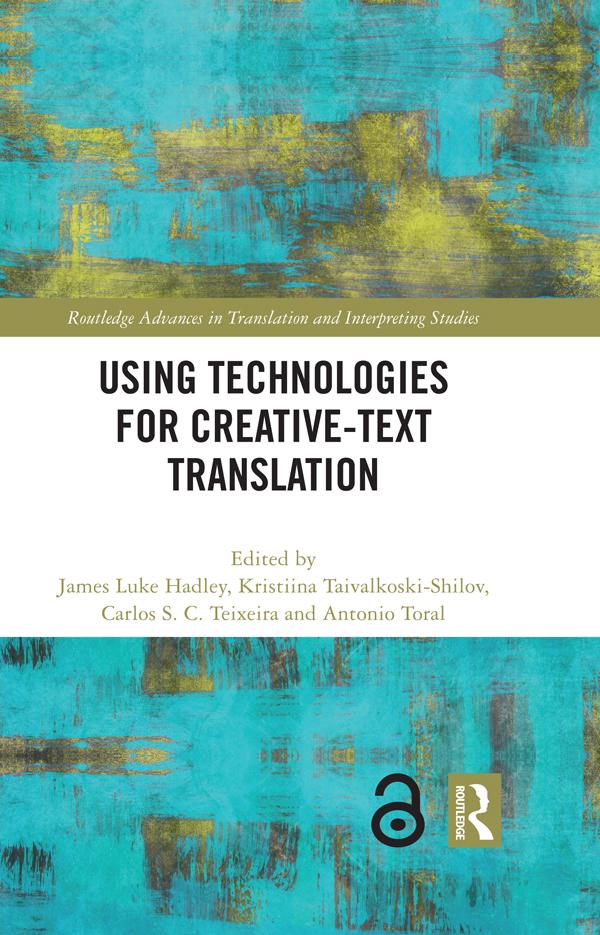
This collection reflects on the state of the art of research into the use of translation technologies in the translation of creative texts, encompassing literary texts but also extending beyond to cultural texts, and charts their development and paths for further research.
Bringing together perspectives from scholars across the discipline, the book considers recent trends and developments in technology that have spurred growing interest in the use of computer-aided translation (CAT) and machine translation (MT) tools in literary translation. Chapters examine the relationships between translators and these tools—the extent to which they already use such technologies, the challenges they face, and prevailing attitudes towards these tools—as well as the ethical implications of such technologies in translation practice. The volume gives special focus to drawing on examples with and beyond traditional literary genres to look to these technologies’ use in working with the larger group of creative texts, setting the stage for many future research opportunities.
The book will be of particular interest to students and scholars in translation studies, especially those with an interest in literary translation, translation technology, translation practice, and translation ethics.
Chapters 2 & 3 of this book are freely available as a downloadable Open Access PDF under a Creative Commons Attribution-Non Commercial-No Derivatives 4.0 license available at http://www.taylorfrancis.com
Betal enkelt med kort, Klarna, Apple Pay eller Google Pay. Ikke fornøyd? Du har alltid 14 dagers angrerett. Les mer i våre vilkår. Har du spørsmål, send oss en e-post på hello@memmo.org.
Memmo gjør det enklere å studere – uansett hvor du er i verden. Hos oss samler du pensumbøker og smarte studieverktøy på ett og samme sted: sammendrag, quizer, podkaster og flashcards. Og så Ted, din studiekompis som svarer på alt du lurer på. Over 50 000 studenter studerer allerede her – bygget for at du skal lære raskere og stresse mindre.