
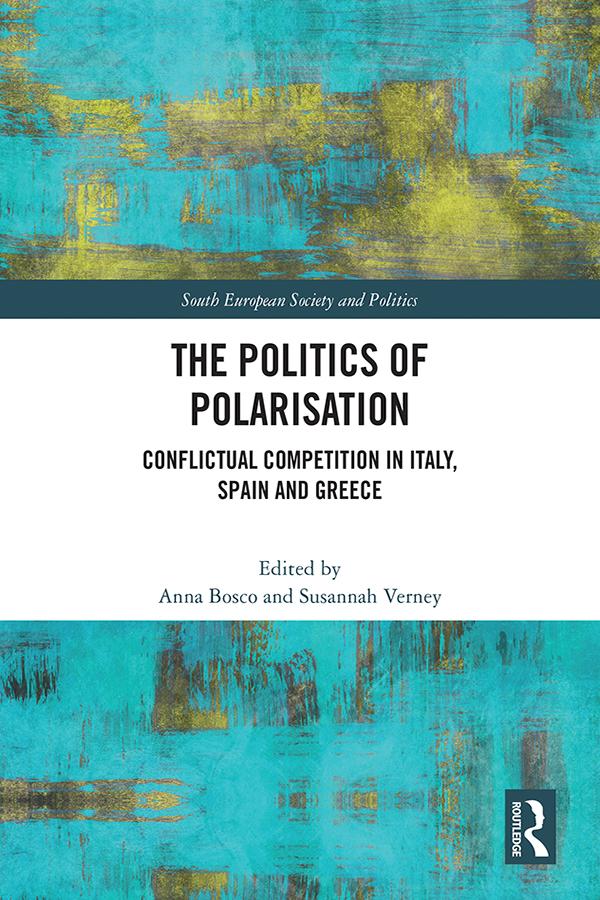
Focusing on Italy, Spain and Greece, this book explores the extent of polarisation, as well as its causes, characteristics and consequences. It investigates varied manifestations of polarised politics including leader polarisation, policy polarisation and affective polarisation as well as providing case studies of polarised elections taking place at multiple levels.
In recent years, polarisation has been a key feature of South European politics. Deep antagonism has moved party leaders against each other, hindered parliamentary and governmental cooperation, and triggered a cascade effect of harsh divisions among elites and citizens. Beyond the left-right axis, the chapters in this volume highlight multiple dimensions around which parties and voters polarise: the split around sovereign bailouts in Greece, the territorial cleavage in Spain, the divisions around immigration and European integration in Italy. This volume offers essential understanding of the specific features of polarisation in different national contexts and the consequences for political competition and government instability.
The chapters in this book were originally published as a special issue of South European Society and Politics.
Betal enkelt med kort, Klarna, Apple Pay eller Google Pay. Ikke fornøyd? Du har alltid 14 dagers angrerett. Les mer i våre vilkår. Har du spørsmål, send oss en e-post på hello@memmo.org.
Memmo gjør det enklere å studere – uansett hvor du er i verden. Hos oss samler du pensumbøker og smarte studieverktøy på ett og samme sted: sammendrag, quizer, podkaster og flashcards. Og så Ted, din studiekompis som svarer på alt du lurer på. Over 50 000 studenter studerer allerede her – bygget for at du skal lære raskere og stresse mindre.