
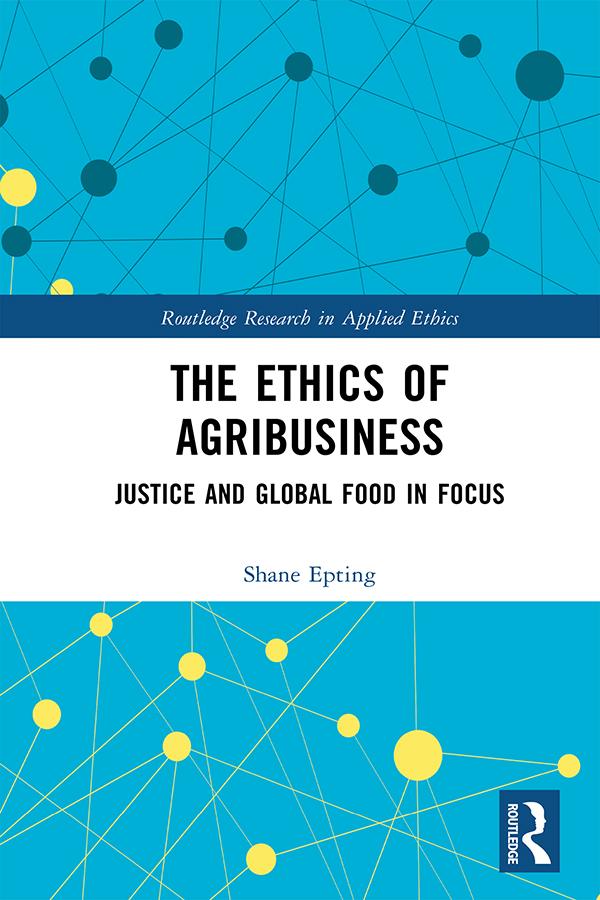
This book offers an original perspective on food supply chains. It argues that the ability to trade food on a global scale could be intrinsically good aside from any instrumental value that people gain from it.
While the author’s argument seems to counter wholesale anti-agribusiness views, it is consistent with the larger goals of food-justice movements. The author examines the structures of food supply chains, revealing the kinds of harm they help produce. They include slavery, abusive labor, geopolitical exploitation, ecological degradation, and public health impacts. Although the book argues that food supply chains can be collectively beneficial, eliminating their immoral features must hold steady as a continuous enterprise. Securing this outcome means that we go beyond critique. The final chapter advocates for the sustainable food label to address issues of food justice and food sovereignty.
The Ethics of Agribusiness will interest researchers and advanced students working in food ethics, environmental ethics, and agricultural ethics.
Betal enkelt med kort, Klarna, Apple Pay eller Google Pay. Ikke fornøyd? Du har alltid 14 dagers angrerett. Les mer i våre vilkår. Har du spørsmål, send oss en e-post på hello@memmo.org.
Memmo gjør det enklere å studere – uansett hvor du er i verden. Hos oss samler du pensumbøker og smarte studieverktøy på ett og samme sted: sammendrag, quizer, podkaster og flashcards. Og så Ted, din studiekompis som svarer på alt du lurer på. Over 50 000 studenter studerer allerede her – bygget for at du skal lære raskere og stresse mindre.