
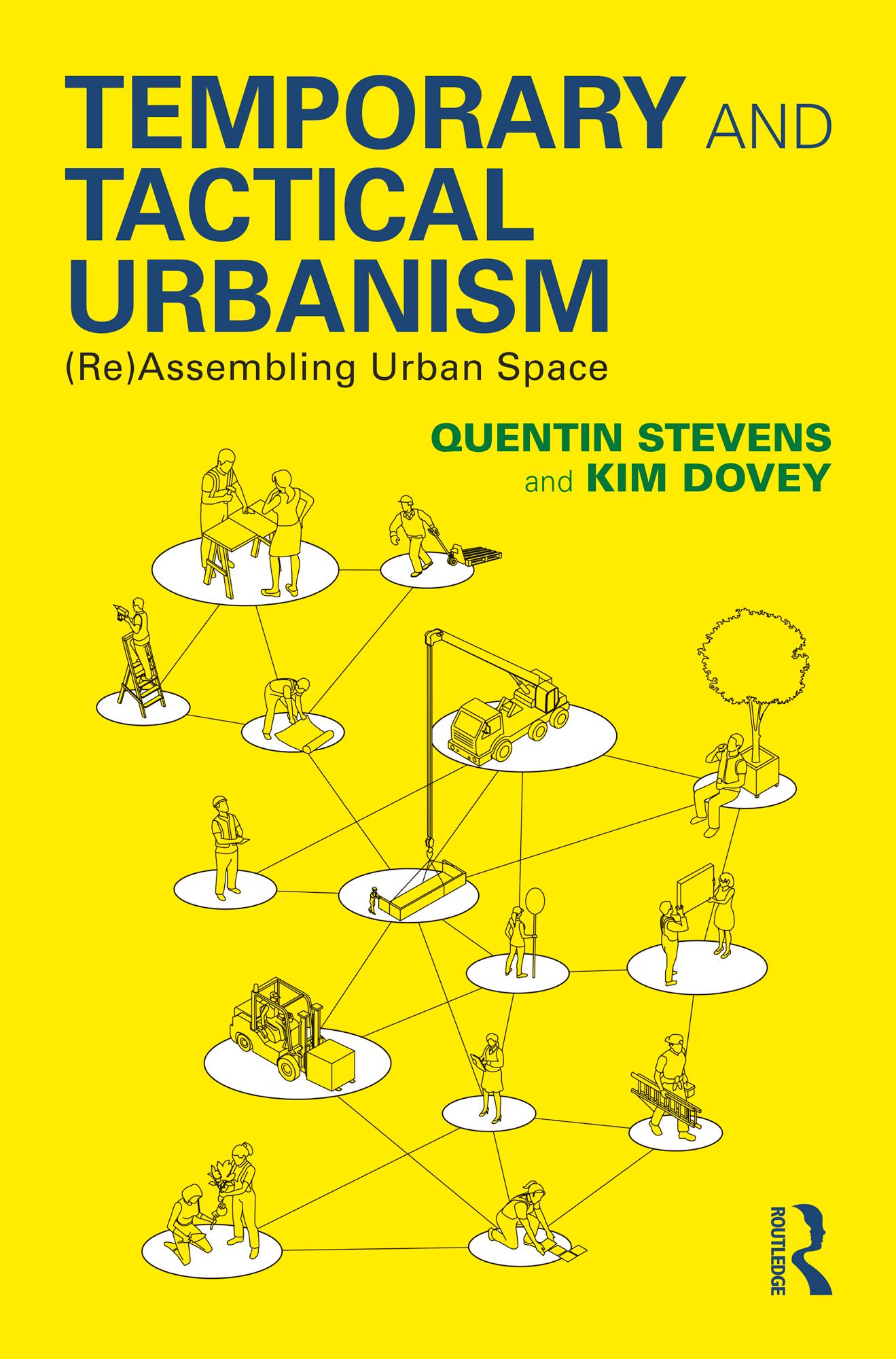
Temporary and Tactical Urbanism examines a key set of urban design strategies that have emerged in the twenty-first century. Such projects range from guerrilla gardens and bike lanes to more formalised temporary beaches and swimming pools, parklets, pop-up plazas and buildings and container towns.
These practices enable diverse forms of economic, social and artistic life that are usually repressed by the fixities of urban form and its management. This book takes a thematic approach to explore what the scope of this practice is, and understand why it has risen to prominence, how it works, who is involved, and what its implications are for the future of city design and planning. It critically examines the material, social, economic and political complexities that surround and enable these small, ephemeral urban interventions. It identifies their short-term and long-term implications for urban intensity, diversity, creativity and adaptability.
The book's insights into temporary and tactical urbanism have particular relevance in the context of the COVID-19 pandemic, which has highlighted both the need and the possibility of quickly transforming urban spaces worldwide. They also reveal significant lessons for the long-term planning and design of buildings, landscapes and cities.
Betal enkelt med kort, Klarna, Apple Pay eller Google Pay. Ikke fornøyd? Du har alltid 14 dagers angrerett. Les mer i våre vilkår. Har du spørsmål, send oss en e-post på hello@memmo.org.
Memmo gjør det enklere å studere – uansett hvor du er i verden. Hos oss samler du pensumbøker og smarte studieverktøy på ett og samme sted: sammendrag, quizer, podkaster og flashcards. Og så Ted, din studiekompis som svarer på alt du lurer på. Over 50 000 studenter studerer allerede her – bygget for at du skal lære raskere og stresse mindre.