
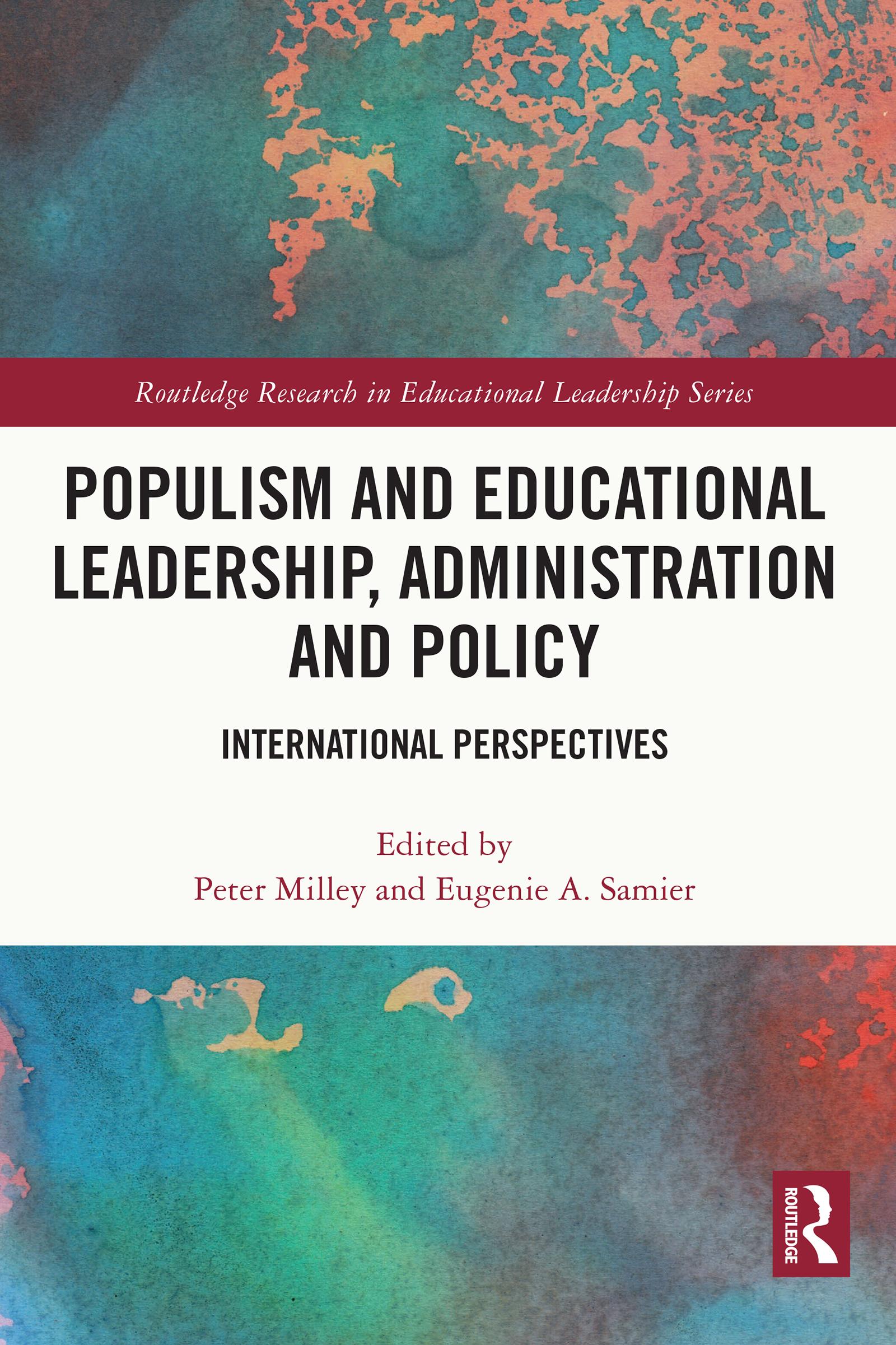
This book explores the theoretical and practical implications of a global resurgence of populism on educational leadership. Drawing together a wide range of international authors, it examines how socio-cultural and political populist developments affect educational policies, organisations, and administration around the world.
The collection addresses the forms and meanings of populism and examines their influence on education systems and institutions. It includes theoretical perspectives and rich examples from Australia, Brazil, Canada, Finland, France, Hungary, Nicaragua, the UK, and the US, exploring the complex influences and effects of populism on education policy, politics, and institutions in these countries. These include attacks on initiatives promoting equity and inclusion, the repression of academic freedom, the erosion of institutional autonomy from partisan political direction, and the suppression of evidence and expertise in policy and curriculum development.
With its international and multidisciplinary outlook, this book will be highly relevant reading for researchers, scholars, and students in the fields of educational leadership and administration, higher education, and education policy, as well as those interested in the contemporary manifestations of populism on education.
Betal enkelt med kort, Klarna, Apple Pay eller Google Pay. Ikke fornøyd? Du har alltid 14 dagers angrerett. Les mer i våre vilkår. Har du spørsmål, send oss en e-post på hello@memmo.org.
Memmo gjør det enklere å studere – uansett hvor du er i verden. Hos oss samler du pensumbøker og smarte studieverktøy på ett og samme sted: sammendrag, quizer, podkaster og flashcards. Og så Ted, din studiekompis som svarer på alt du lurer på. Over 50 000 studenter studerer allerede her – bygget for at du skal lære raskere og stresse mindre.