
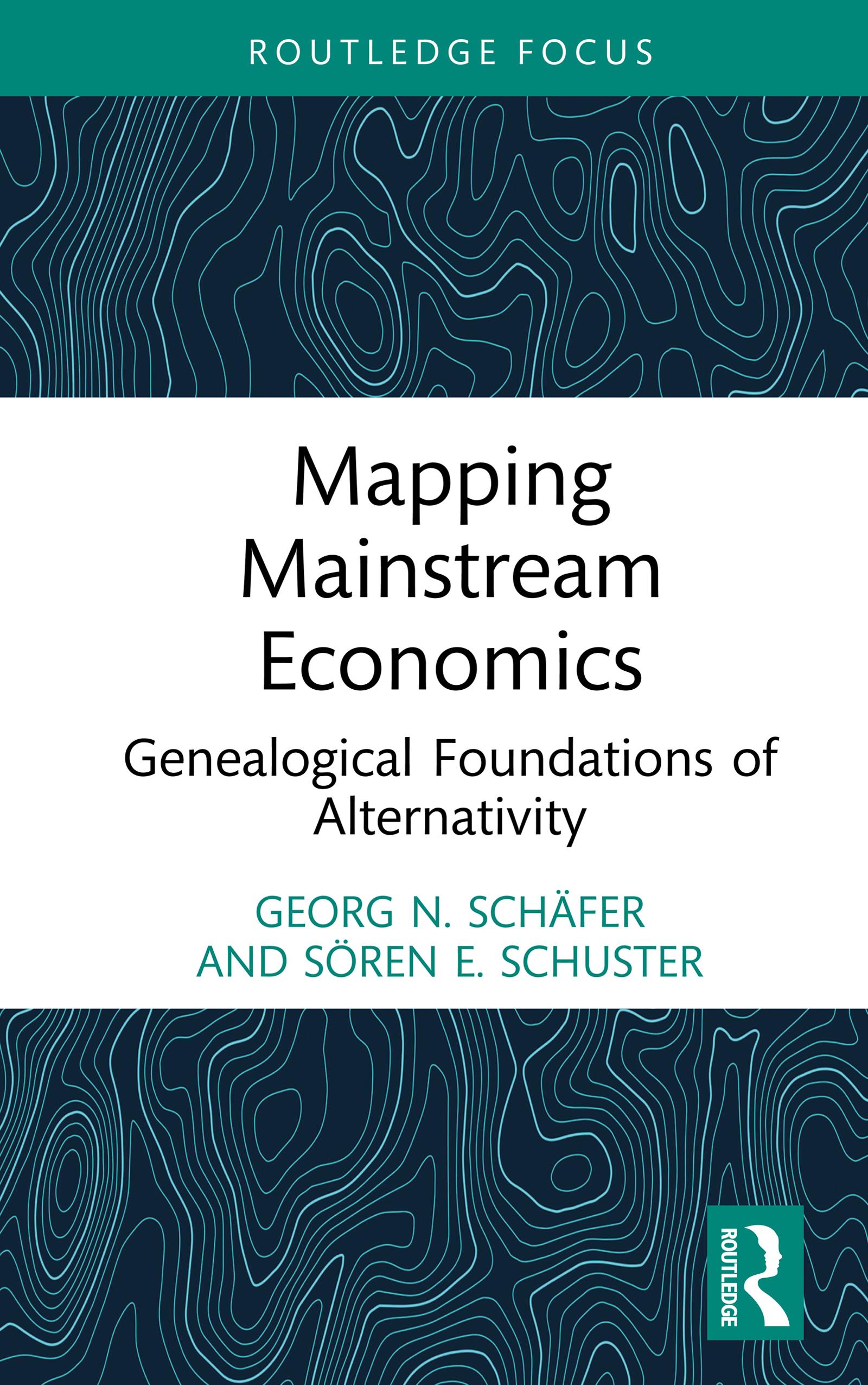
Mapping Mainstream Economics: Genealogical Foundations of Alternativity seeks to establish a definition of the mainstream economics, and by extension the alternatives to it, by adopting a genealogical approach: tracing the methodological development of the economic mainstream through its ancestry, which allows for a definition of the mainstream that is separate from politically charged categories or gridlocked academic arguments between received schools of thought.
The book follows the evolution of the economic mainstream through four major transformations of the discipline: from political to analytical economics, debates around a logical empiricist economics, the consolidation of neoclassical economics, and the recent expansion of the mainstream. For each of these steps, the key point of departure is explored, illustrated through the work of leading authors at the time. Thus, the book draws on recent research from the history of economic thought and debates the crucial role of historic concepts of economics for alternativity in the field. To put the approach into practice, it examines the relation between today’s mainstream economics and two of its alternatives: ecological economics and degrowth. Finally, the book reflects on recent exciting developments in the discourse on alternativity and sheds light on some distant relatives of today’s mainstream. This book marks a significant contribution to the literature on the debates around the state and nature of mainstream, alternative, and heterodox economics.
Betal enkelt med kort, Klarna, Apple Pay eller Google Pay. Ikke fornøyd? Du har alltid 14 dagers angrerett. Les mer i våre vilkår. Har du spørsmål, send oss en e-post på hello@memmo.org.
Memmo gjør det enklere å studere – uansett hvor du er i verden. Hos oss samler du pensumbøker og smarte studieverktøy på ett og samme sted: sammendrag, quizer, podkaster og flashcards. Og så Ted, din studiekompis som svarer på alt du lurer på. Over 50 000 studenter studerer allerede her – bygget for at du skal lære raskere og stresse mindre.