
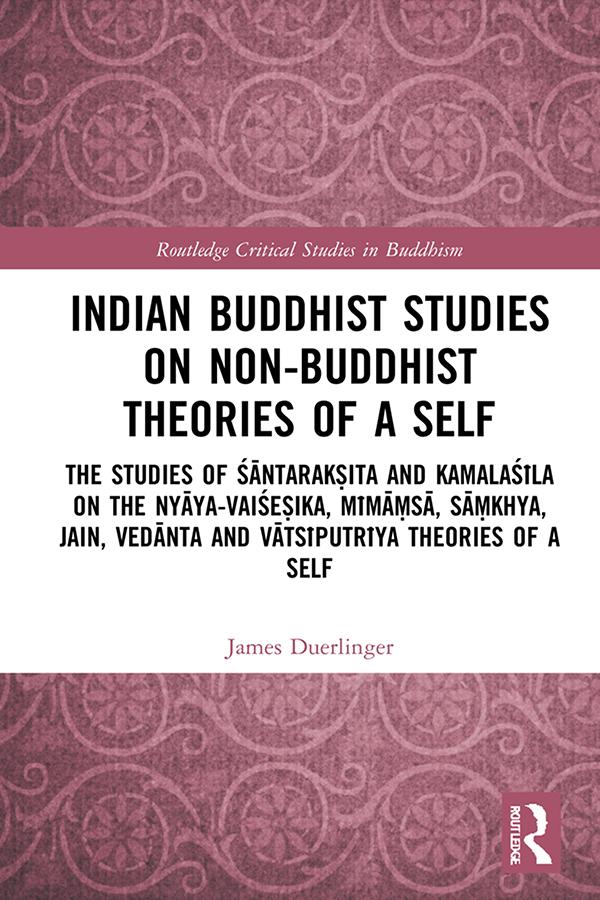
This book addresses prominent views on the nature of the self in Indian philosophical traditions and presents Buddhist critiques of those conceptions through the translation and commentary on Śāntarakṣita’s chapter in the Tattvasaṃgraha on theories of a self and Kamala-śīla’s commentary on it in his Tattvasaṃgrahapañjikā.
The book is comprised of an introduction presenting the theories of a self in the Indian Buddhist Middle Way philosophies and in the different philosophical schools Śāntarakṣita and Kamalaśīla study and offers a background for the translation. The detailed translation that follows reveals the theories of a self that are explained in the philosophical schools in India called the Nyāya-Vaiśeṣika, Mīmāṃsā, Sāṃkhya, Jain, Advaita Vedanta, and Vātsīputrīya. It is complemented by a thorough commentary by the author which brings the text to light for a modern audience.
A useful contribution to Indian philosophy and global philosophy, this book will be of interest to researchers in the fields of Philosophy, Religious Studies and Buddhist Studies.
Betal enkelt med kort, Klarna, Apple Pay eller Google Pay. Ikke fornøyd? Du har alltid 14 dagers angrerett. Les mer i våre vilkår. Har du spørsmål, send oss en e-post på hello@memmo.org.
Memmo gjør det enklere å studere – uansett hvor du er i verden. Hos oss samler du pensumbøker og smarte studieverktøy på ett og samme sted: sammendrag, quizer, podkaster og flashcards. Og så Ted, din studiekompis som svarer på alt du lurer på. Over 50 000 studenter studerer allerede her – bygget for at du skal lære raskere og stresse mindre.