
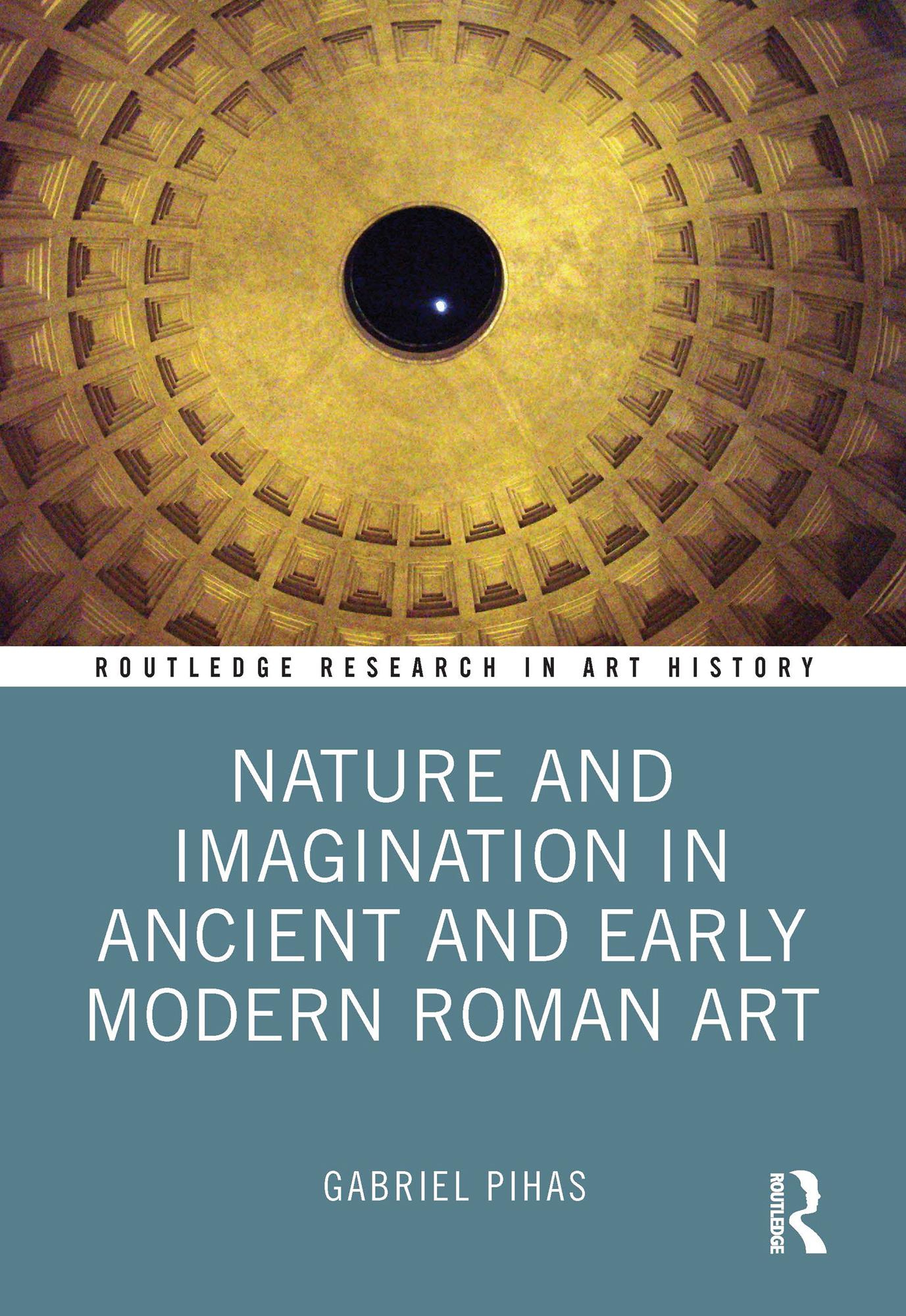
This volume uses the art of Rome to help us understand the radical historical break between the fundamental ancient pre-supposition that there is a natural world or cosmos situating human life, and the equally fundamental modern emphasis on human imagination and its creative power.
Rome’s unique art history reveals a different side of the battle between ancients and moderns than that usually raised as an issue in the history of science and philosophy. The book traces the idea of a cosmos in pre-modern art in Rome, from the reception of Greek art in the Roman republic to the construction of the Pantheon, to early Christian art and architecture. It then sketches the disappearance of the presupposition of a cosmos in the High Renaissance and Baroque periods, as creativity became a new ideal. Through discussions of the art and architecture that defines proto-modern Rome— from Michelangelo’s terribilita’ in the Sistine Chapel, Caravaggio’s realism, Baroque illusionism, the infinities of Borromini’s architecture, to the Grand Tour’s representations of ruins— through an interpretation of such major issues and works, this book shows how modern art liberates us while leaving us feeling estranged from our grounding in the natural world.
The book will be of interest to scholars working in art history, architectural history, classics, philosophy, and early modern history and culture.
Betal enkelt med kort, Klarna, Apple Pay eller Google Pay. Ikke fornøyd? Du har alltid 14 dagers angrerett. Les mer i våre vilkår. Har du spørsmål, send oss en e-post på hello@memmo.org.
Memmo gjør det enklere å studere – uansett hvor du er i verden. Hos oss samler du pensumbøker og smarte studieverktøy på ett og samme sted: sammendrag, quizer, podkaster og flashcards. Og så Ted, din studiekompis som svarer på alt du lurer på. Over 50 000 studenter studerer allerede her – bygget for at du skal lære raskere og stresse mindre.