
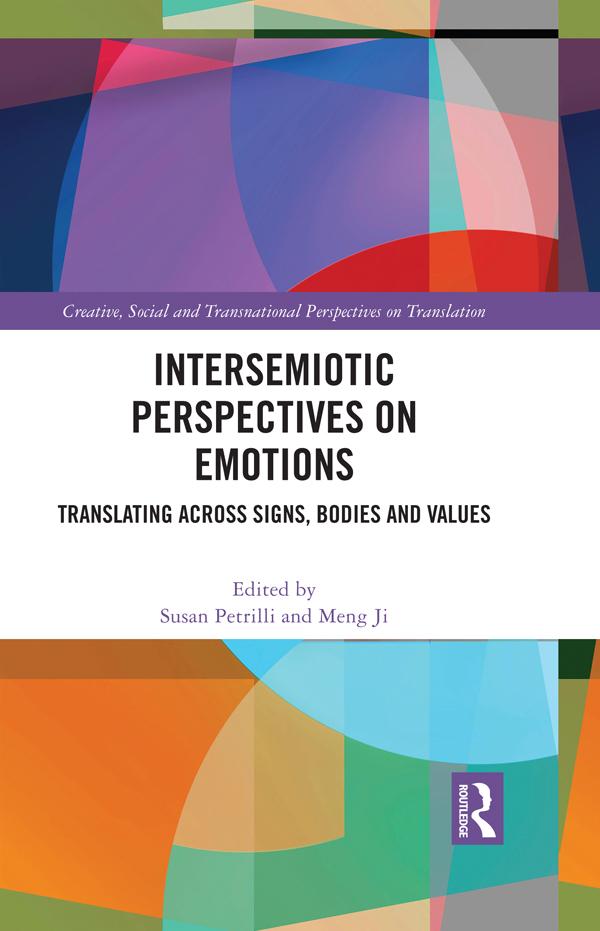
This edited volume explores emotion and its translations through the global world from a variety of different perspectives, as a personal, socio- cultural, ideological, ethical and political, even business investment in the latest phases of globalisation.
Emotions are powerful in engaging or disengaging individuals, communities, the masses, peoples and nations with distinct linguistic and cultural backgrounds for good, but also for evil. All depends on how emotions are interpreted, that is, translated in “words” or in “facts”, in any case in “signs”. Semiotic reflection on emotions and their interpretation/translation is thus of essential importance. An adequate understanding of emotional phenomena and their complexities calls for different views which together reveal and illustrate inconsistencies in our modern life.
The contributors argue that an investigation of types of emotional translation – linguistic and non- linguistic, audio-visual, theatrical, literary, racial, legal, architectural, political, and so forth – can contribute to a better understanding of emotions and how they are exploited to engender injustice, unfairness, absurdity in contemporary life. Nonetheless, emotions are also exploited and oriented – and this is the intent of our authors – to favour the development of sustainable multicultural societies and facilitate living together.
A major reference for students and scholars in translation, semiotics, language and cultural studies around the world.
Betal enkelt med kort, Klarna, Apple Pay eller Google Pay. Ikke fornøyd? Du har alltid 14 dagers angrerett. Les mer i våre vilkår. Har du spørsmål, send oss en e-post på hello@memmo.org.
Memmo gjør det enklere å studere – uansett hvor du er i verden. Hos oss samler du pensumbøker og smarte studieverktøy på ett og samme sted: sammendrag, quizer, podkaster og flashcards. Og så Ted, din studiekompis som svarer på alt du lurer på. Over 50 000 studenter studerer allerede her – bygget for at du skal lære raskere og stresse mindre.