
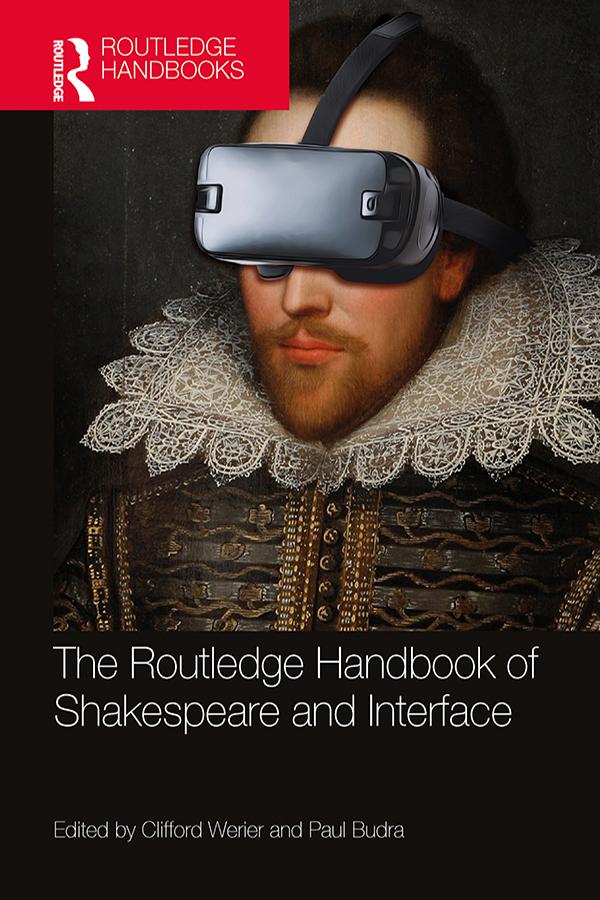
The Routledge Handbook of Shakespeare and Interface provides a ground-breaking investigation into media-specific spaces where Shakespeare is experienced. While such operations may be largely invisible to the average reader or viewer, the interface properties of books, screens, and stages profoundly mediate our cognitive engagement with Shakespeare.
This volume considers contemporary debates and questions including how mobile devices mediate the experience of Shakespeare; the impact of rapidly evolving virtual reality technologies and the interface architectures which condition Shakespearean plays; and how design elements of hypertext, menus, and screen navigation operate within internet Shakespeare spaces. Charting new frontiers, this diverse collection delivers fresh insight into human–computer interaction and user-experience theory, cognitive ecology, and critical approaches such as historical phenomenology. This volume also highlights the application of media and interface design theory to questions related to the medium of the play and its crucial interface with the body and mind.
Betal enkelt med kort, Klarna, Apple Pay eller Google Pay. Ikke fornøyd? Du har alltid 14 dagers angrerett. Les mer i våre vilkår. Har du spørsmål, send oss en e-post på hello@memmo.org.
Memmo gjør det enklere å studere – uansett hvor du er i verden. Hos oss samler du pensumbøker og smarte studieverktøy på ett og samme sted: sammendrag, quizer, podkaster og flashcards. Og så Ted, din studiekompis som svarer på alt du lurer på. Over 50 000 studenter studerer allerede her – bygget for at du skal lære raskere og stresse mindre.