
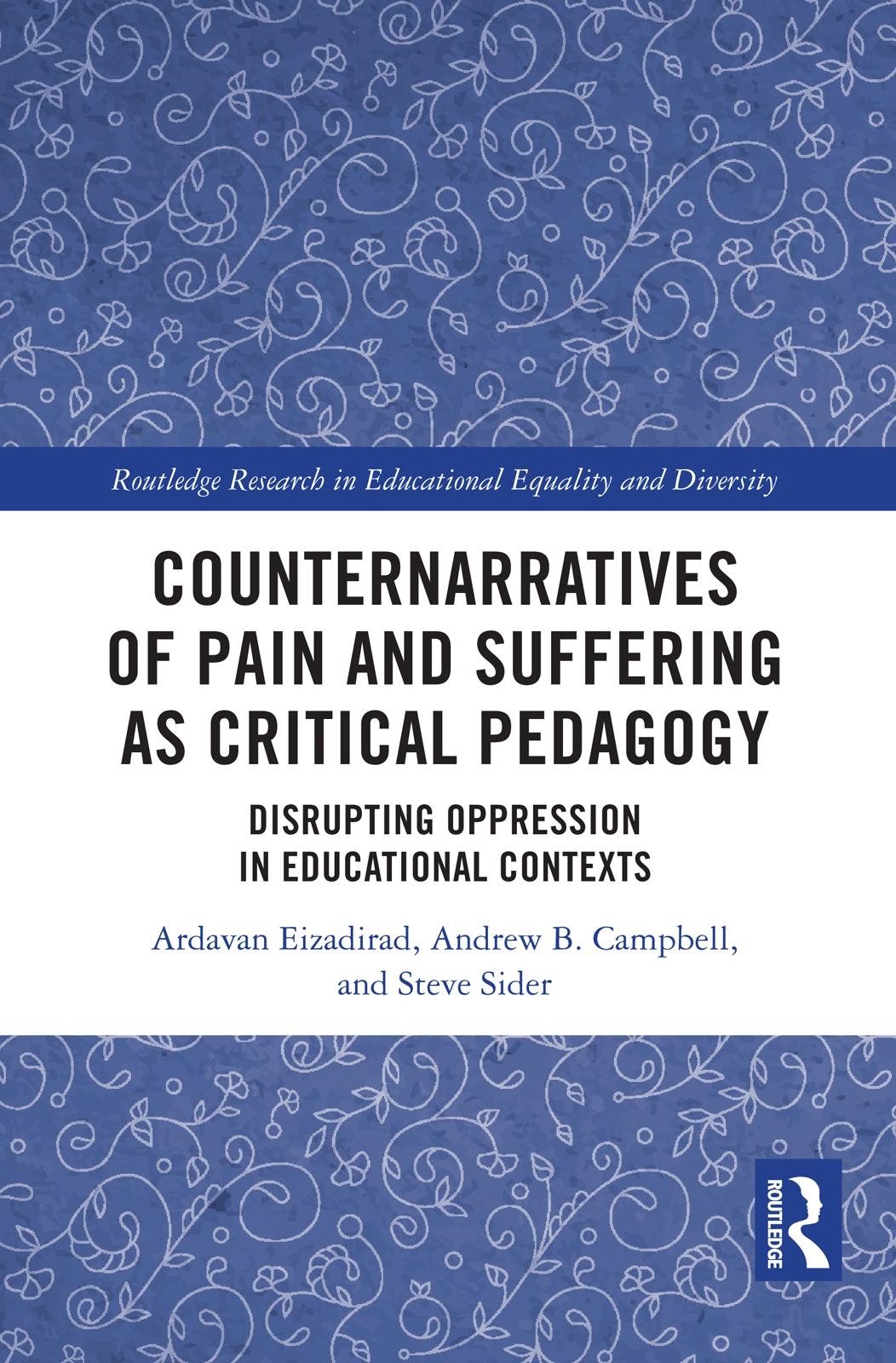
Foregrounding diverse lived experiences and non-dominant forms of knowledge, this edited volume showcases ways in which narrating and sharing stories of pain and suffering can be engaged as critical pedagogy to challenge oppression and inequity in educational contexts.
The volume illustrates the need to consider both the act of narrating and the experience of bearing witness to narration to harness the full transformative potentials of counternarratives in disrupting oppressive practices. Chapters are divided into three parts - "Telling and Reliving Trauma as Pedagogy," "Pedagogies of Overcoming Silence," and "Forgetting as Pedagogy" - illustrating a range of relational pedagogical and methodological approaches, including journaling, poetry, and arts-based narrative inquiry.
The authors make the argument that the language of pain and suffering is universal, hence its potential as critical pedagogy for transformative and therapeutic teaching and learning. Readers are encouraged to reflect on their own lived experiences to constructively engage with their pain, suffering, and trauma. Focusing on trauma-informed non-hegemonic storytelling and transformative pedagogies, this volume will be of interest to students, faculty, scholars, and community members with an interest in advancing anti-oppressive and social justice education.
Betal enkelt med kort, Klarna, Apple Pay eller Google Pay. Ikke fornøyd? Du har alltid 14 dagers angrerett. Les mer i våre vilkår. Har du spørsmål, send oss en e-post på hello@memmo.org.
Memmo gjør det enklere å studere – uansett hvor du er i verden. Hos oss samler du pensumbøker og smarte studieverktøy på ett og samme sted: sammendrag, quizer, podkaster og flashcards. Og så Ted, din studiekompis som svarer på alt du lurer på. Over 50 000 studenter studerer allerede her – bygget for at du skal lære raskere og stresse mindre.