
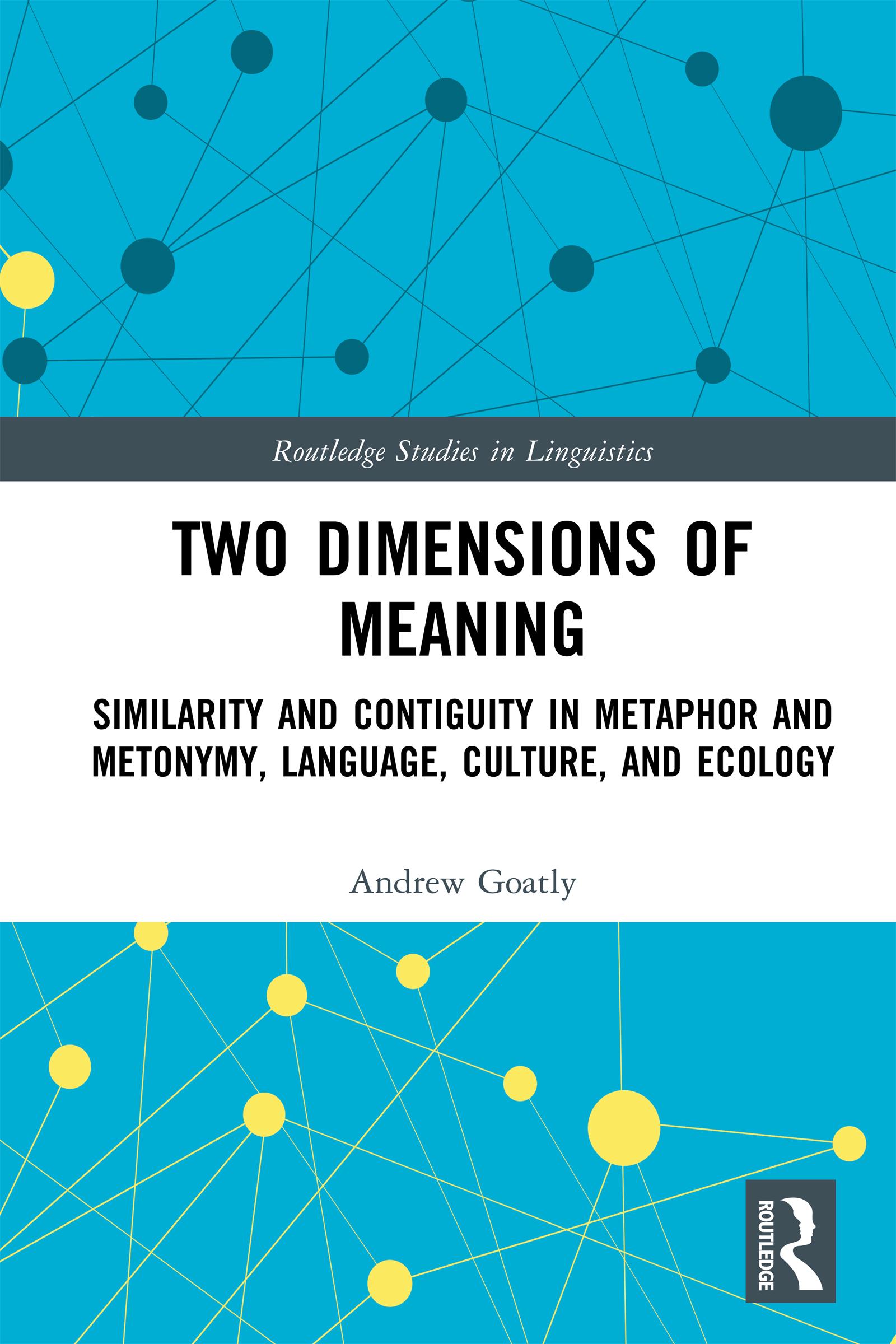
The book takes as its point of departure the notion that similarity and contiguity are fundamental to meaning. It shows how they manifest in oral, literate, print, and internet cultures, in language acquisition, pragmatics, dialogism, classification, the semantics of grammar, literature, and, most centrally, metaphor and metonymy.
The book situates these reflections on similarity and contiguity in the interplay of language, cognition, culture, and ideology, and within broader debates around such issues as capitalism, biodiversity, and human control over nature. Positing that while similarity-focused systems can be reductive, and have therefore been contested in social science, philosophy, and poetry, and contiguity-based ones might disregard useful statistical and scientific evidence, Andrew Goatly argues for the need for humans to entertain diverse metaphors, models, and languages as ways of understanding and acting on our world. The volume also considers the cognitive connections between the similarity-contiguity duality and the noun-verb distinction.
This innovative volume will appeal to scholars involved in wider debates on meaning, within the fields of cognitive semantics, pragmatics, metaphor and metonymy theory, critical discourse analysis, and the philosophy of language. Equally, the motivated and intelligent general reader, interested in language, philosophy, culture, and ecology, should find the later chapters of the book fascinating, and the earlier technical chapters accessible.
Betal enkelt med kort, Klarna, Apple Pay eller Google Pay. Ikke fornøyd? Du har alltid 14 dagers angrerett. Les mer i våre vilkår. Har du spørsmål, send oss en e-post på hello@memmo.org.
Memmo gjør det enklere å studere – uansett hvor du er i verden. Hos oss samler du pensumbøker og smarte studieverktøy på ett og samme sted: sammendrag, quizer, podkaster og flashcards. Og så Ted, din studiekompis som svarer på alt du lurer på. Over 50 000 studenter studerer allerede her – bygget for at du skal lære raskere og stresse mindre.