
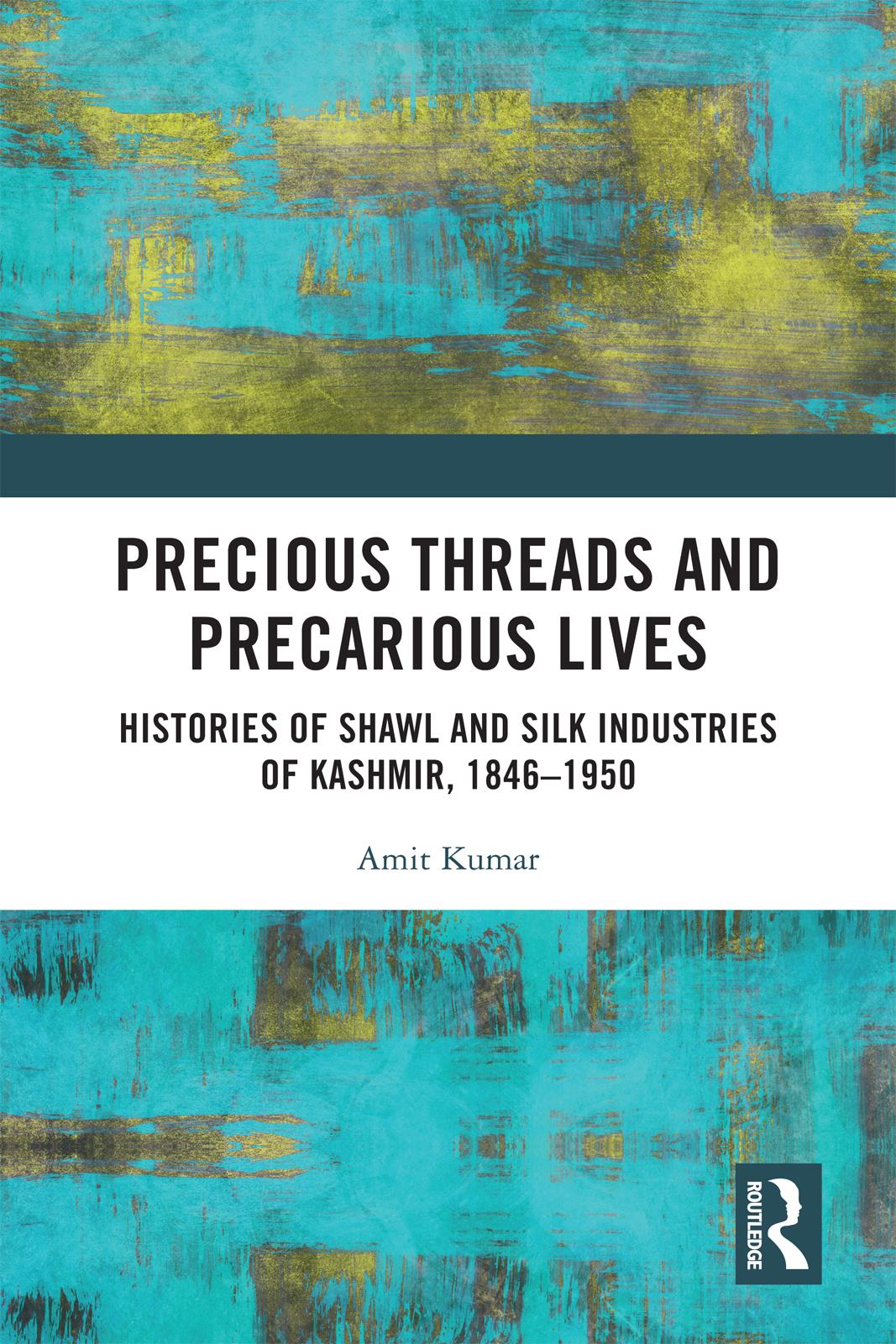
This book studies the hitherto unexplored history of the shawl and silk industries of the himalyan state of Jammu and Kashmir, India. It focuses on the three processes – production, circulation, and consumption – of the textile industry of the region to highlight its socio-economic and political importance in 19th- and 20th-century Kashmir. Using the micro-history approach, it studies the sites of production – the home looms or the small karkhana – efficiency of labour, and innovations by weavers in their techniques to suit the demands of the market. It also locates the impact colonialism had on transforming the labour economy in the Kashmir textile industry. Further, it compares these karkhanas with the Scottish factories or home looms to illuminate many sites of difference and comparison between the working styles and technologies.
Mapping a history as complex as the weave on the finest Kashmiri shawl, this book brings to life the interface between culture, commodity, and colonial networks. It will be of great interest to scholars and researchers of South Asian history, colonial and imperial history, cultural studies, and economic and labour history.
Betal enkelt med kort, Klarna, Apple Pay eller Google Pay. Ikke fornøyd? Du har alltid 14 dagers angrerett. Les mer i våre vilkår. Har du spørsmål, send oss en e-post på hello@memmo.org.
Memmo gjør det enklere å studere – uansett hvor du er i verden. Hos oss samler du pensumbøker og smarte studieverktøy på ett og samme sted: sammendrag, quizer, podkaster og flashcards. Og så Ted, din studiekompis som svarer på alt du lurer på. Over 50 000 studenter studerer allerede her – bygget for at du skal lære raskere og stresse mindre.