
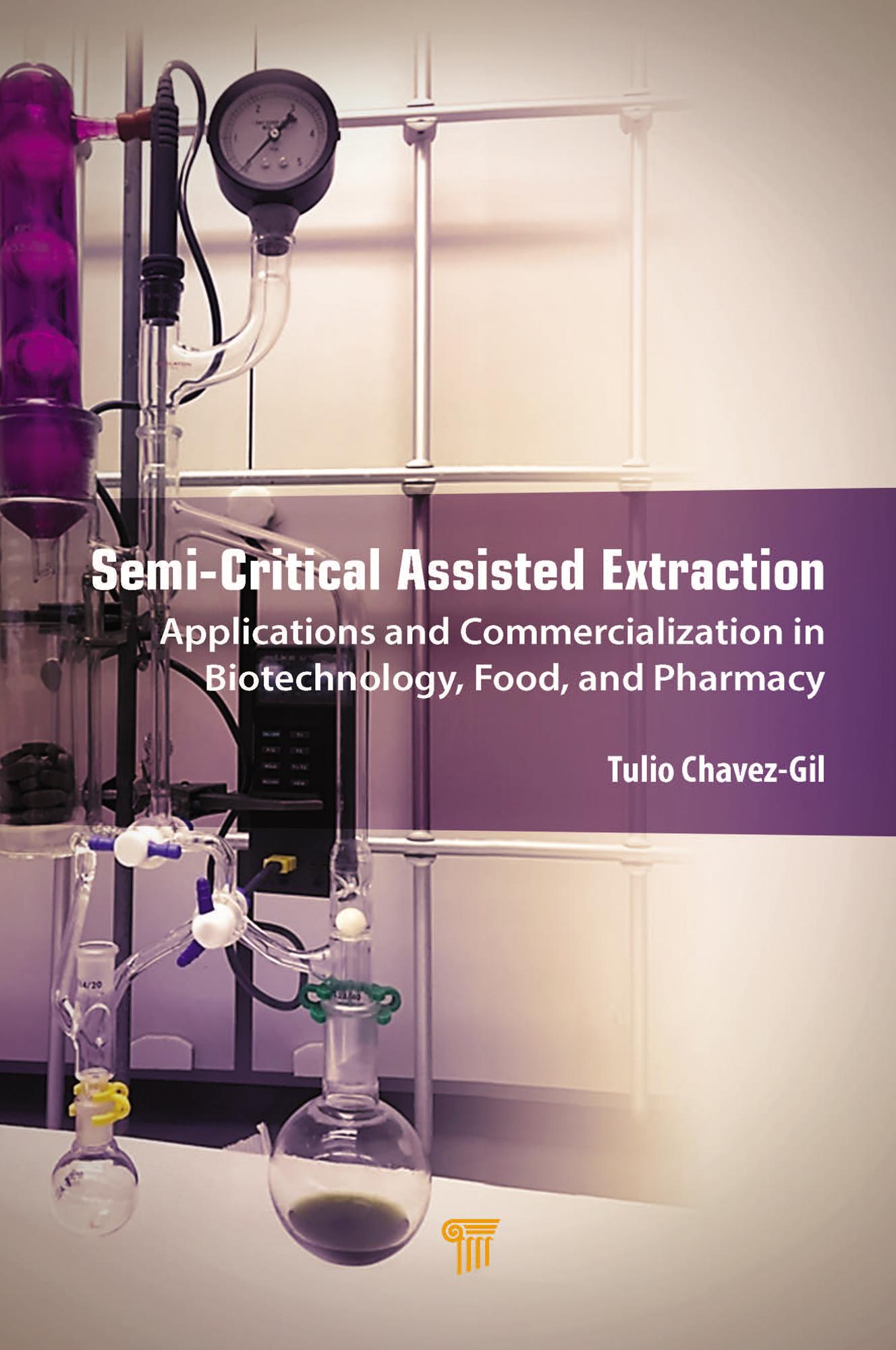
In the past three decades, great efforts have been made to develop new methods for the extraction of natural molecules. Improved extraction technologies have garnered scientific interest as they have helped in understanding how mass and energy transfer exhibited for a solvent and solute during a chemical extraction can be used as physical chemistry parameters, leading to the modeling and design of new advantageous equipment. In situ data collected during a chemically assisted experiment is useful in a variety of scientific and technological applications, especially in generating extractors that are safer, more efficient, and offer true opportunities to scale them up in a wide range of materials (among stainless steel).
This book compiles empirical and traditional extraction methods applied to cutting-edge critical extraction research in the areas of food science, phytochemistry, pharmacy, fragrance, cosmetology, and folk medicine. It presents extraction technology as an interdisciplinary area that applies the principles of physics and chemistry as tools to develop engineered models for the construction of more advanced extraction devices. It includes examples and problems related to data treatment in normal laboratory research work that will facilitate undergraduate- and graduate-level students, as well as operators working in the area, in solving real problems.
Betal enkelt med kort, Klarna, Apple Pay eller Google Pay. Ikke fornøyd? Du har alltid 14 dagers angrerett. Les mer i våre vilkår. Har du spørsmål, send oss en e-post på hello@memmo.org.
Memmo gjør det enklere å studere – uansett hvor du er i verden. Hos oss samler du pensumbøker og smarte studieverktøy på ett og samme sted: sammendrag, quizer, podkaster og flashcards. Og så Ted, din studiekompis som svarer på alt du lurer på. Over 50 000 studenter studerer allerede her – bygget for at du skal lære raskere og stresse mindre.