
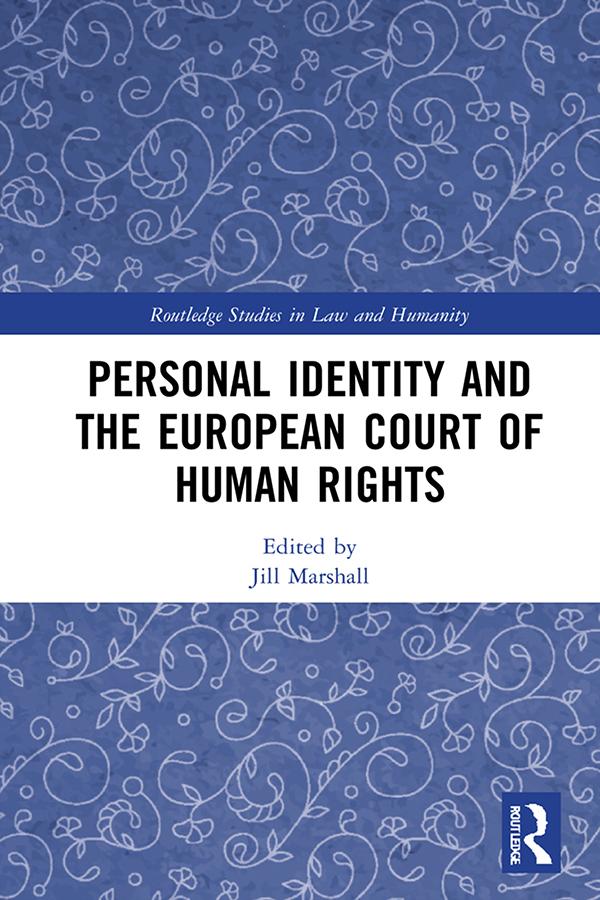
In this new and burgeoning field in legal and human rights thought, this edited collection explores, by reference to applied philosophy and case law, how the European Court of Human Rights (ECtHR) has developed and presented a right to personal identity, largely through interpretation of Article 8 of the European Convention on Human Rights. Divided into three parts, the collection interrogates: firstly, the construction of personal identity rights at the ECtHR; secondly, whose identity rights are protected; and thirdly, the limits of identity rights. The collection is the first in the Routledge Studies in Law and Humanity series. Contributions from nine leading and emerging legal scholars from the UK, Ireland and continental Europe explore how the right has developed, rights to identity and marriage, LGBTI+, persons with disabilities, religious and cultural issues and critical perspectives on the social construction and framing of the right. The collection is primarily aimed at scholars and advanced students, particularly of human rights law and its theory, Jurisprudence and Philosophy of Law, and those interested in ECtHR jurisprudence, and those interested in the connection between theories of inclusion, belonging and rights, including human rights lawyers.
Betal enkelt med kort, Klarna, Apple Pay eller Google Pay. Ikke fornøyd? Du har alltid 14 dagers angrerett. Les mer i våre vilkår. Har du spørsmål, send oss en e-post på hello@memmo.org.
Memmo gjør det enklere å studere – uansett hvor du er i verden. Hos oss samler du pensumbøker og smarte studieverktøy på ett og samme sted: sammendrag, quizer, podkaster og flashcards. Og så Ted, din studiekompis som svarer på alt du lurer på. Over 50 000 studenter studerer allerede her – bygget for at du skal lære raskere og stresse mindre.
Du vil kanskje også like
Kjøp boken0