
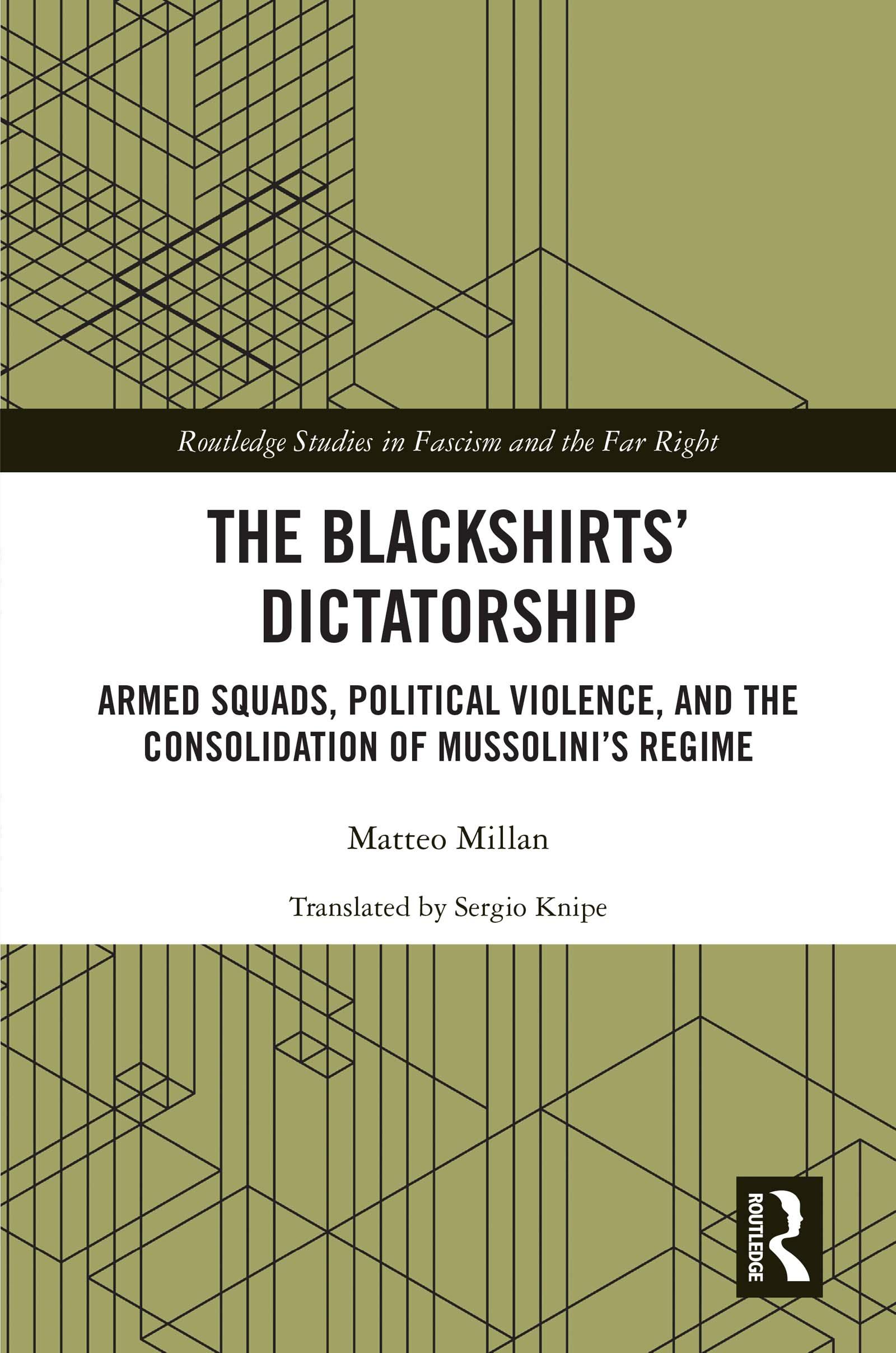
On October 1922 Mussolini became head of the Italian government, a situation that would last for twenty years. That power was obtained was largely due to the widespread violence perpetrated by blackshirts throughout Italy (squadristi). Violence however did not end. Old and new blackshirts played a major role in making Italy a fascist country. Contrary to the claims of many scholars that have depicted blackshirts after the March on Rome only as troublemakers for Mussolini, the book shows that they played a crucial role in establishing a full and totalitarian dictatorship. Squadristi carried out processes of fascistisation, crushed opponents and convinced bystanders and dubious people, consolidating fascist power in many aspects of social, political and even intimate life. By resorting to new archives, a long chronology and a focus on individual perspectives, this book gives voice to the perpetrators of fascist violence and offers new insights into the lives of squadristi throughout the dictatorship, outlining their beliefs, outlooks and expectations. The book shows that post-1922 squadrismo was not a side effect of Fascism's twenty-year history. On the contrary, violence represents one of the essential components of any definition of Italian Fascism.
Betal enkelt med kort, Klarna, Apple Pay eller Google Pay. Ikke fornøyd? Du har alltid 14 dagers angrerett. Les mer i våre vilkår. Har du spørsmål, send oss en e-post på hello@memmo.org.
Memmo gjør det enklere å studere – uansett hvor du er i verden. Hos oss samler du pensumbøker og smarte studieverktøy på ett og samme sted: sammendrag, quizer, podkaster og flashcards. Og så Ted, din studiekompis som svarer på alt du lurer på. Over 50 000 studenter studerer allerede her – bygget for at du skal lære raskere og stresse mindre.