
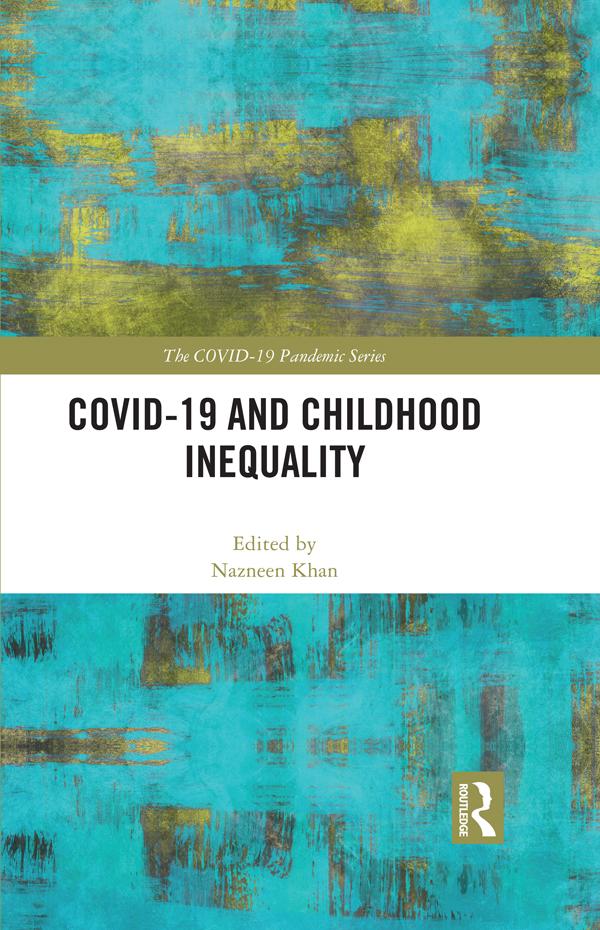
The COVID-19 pandemic and the global response to it have disrupted the daily lives of children in innumerable ways. These impacts have unfolded unevenly, as nation, race, class, sexuality, citizenship status, disability, housing stability, and other dimensions of power have shaped the ways in which children and youth have experienced the pandemic. COVID-19 and Childhood Inequality brings together a multidisciplinary group of child and youth scholars and practitioners who highlight the mechanisms and practices through which the COVID-19 pandemic has both further marginalized children and exacerbated childhood disparities.
Featuring an introduction and ten chapters, the volume "unmasks" childhood inequalities through innovative, real-time research on children’s pandemic lives and experiences, situating that research within established child and youth literatures. Using multiple methods and theoretical perspectives, the work provides a robust, multidisciplinary, and holistic approach to understanding childhood inequality as it intersects with the COVID-19 pandemic, particularly in the USA. The chapters also ask us to consider pathways toward resilience, offering recommendations and practices for challenging the inequities that have deepened since the entrée of SARS-CoV-2 onto the global stage.
Ultimately, the work provides a timely and vital resource for childhood and youth educators, practitioners, organizers, policymakers, and researchers. An illuminating volume, each chapter brings a much-needed focus on the varied and exponential impacts of COVID-19 on the lives of children and youth.
Betal enkelt med kort, Klarna, Apple Pay eller Google Pay. Ikke fornøyd? Du har alltid 14 dagers angrerett. Les mer i våre vilkår. Har du spørsmål, send oss en e-post på hello@memmo.org.
Memmo gjør det enklere å studere – uansett hvor du er i verden. Hos oss samler du pensumbøker og smarte studieverktøy på ett og samme sted: sammendrag, quizer, podkaster og flashcards. Og så Ted, din studiekompis som svarer på alt du lurer på. Over 50 000 studenter studerer allerede her – bygget for at du skal lære raskere og stresse mindre.