
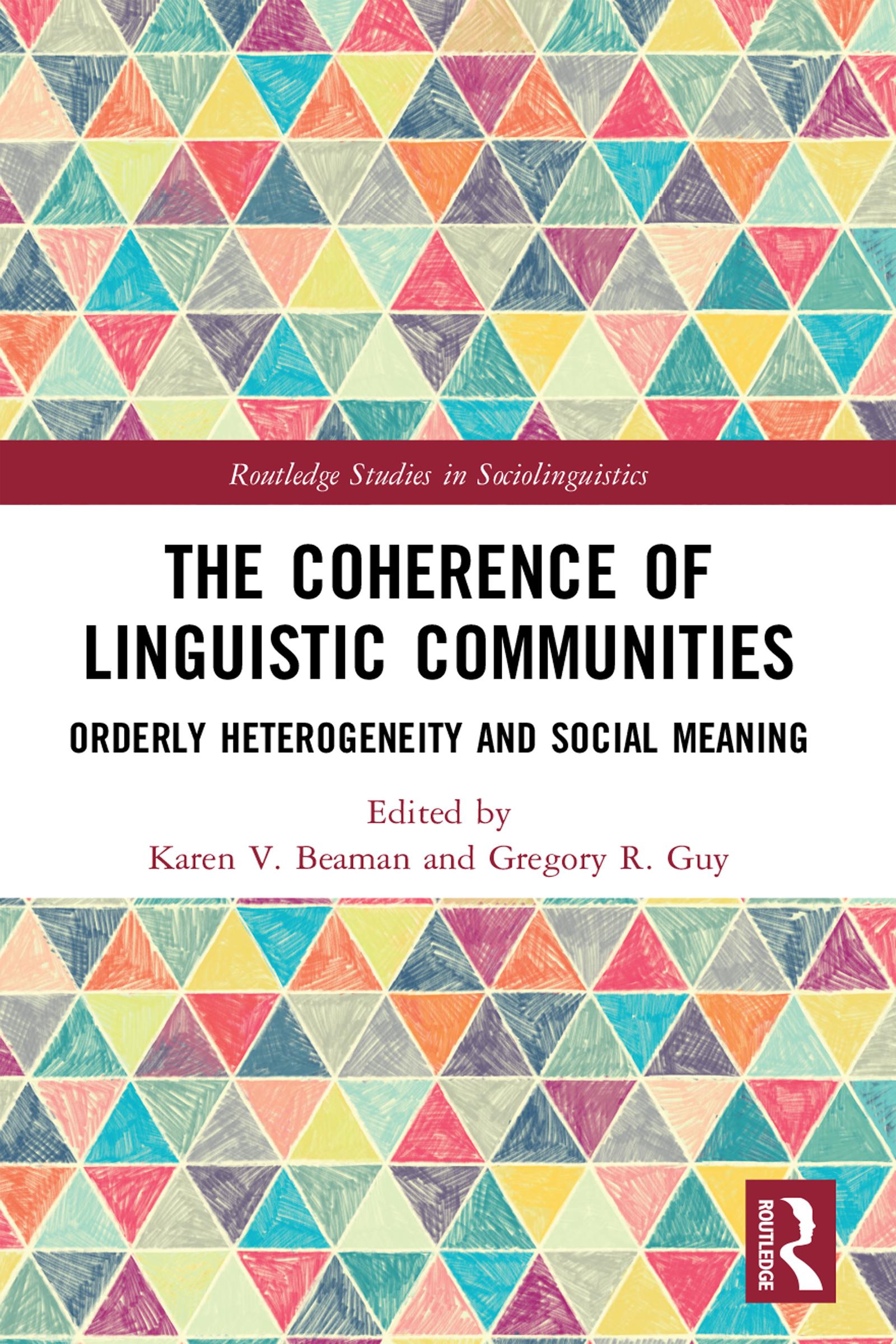
This innovative collection brings together a range of perspectives on the notions of "orderly heterogeneity" and "social meaning", shedding light on how structured variation and indexicalities of social meaning "cohere" within linguistic communities. This book fills a gap in research on language variation by critically considering the position articulated by Weinrich, Labov, and Herzog in 1968 that linguistic diversity is systematically organized in ways that reflect and construct social order.
The volume investigates such key themes as
- covariation and co-occurrence restrictions;
- indexicality, perception and social meaning;
- coherence and language change;
- and the structure and measurement of coherence at different levels of analysis.
This collection advances our understanding of the coherence of linguistic communities through empirical investigations of larger and more diverse sets of variables, language varieties, speech styles, and communities, as afforded by the development and advancement of new methods and models in sociolinguistic research.
This book is of interest to scholars in sociolinguistics, language variation and change, and formal linguistics, as well as those interested in developments on research methods in linguistics.
Betal enkelt med kort, Klarna, Apple Pay eller Google Pay. Ikke fornøyd? Du har alltid 14 dagers angrerett. Les mer i våre vilkår. Har du spørsmål, send oss en e-post på hello@memmo.org.
Memmo gjør det enklere å studere – uansett hvor du er i verden. Hos oss samler du pensumbøker og smarte studieverktøy på ett og samme sted: sammendrag, quizer, podkaster og flashcards. Og så Ted, din studiekompis som svarer på alt du lurer på. Over 50 000 studenter studerer allerede her – bygget for at du skal lære raskere og stresse mindre.