
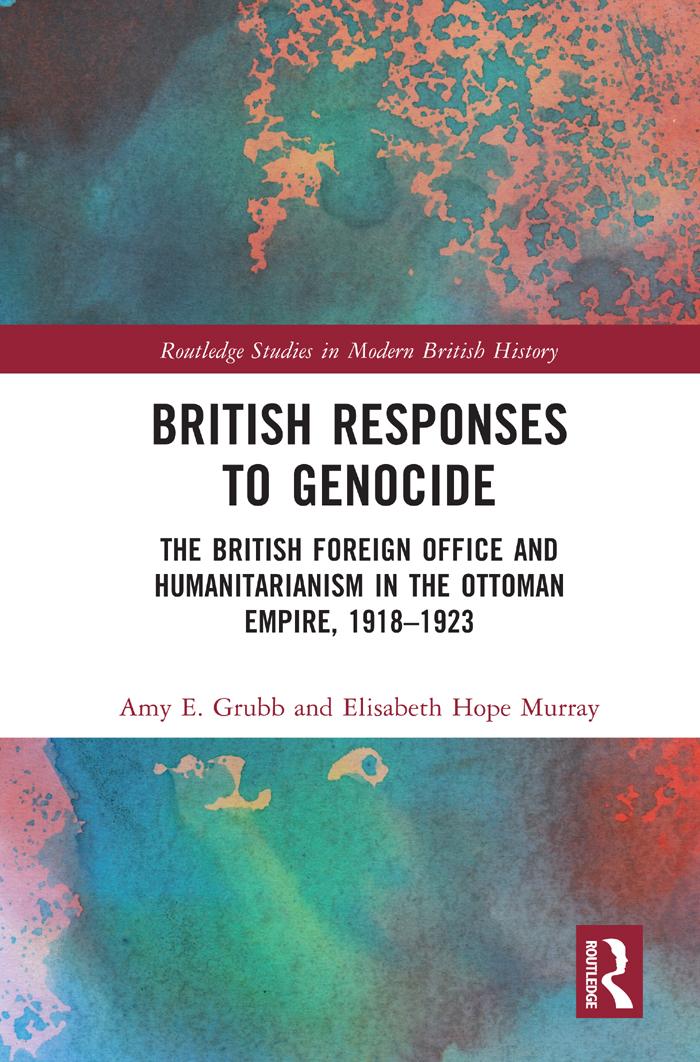
This book examines British responses to genocide and atrocity in the Ottoman Empire during the aftermath of World War I. The authors analyze British humanitarianism and humanitarian intervention through the advice and policies of the Foreign Office and British government in London and the actions of Foreign Officers in the field. British understandings of humanitarianism at the time revolved around three key elements: good government, atrocity, and the refugee crises; this ideology of humanitarianism, however, was challenged by disputed policies of post-war politics and goals regarding the Near East. This resulted in limited intervention methods available to those on the ground but did not necessarily result in the forfeiture of the belief in humanitarianism amongst the local British officials charged with upholding it. This study shows that the tension between altruism and political gain weakened British power in the region, influencing the continuation of violence and repression long after the date most perceive as the cessation of WWI.
The book is primarily aimed at scholars and researchers within the field; it is a research monograph and will be of greatest interest to scholars of genocide, British history, and refugee studies, as well as for activists and practitioners.
Betal enkelt med kort, Klarna, Apple Pay eller Google Pay. Ikke fornøyd? Du har alltid 14 dagers angrerett. Les mer i våre vilkår. Har du spørsmål, send oss en e-post på hello@memmo.org.
Memmo gjør det enklere å studere – uansett hvor du er i verden. Hos oss samler du pensumbøker og smarte studieverktøy på ett og samme sted: sammendrag, quizer, podkaster og flashcards. Og så Ted, din studiekompis som svarer på alt du lurer på. Over 50 000 studenter studerer allerede her – bygget for at du skal lære raskere og stresse mindre.