
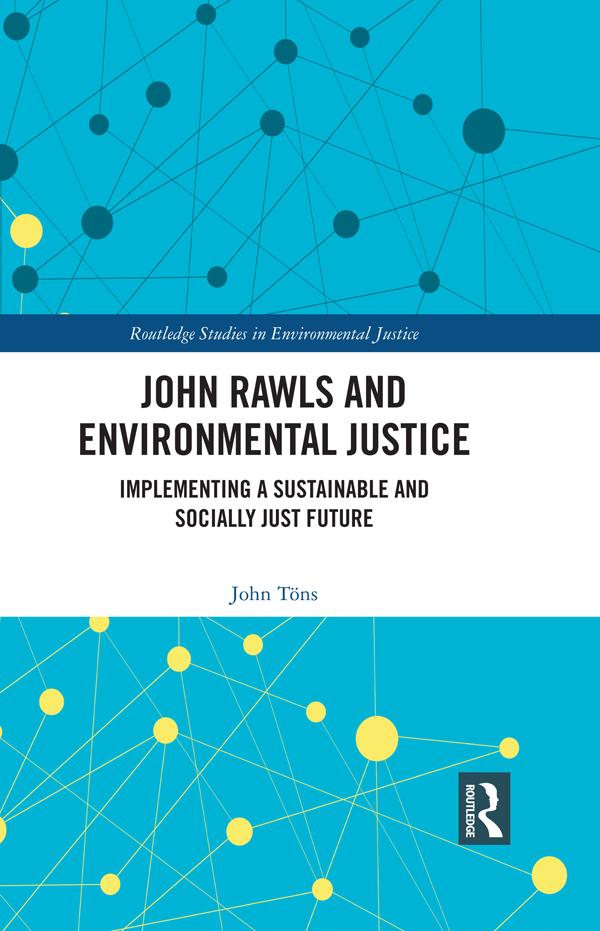
Using the principles of John Rawls’ theory of justice, this book offers an alternative political vision, one which describes a mode of governance that will enable communities to implement a sustainable and socially just future.
Rawls described a theory of justice that not only describes the sort of society in which anyone would like to live but that any society can create a society based on just institutions. While philosophers have demonstrated that Rawls’s theory can provide a framework for the discussion of questions of environmental justice, the problem for many philosophical theories is that discussions of sustainable development open the need to address questions of ecological interdependence, historical inequality in past resource use and the recognition that we cannot afford to ignore the limitations of growth. These ideas do not fit in comfortably in standard discourse about theories of justice. In contrast, this book frames the discussion of global justice in terms of environmental sustainability. The author argues that these ideas can be used to develop a coherent political theory that reconciles cosmopolitan arguments and the non-cosmopolitan or nationalist arguments concerning social and environmental justice.
This book will be of great interest to students and scholars of environmental philosophy and ethics, moral and political philosophy, global studies and sustainable development.
Betal enkelt med kort, Klarna, Apple Pay eller Google Pay. Ikke fornøyd? Du har alltid 14 dagers angrerett. Les mer i våre vilkår. Har du spørsmål, send oss en e-post på hello@memmo.org.
Memmo gjør det enklere å studere – uansett hvor du er i verden. Hos oss samler du pensumbøker og smarte studieverktøy på ett og samme sted: sammendrag, quizer, podkaster og flashcards. Og så Ted, din studiekompis som svarer på alt du lurer på. Over 50 000 studenter studerer allerede her – bygget for at du skal lære raskere og stresse mindre.