
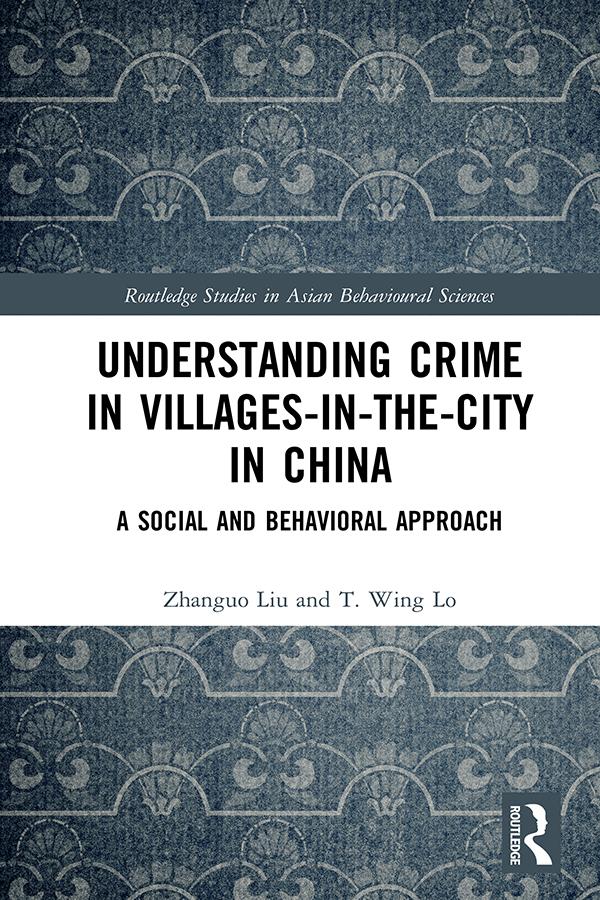
Rapid urbanization of economic zones in China has resulted in a special social phenomenon: "villages-in-the-city." Underdeveloped villages are absorbed during the expansion of urban areas, while retaining their rustic characteristics. Due to the rural characteristics of these areas, social security is much lower compared with the urbanized city. This book uses Tang Village, a remote area in the Shenzhen Special Economic Zone, as an example to establish a comprehensive analytical framework by integrating existing crime theories in analyzing villages-in-the-city. The analysis covers the community, individual, and macro levels to detail the diverse social and behavioral factors causing crime at multiple levels. First, a brief history of the urbanization process of Tang Village is provided to establish how urban planning contributed to the issues in the village today. The authors go on to explain how socially disorganized communities dictate the crime hotspots and the common types of crime. The book examines other risk factors that may contribute to the level of crime such as weak social controls, building density, and floating populations of poor working-class migrants. The routine activities of victims, offenders, and guardians are examined. The book concludes with the current trends in the social structure within the villages-in-the-city and their expected outcome after urbanization.
Betal enkelt med kort, Klarna, Apple Pay eller Google Pay. Ikke fornøyd? Du har alltid 14 dagers angrerett. Les mer i våre vilkår. Har du spørsmål, send oss en e-post på hello@memmo.org.
Memmo gjør det enklere å studere – uansett hvor du er i verden. Hos oss samler du pensumbøker og smarte studieverktøy på ett og samme sted: sammendrag, quizer, podkaster og flashcards. Og så Ted, din studiekompis som svarer på alt du lurer på. Over 50 000 studenter studerer allerede her – bygget for at du skal lære raskere og stresse mindre.