
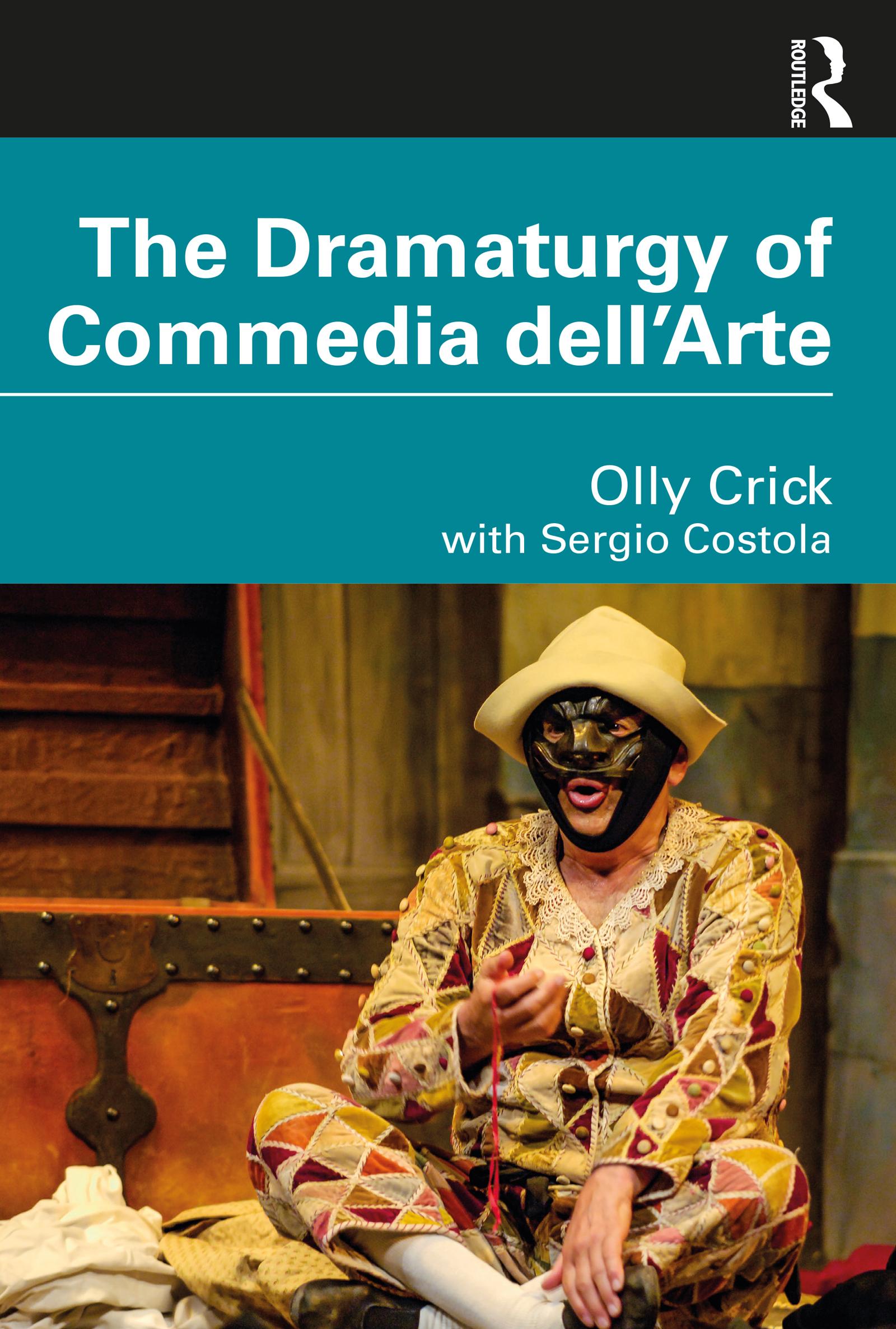
This book examines Commedia dell'Arte as a performative genre, and one that should be analysed through the framework of dramaturgy and dramaturgical practice.
This volume examines the way Commedia has been explored in the twentieth and twenty-first centuries, and details its reinventors’ dramaturgic approaches, both focusing in on specific examples such as Jacques Lecoq, Dario Fo and Antonio Fava, and also suggesting how modern discoveries may aid the study of historical performance practice. It also discusses how audiences read and receive masks; the relationship between the different masked and unmasked roles; the range of performance activities that come under the umbrella term ‘improvisation’; the performative construction of a role performed ‘live’ from a scenario; the role of language and embodied locality in performance; and the performative relationship between performative commedia and literary tragicomedy.
Its focus is dramaturgy, and so it may be read both as a text describing various theatrical practices from 1946 onwards and as a way of creating one’s own contemporary Commedia practice. It is an important read for any student or scholar of Commedia dell'Arte and theatre historians grappling with the status of this unique and influential performance form.
Betal enkelt med kort, Klarna, Apple Pay eller Google Pay. Ikke fornøyd? Du har alltid 14 dagers angrerett. Les mer i våre vilkår. Har du spørsmål, send oss en e-post på hello@memmo.org.
Memmo gjør det enklere å studere – uansett hvor du er i verden. Hos oss samler du pensumbøker og smarte studieverktøy på ett og samme sted: sammendrag, quizer, podkaster og flashcards. Og så Ted, din studiekompis som svarer på alt du lurer på. Over 50 000 studenter studerer allerede her – bygget for at du skal lære raskere og stresse mindre.