
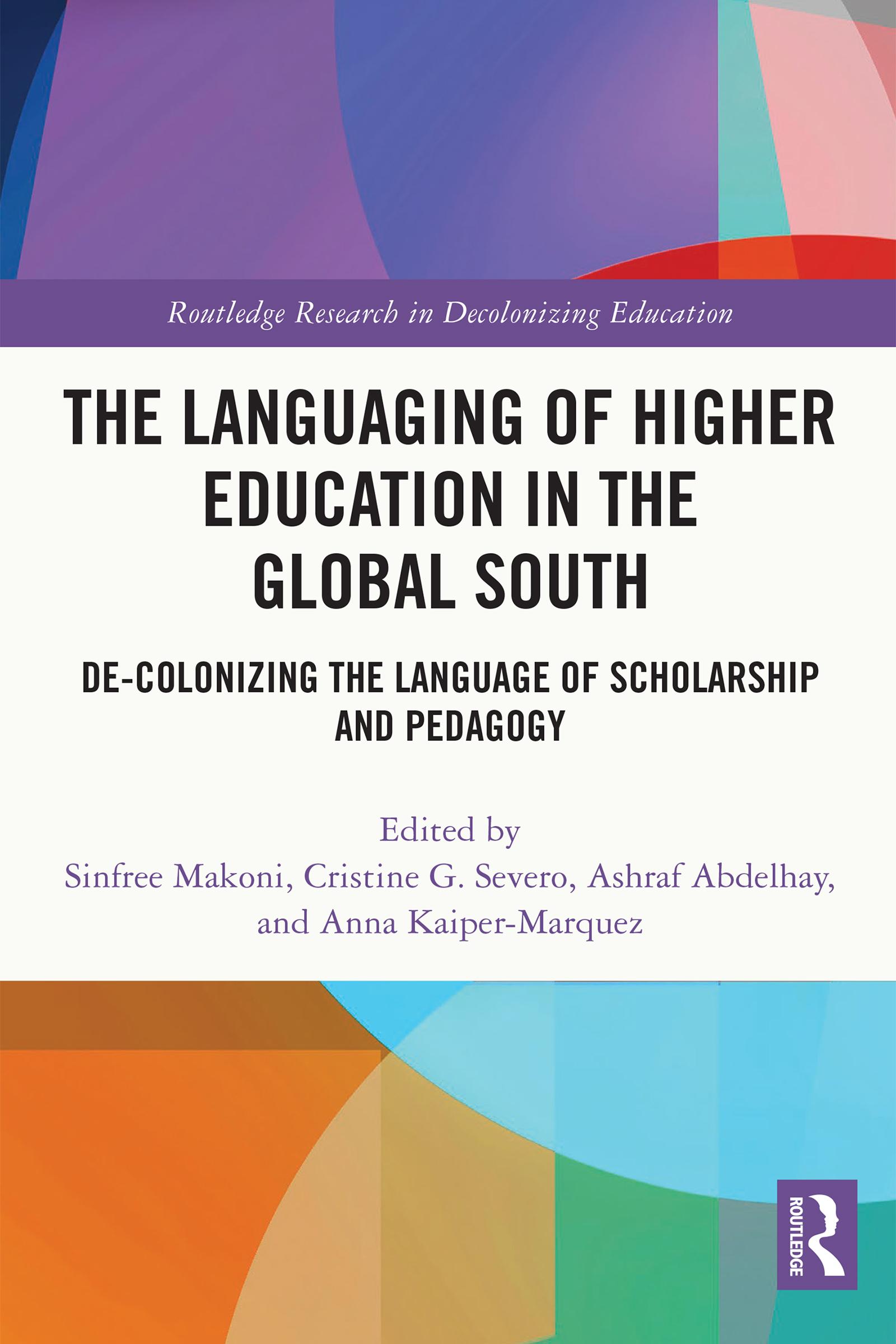
By foregrounding language practices in educational settings, this timely volume offers a postcolonial critique of the languaging of higher education and considers how Southern epistemologies can be used to further the decolonization of post-secondary education in the Global South.
Offering a range of contributions from diverse and minoritized scholars based in countries including South Africa, Rwanda, Sudan, Qatar, Turkey, Portugal, Sweden, India, and Brazil, The Languaging of Higher Education in the Global South problematizes the use of language in various areas of higher education. Chapters demonstrate both subtle and explicit ways in which the language of pedagogy, scholarship, policy, and partcipiation endorse and privelege Western constructs and knowledge production, and utilize Southern theories and epistemologies to offer an alternative way forward – practice and research which applies and promotes Southern epistemologies and local knowledges. The volume confronts issues including integrationism, epistemic solidarity, language policy and ideology, multilingualism, and the increasing use of technology in institutions of higher education.
This innovative book will be of interest to researchers, scholars, and postgraduate students in the fields of higher education, applied linguistics, and multicultural education. Those with an interest in the decolonization of education and language will find the book of particular use.
Betal enkelt med kort, Klarna, Apple Pay eller Google Pay. Ikke fornøyd? Du har alltid 14 dagers angrerett. Les mer i våre vilkår. Har du spørsmål, send oss en e-post på hello@memmo.org.
Memmo gjør det enklere å studere – uansett hvor du er i verden. Hos oss samler du pensumbøker og smarte studieverktøy på ett og samme sted: sammendrag, quizer, podkaster og flashcards. Og så Ted, din studiekompis som svarer på alt du lurer på. Over 50 000 studenter studerer allerede her – bygget for at du skal lære raskere og stresse mindre.