
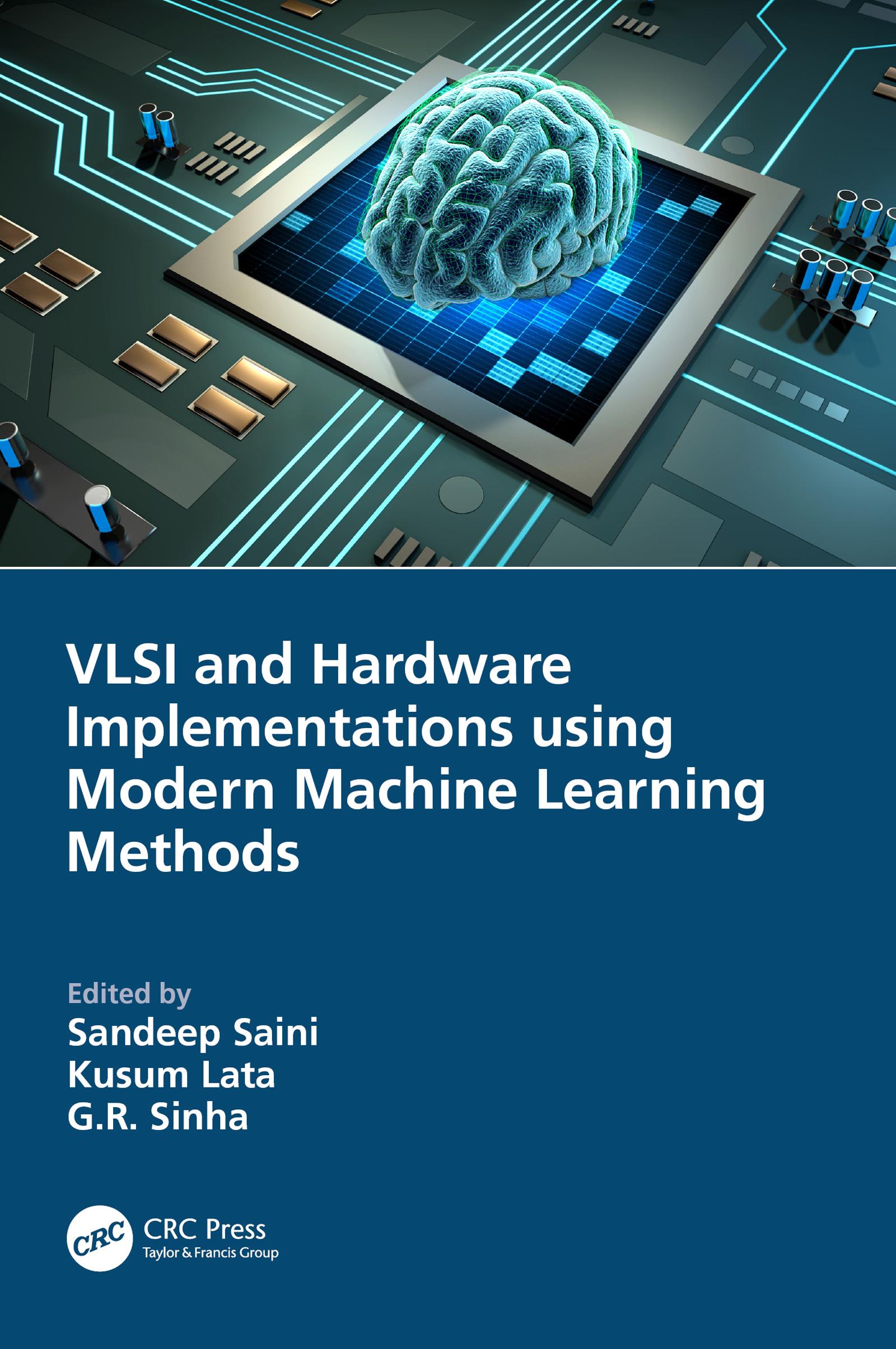
Machine learning is a potential solution to resolve bottleneck issues in VLSI via optimizing tasks in the design process. This book aims to provide the latest machine-learning–based methods, algorithms, architectures, and frameworks designed for VLSI design. The focus is on digital, analog, and mixed-signal design techniques, device modeling, physical design, hardware implementation, testability, reconfigurable design, synthesis and verification, and related areas. Chapters include case studies as well as novel research ideas in the given field. Overall, the book provides practical implementations of VLSI design, IC design, and hardware realization using machine learning techniques.
Features:
- Provides the details of state-of-the-art machine learning methods used in VLSI design
- Discusses hardware implementation and device modeling pertaining to machine learning algorithms
- Explores machine learning for various VLSI architectures and reconfigurable computing
- Illustrates the latest techniques for device size and feature optimization
- Highlights the latest case studies and reviews of the methods used for hardware implementation
This book is aimed at researchers, professionals, and graduate students in VLSI, machine learning, electrical and electronic engineering, computer engineering, and hardware systems.
Betal enkelt med kort, Klarna, Apple Pay eller Google Pay. Ikke fornøyd? Du har alltid 14 dagers angrerett. Les mer i våre vilkår. Har du spørsmål, send oss en e-post på hello@memmo.org.
Memmo gjør det enklere å studere – uansett hvor du er i verden. Hos oss samler du pensumbøker og smarte studieverktøy på ett og samme sted: sammendrag, quizer, podkaster og flashcards. Og så Ted, din studiekompis som svarer på alt du lurer på. Over 50 000 studenter studerer allerede her – bygget for at du skal lære raskere og stresse mindre.