
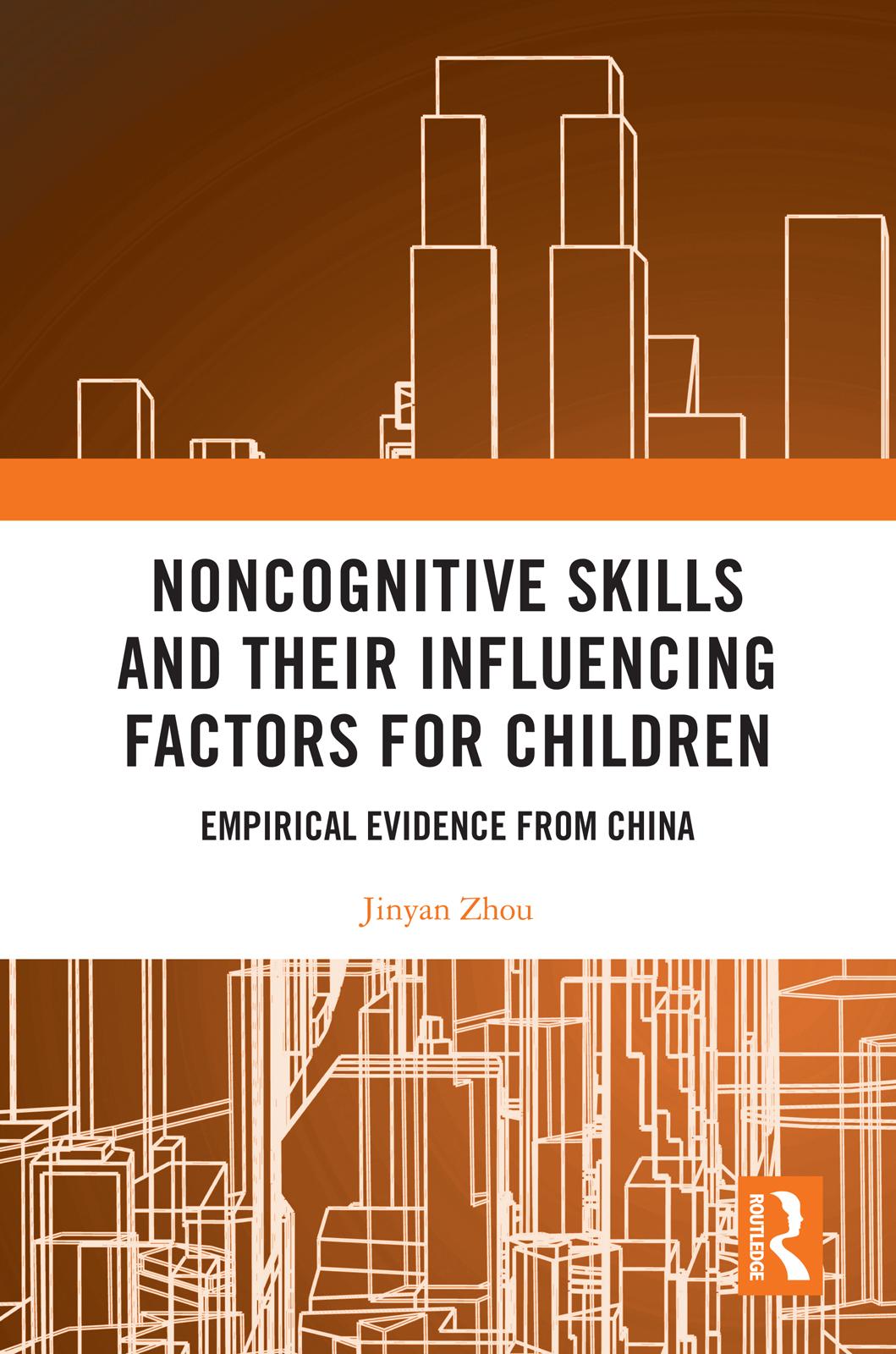
"Non-cognitive skills" are often used to refers to those skills that do not fall within the cognitive category but to describe a stable pattern of thought, feeling, and behavior in different situations and backgrounds with profitable and investable characteristics, such as conscientiousness, perseverance, and teamwork, which are critically important in education. However, for many years, "non-cognitive skills" have always been ignored in human capital theory. The book, using a multidisciplinary approach, tries to uncover the noncognitive components of human capital, so as to answer the question "what is the skill that should be invested in?"
The author expands the connotations of human capital by exploring the value of noncognitive skills and their production patterns, constructing a measurement framework and a set of tools to measure noncognitive skills. She especially carries out an empirical survey which covers primary and secondary school students from seven provinces of China’s east, middle, and west areas. With the data collected, she analyzes Chinese students’ noncognitive development and further identifies the critical factors that may impact their noncognitive skills by applying the Bayesian Model Average approach.
The book will be a theoretical contribution to education economics. Researchers interested in education in China, children’s development, and policymakers in the field of education will find this book helpful and resourceful.
Betal enkelt med kort, Klarna, Apple Pay eller Google Pay. Ikke fornøyd? Du har alltid 14 dagers angrerett. Les mer i våre vilkår. Har du spørsmål, send oss en e-post på hello@memmo.org.
Memmo gjør det enklere å studere – uansett hvor du er i verden. Hos oss samler du pensumbøker og smarte studieverktøy på ett og samme sted: sammendrag, quizer, podkaster og flashcards. Og så Ted, din studiekompis som svarer på alt du lurer på. Over 50 000 studenter studerer allerede her – bygget for at du skal lære raskere og stresse mindre.