
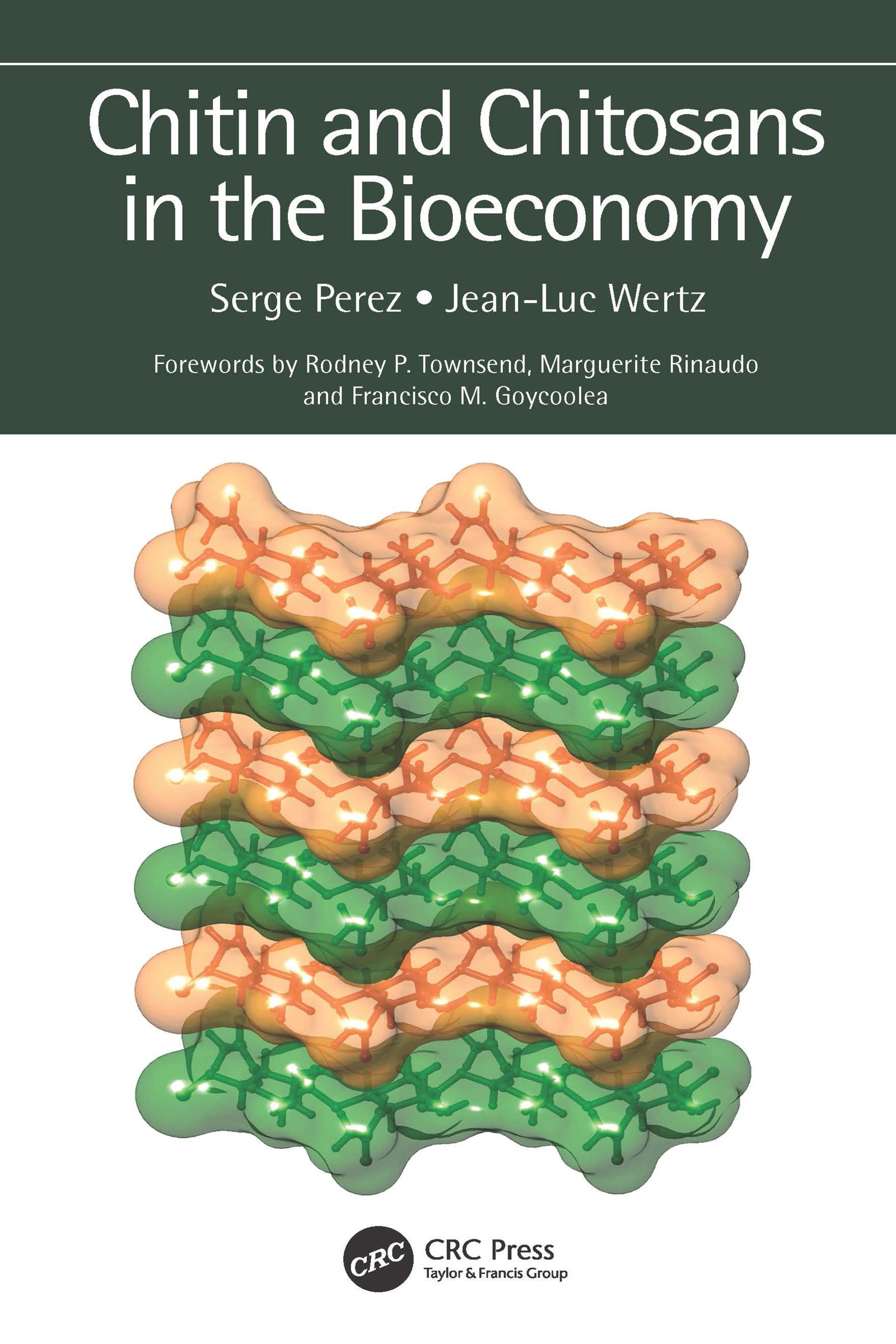
Chitin is the second most abundant natural polymer in the world after cellulose, mainly derived from the food waste of shrimp and crabs. Chitosan is the most important derivative of chitin. Thanks to their biodegradability, non-toxicity, biocompatibility, bioactivity, and versatile chemical and physical properties, chitin and chitosan derivatives are used in a wide variety of applications, including water treatment, cosmetics and toiletries, food and beverages, healthcare/medical, and agrochemicals. Chitin and Chitosans in the Bioeconomy covers all major aspects of chitin and chitosan, including structure, biosynthesis, biodegradation, properties of chitin and derivatives, applications, and market. It offers a special focus on the bioeconomy, which is the renewable segment of the circular economy.
- Describes the structure, biosynthesis, and biodegradation of chitin and chitosan
- Covers chitin- and chitosan-based products
- Details valorization of these materials
- Presents information on shell biorefineries
Chitin and Chitosans in the Bioeconomy serves as a reference for polymer scientists and engineers and is also accessible to economists and advanced students.
Betal enkelt med kort, Klarna, Apple Pay eller Google Pay. Ikke fornøyd? Du har alltid 14 dagers angrerett. Les mer i våre vilkår. Har du spørsmål, send oss en e-post på hello@memmo.org.
Memmo gjør det enklere å studere – uansett hvor du er i verden. Hos oss samler du pensumbøker og smarte studieverktøy på ett og samme sted: sammendrag, quizer, podkaster og flashcards. Og så Ted, din studiekompis som svarer på alt du lurer på. Over 50 000 studenter studerer allerede her – bygget for at du skal lære raskere og stresse mindre.