
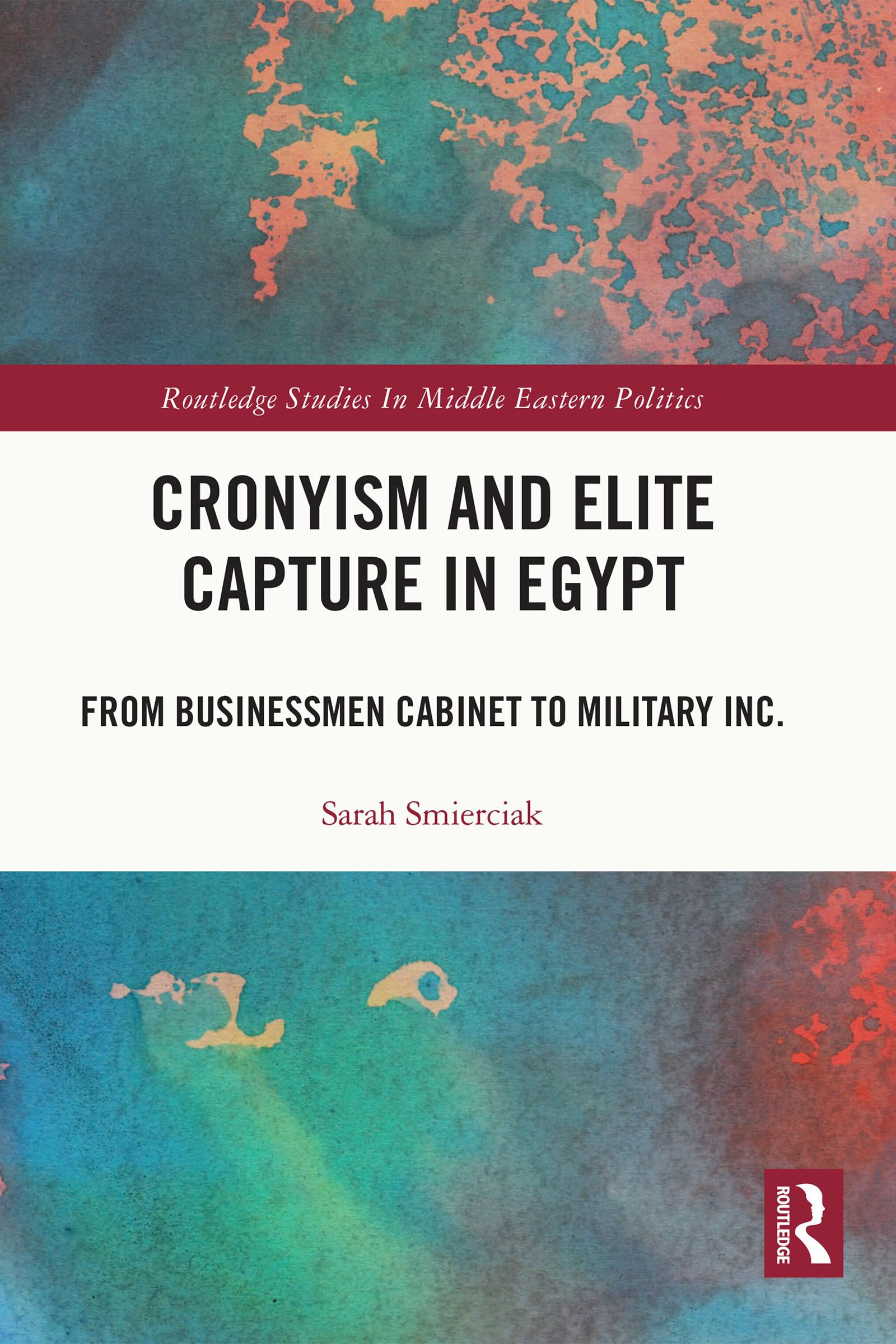
Examining business-state networks in Egypt (1991–2020), this book highlights the complicity of international actors in facilitating inequality and elite capture. Using interdisciplinary methodology, it argues that Western actors promoting market liberalization have served as central partners in enabling elites to capture the fruits of Egypt’s economic reforms.
In the years leading up to the 2011 Revolution, Egypt’s crony capitalism reached new levels of visibility with the appointment of a "Businessmen Cabinet." The businessmen-turned-state representatives ushered in a wave of "market liberalizing" reforms, expanding avenues for the abuse of power. Providing a detailed look at some of this period’s chief beneficiaries, including a number of Egypt’s wealthiest oligarchs, the volume follows their ascent from former President Hosni Mubarak’s first round of neoliberal reforms in 1991 through his last wave of reforms beginning in 2004 and ending in regime overthrow. The final chapter examines the fate of these elites under the brief rule of Muslim Brotherhood President, Mohammed Morsi, and of Abdel Fattah el Sisi’s current military-backed regime.
Based on five years of fieldwork and dozens of interviews with businessmen and state representatives, this book offers a unique look into the politics of policy, and inequality, in Egypt. It will be of interest to scholars reading political economy, international development, and Middle East studies.
Betal enkelt med kort, Klarna, Apple Pay eller Google Pay. Ikke fornøyd? Du har alltid 14 dagers angrerett. Les mer i våre vilkår. Har du spørsmål, send oss en e-post på hello@memmo.org.
Memmo gjør det enklere å studere – uansett hvor du er i verden. Hos oss samler du pensumbøker og smarte studieverktøy på ett og samme sted: sammendrag, quizer, podkaster og flashcards. Og så Ted, din studiekompis som svarer på alt du lurer på. Over 50 000 studenter studerer allerede her – bygget for at du skal lære raskere og stresse mindre.