
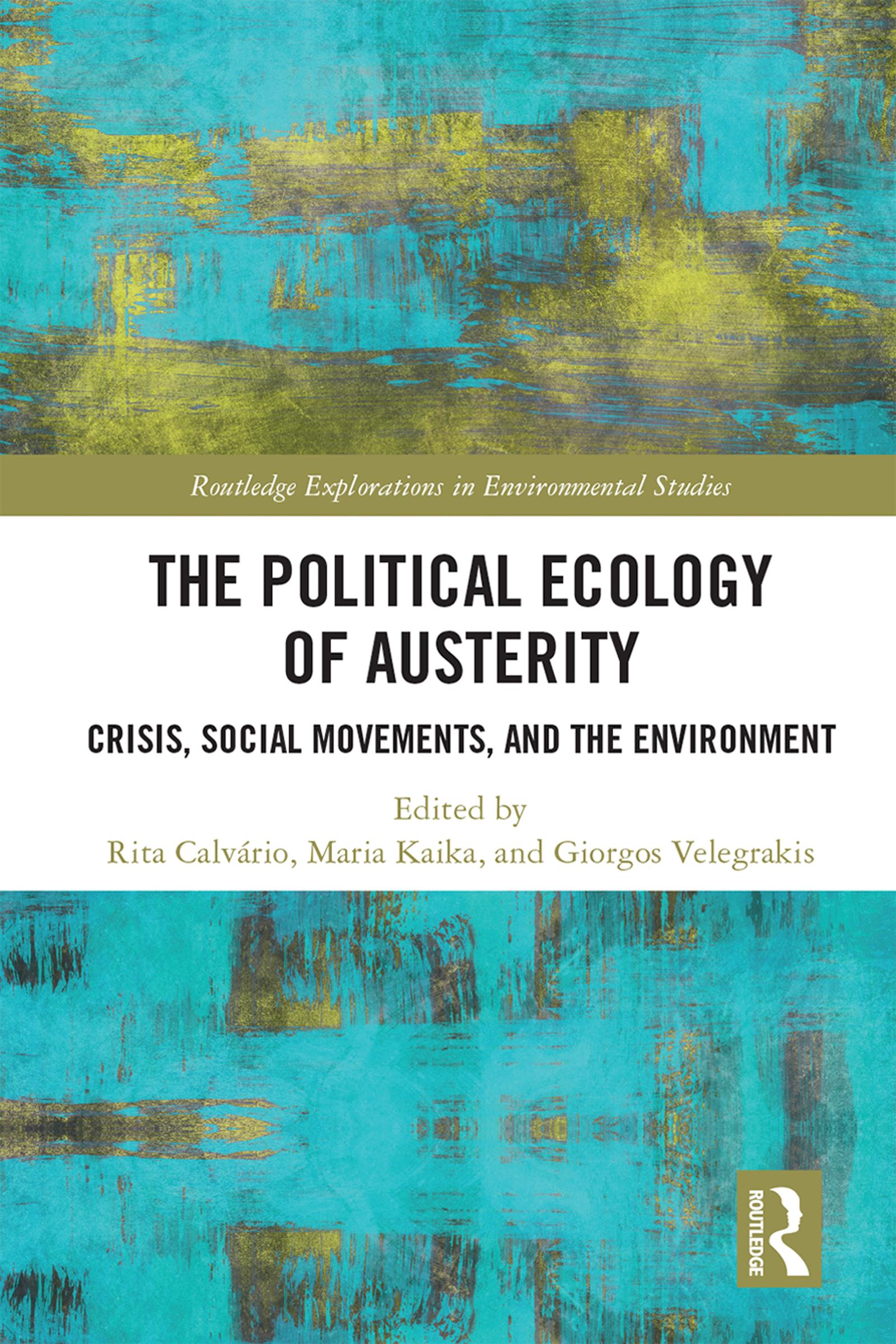
The Political Ecology of Austerity explores the environmental dimension of austerity that has thus far escaped academic, policy, and media attention.
Offering a better comprehension of the full socio-environmental impact of austerity measures, the book highlights the importance of considering environmental issues when designing responses to economic crisis in the future. Mobilising detailed case studies from across the world, the volume documents the ways in which austerity impacts global and local ecologies, shapes environmental conflicts and gives rise to new forms and practices of social moblisation and resistance. Bringing together theoretical debates and rigorous case studies, the book proposes ‘the political ecology of austerity’ as an appropriate method of analysis that can inform our understanding of the shift in environmental protection policies and the intensification of growth practices (green or otherwise) that followed the 2008 global economic crisis. The Political Ecology of Austerity discloses austerity to be a globalised set of tools not only for budgetary discipline, but also for socio-environmental discipline that justifies the continuation of capital accumulation at the expense of further global environmental degradation.
This book will be of great interest to students and scholars of social and political sciences, environmental studies, urban studies, and political ecology.
Betal enkelt med kort, Klarna, Apple Pay eller Google Pay. Ikke fornøyd? Du har alltid 14 dagers angrerett. Les mer i våre vilkår. Har du spørsmål, send oss en e-post på hello@memmo.org.
Memmo gjør det enklere å studere – uansett hvor du er i verden. Hos oss samler du pensumbøker og smarte studieverktøy på ett og samme sted: sammendrag, quizer, podkaster og flashcards. Og så Ted, din studiekompis som svarer på alt du lurer på. Over 50 000 studenter studerer allerede her – bygget for at du skal lære raskere og stresse mindre.