
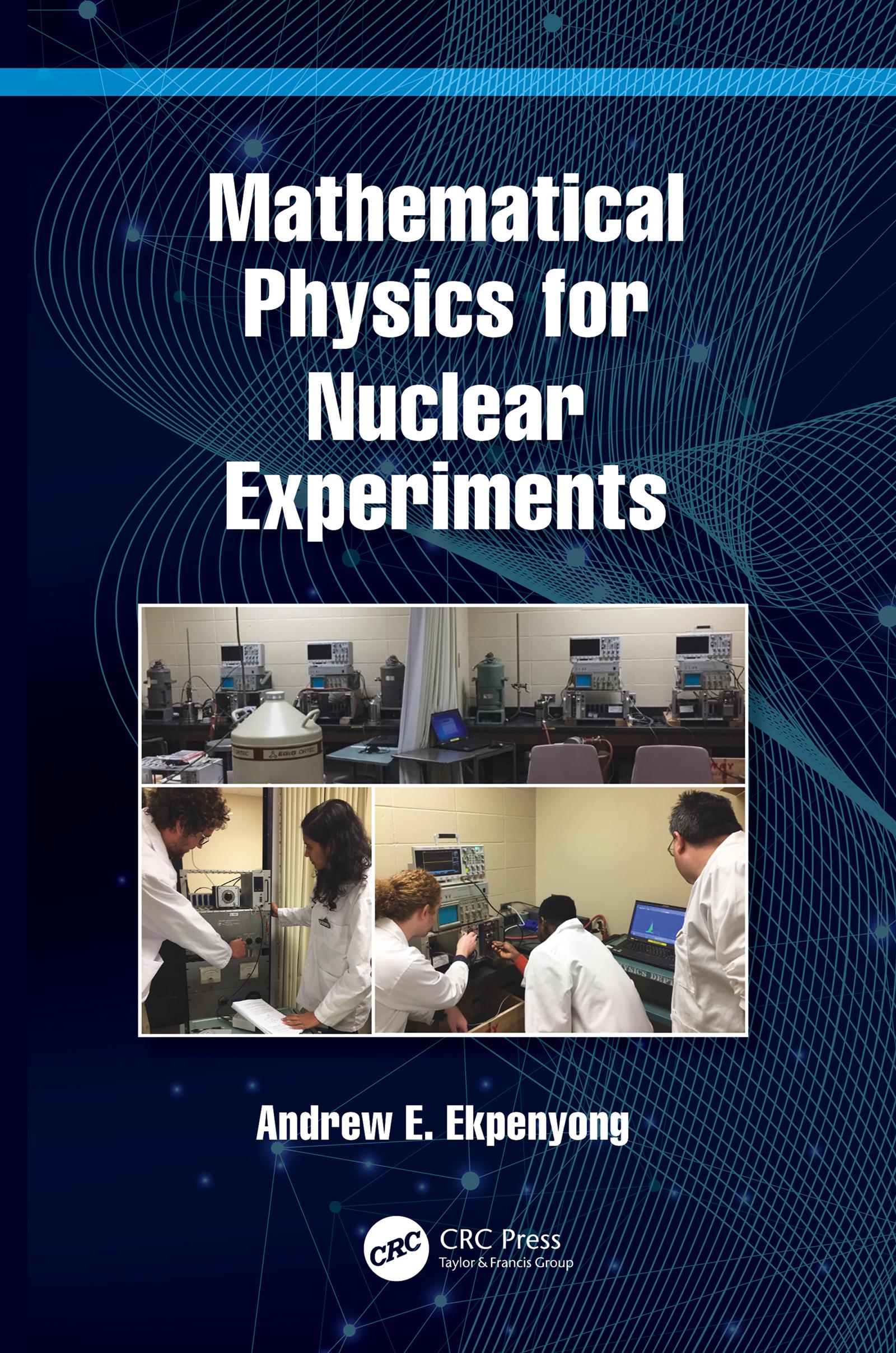
Mathematical Physics for Nuclear Experiments presents an accessible introduction to the mathematical derivations of key equations used in describing and analysing results of typical nuclear physics experiments. Instead of merely showing results and citing texts, crucial equations in nuclear physics such as the Bohr’s classical formula, Bethe’s quantum mechanical formula for energy loss, Poisson, Gaussian and Maxwellian distributions for radioactive decay, and the Fermi function for beta spectrum analysis, among many more, are presented with the mathematical bases of their derivation and with their physical utility.
This approach provides readers with a greater connection between the theoretical and experimental sides of nuclear physics. The book also presents connections between well-established results and ongoing research. It also contains figures and tables showing results from the author’s experiments and those of his students to demonstrate experimental outcomes.
This is a valuable guide for advanced undergraduates and early graduates studying nuclear instruments and methods, medical and health physics courses as well as experimental particle physics courses.
Key features
- Contains over 500 equations connecting theory with experiments.
- Presents over 80 examples showing physical intuition and illustrating concepts.
- Includes 80 exercises, with solutions, showing applications in nuclear and medical physics.
Betal enkelt med kort, Klarna, Apple Pay eller Google Pay. Ikke fornøyd? Du har alltid 14 dagers angrerett. Les mer i våre vilkår. Har du spørsmål, send oss en e-post på hello@memmo.org.
Memmo gjør det enklere å studere – uansett hvor du er i verden. Hos oss samler du pensumbøker og smarte studieverktøy på ett og samme sted: sammendrag, quizer, podkaster og flashcards. Og så Ted, din studiekompis som svarer på alt du lurer på. Over 50 000 studenter studerer allerede her – bygget for at du skal lære raskere og stresse mindre.