
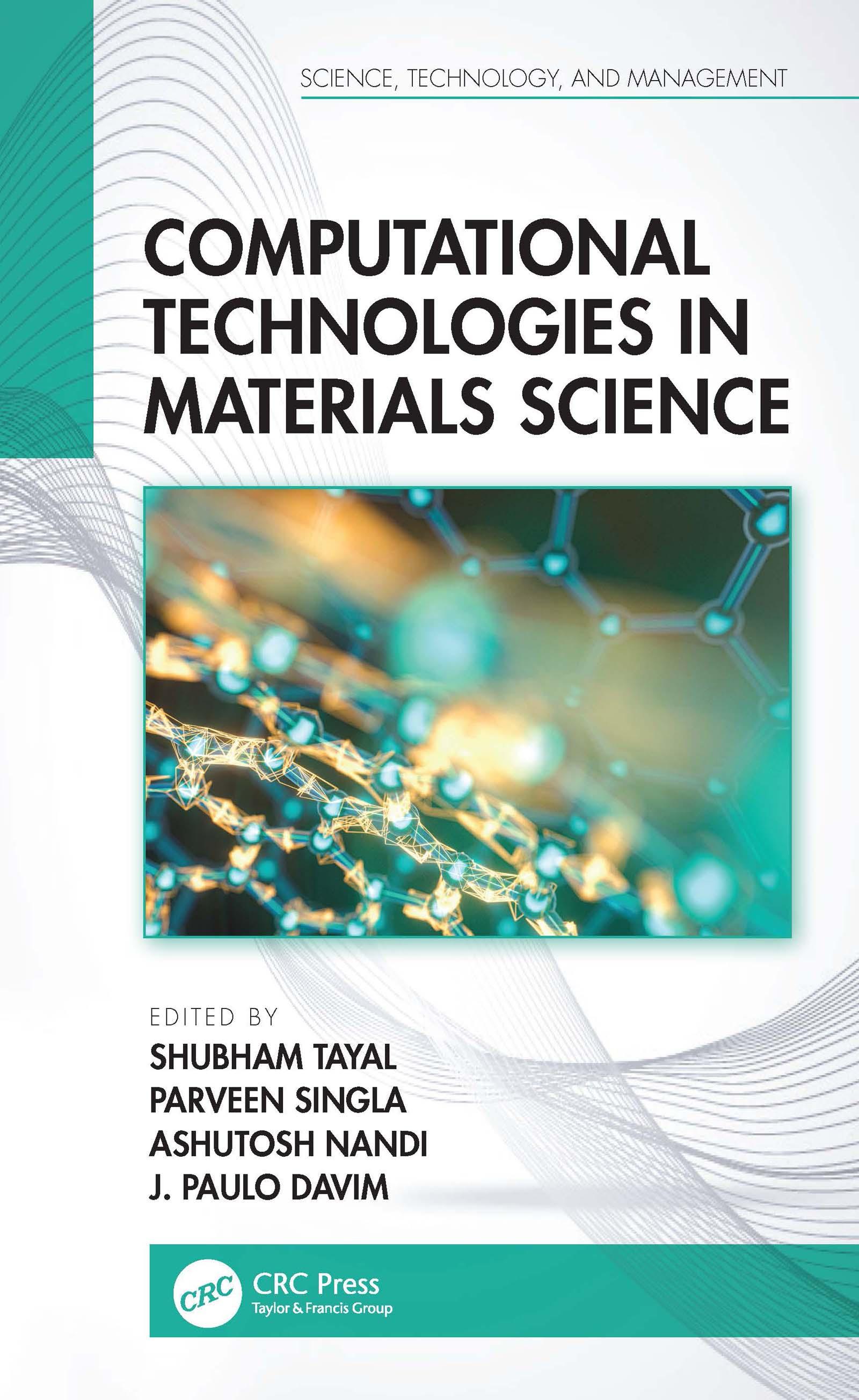
Advanced materials are essential for economic security and human well-being, with applications in industries aimed at addressing challenges in clean energy, national security, and human welfare. Yet, it can take years to move a material to the market after its initial discovery. Computational techniques have accelerated the exploration and development of materials, offering the chance to move new materials to the market quickly. Computational Technologies in Materials Science addresses topics related to AI, machine learning, deep learning, and cloud computing in materials science. It explores characterization and fabrication of materials, machine-learning-based models, and computational intelligence for the synthesis and identification of materials. This book
• Covers material testing and development using computational intelligence
• Highlights the technologies to integrate computational intelligence and materials science
• Details case studies and detailed applications
• Investigates challenges in developing and using computational intelligence in materials science
• Analyzes historic changes that are taking place in designing materials.
This book encourages material researchers and academics to develop novel theories and sustainable computational techniques and explores the potential for computational intelligence to replace traditional materials research.
Betal enkelt med kort, Klarna, Apple Pay eller Google Pay. Ikke fornøyd? Du har alltid 14 dagers angrerett. Les mer i våre vilkår. Har du spørsmål, send oss en e-post på hello@memmo.org.
Memmo gjør det enklere å studere – uansett hvor du er i verden. Hos oss samler du pensumbøker og smarte studieverktøy på ett og samme sted: sammendrag, quizer, podkaster og flashcards. Og så Ted, din studiekompis som svarer på alt du lurer på. Over 50 000 studenter studerer allerede her – bygget for at du skal lære raskere og stresse mindre.