
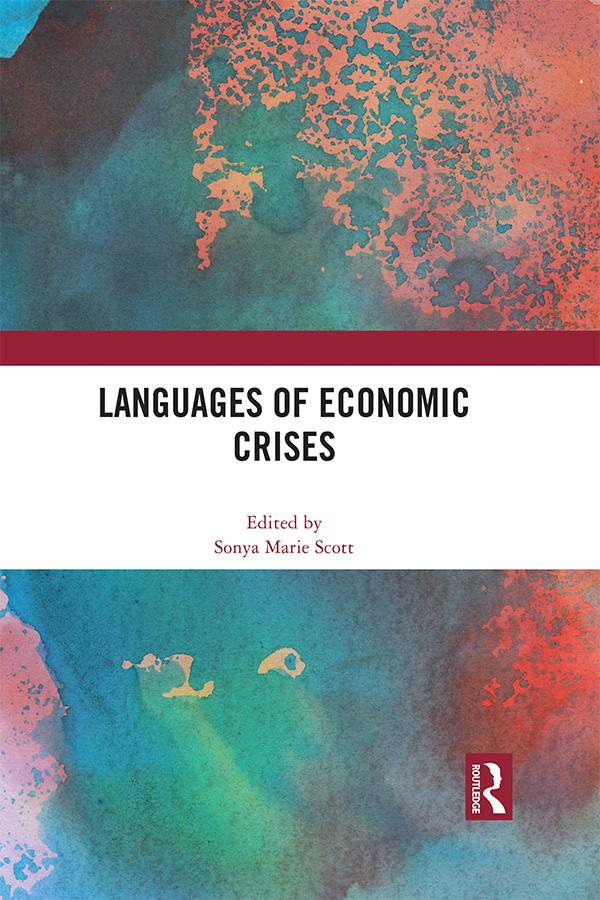
This book offers a critical engagement with languages that describe, perpetuate, respond to, and resist economic crises. Unlike many volumes on economic crises that offer economistic explanations of their causes or policy suggestions for their resolution, this collection explores the different types of language used to deal with complex economic phenomena. The chapters in this volume examine a range of connections between language and crises: from the metaphors used historically to describe economic crises, to the languages deployed within periods of crises and economic struggle, to the popular responses thereto (including political manifestations and worker-organized enterprises). Also considered are the implications for democratic participation and gender relations, and the lack of language to express economic experience amongst certain groups.
With essays from seven contributors representing five different countries, this collection has global relevance in a time marked by economic volatility and upheaval, and will serve as a valuable resource for those interested in the politics of language, economic discourse and the epistemological complexities of economic crises.
The chapters in this book were originally published as a special issue of the Journal of Cultural Economy.
Betal enkelt med kort, Klarna, Apple Pay eller Google Pay. Ikke fornøyd? Du har alltid 14 dagers angrerett. Les mer i våre vilkår. Har du spørsmål, send oss en e-post på hello@memmo.org.
Memmo gjør det enklere å studere – uansett hvor du er i verden. Hos oss samler du pensumbøker og smarte studieverktøy på ett og samme sted: sammendrag, quizer, podkaster og flashcards. Og så Ted, din studiekompis som svarer på alt du lurer på. Over 50 000 studenter studerer allerede her – bygget for at du skal lære raskere og stresse mindre.