
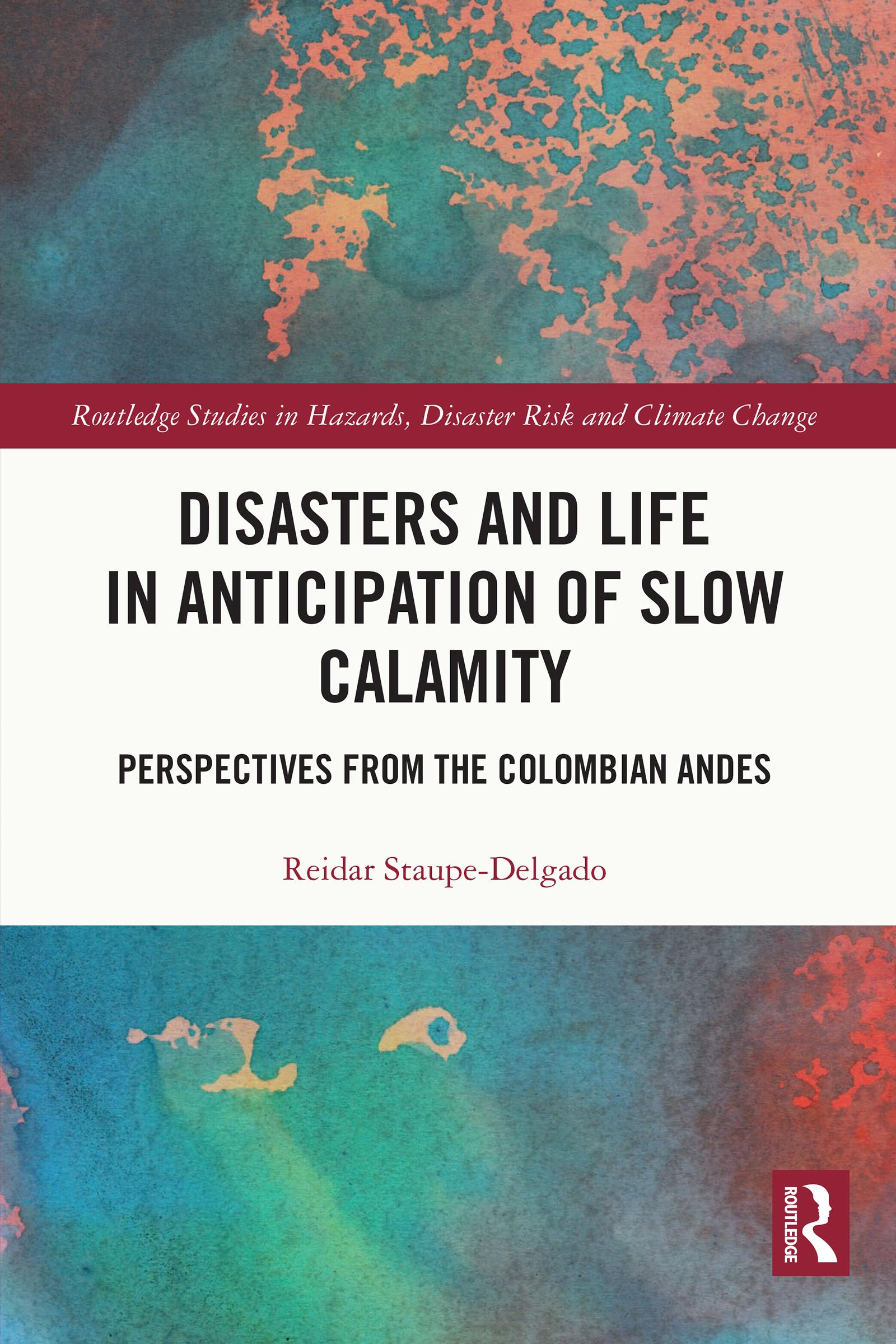
The book provides insights into community narratives concerning life in the face of creeping calamities through a case study from the Colombian Andes. It sets out to make sense of the lived experience of disasters that are slowly unfolding as well disasters that have not yet occurred.
This book explores what it means to live in anticipation of disaster and in anticipation of an uprooting of community, sense of self, and sense of belonging. It questions whether community resilience is a useful concept in the context of slow-onset geological hazards for which few viable solutions are available. The book forces us to think about how resettlement and displacement functions in the context of slow calamities, which presents distinct challenges, mainly related to lower political saliency than what is usually the case in emergencies. The book thus also has implications for how we think about the adverse impacts of climate change. By raising new questions on the nature of disasters and calamities and how we experience them, the book explores the challenges and tensions surrounding governance and governmentality.
The interdisciplinary blend of practice-oriented and conceptual reflections will appeal to academics in postgraduate and postdoctoral research in social sciences, specifically, disaster research, geography, and research fields centred on natural hazards and disasters.
Betal enkelt med kort, Klarna, Apple Pay eller Google Pay. Ikke fornøyd? Du har alltid 14 dagers angrerett. Les mer i våre vilkår. Har du spørsmål, send oss en e-post på hello@memmo.org.
Memmo gjør det enklere å studere – uansett hvor du er i verden. Hos oss samler du pensumbøker og smarte studieverktøy på ett og samme sted: sammendrag, quizer, podkaster og flashcards. Og så Ted, din studiekompis som svarer på alt du lurer på. Over 50 000 studenter studerer allerede her – bygget for at du skal lære raskere og stresse mindre.